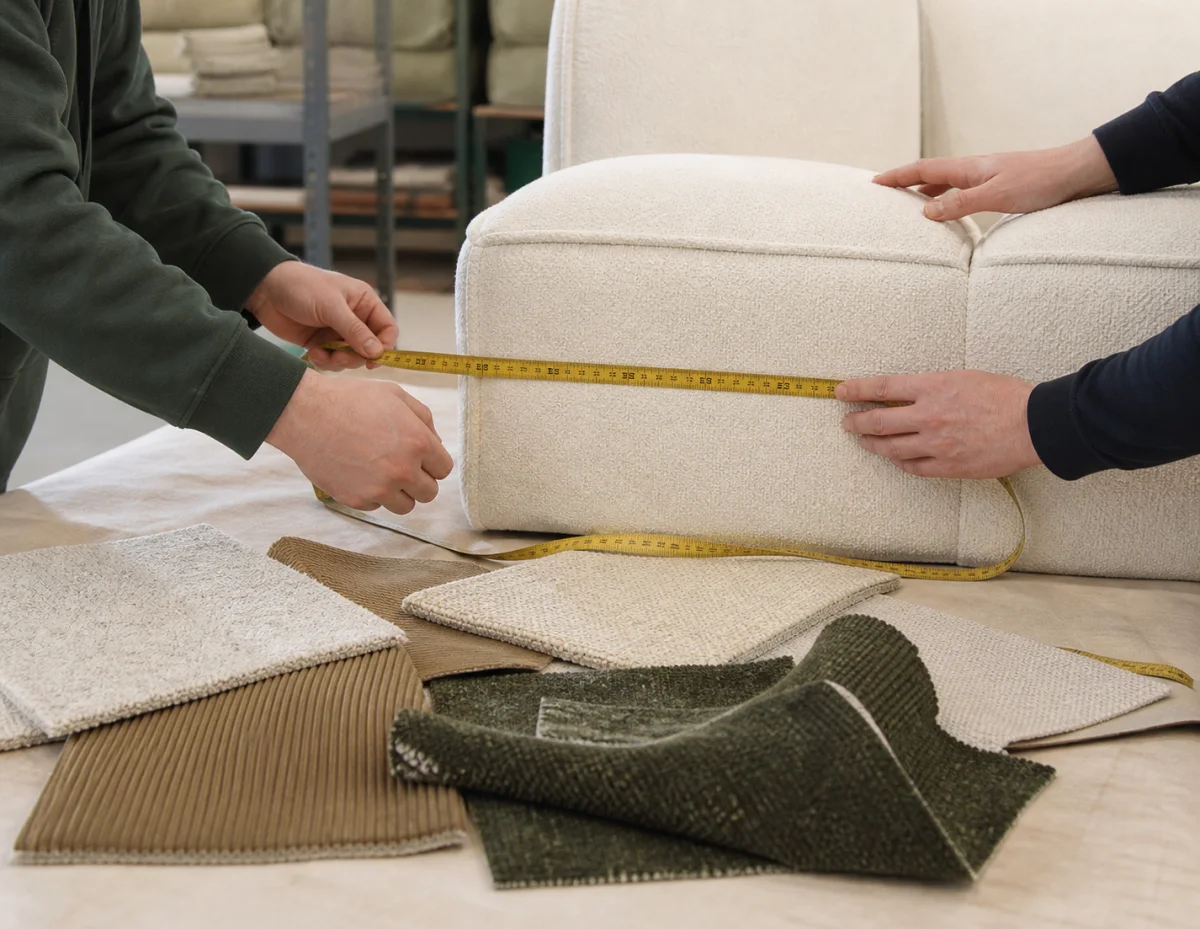
Compression sofa project pathways without imaginary success metrics.
Good case studies distinguish evidence from storytelling. Until named customer approval and verified outcomes are available, ALF Home uses representative scenarios to show the decisions, risks and approval records behind common foam furniture briefs.
A configuration is only one outcome; the real project also defines each module, carton and approval relationship.
Evidence disclosure
What these examples are—and are not.
They are representative development scenarios created to explain sourcing logic. They do not identify a customer, claim a completed order or publish invented revenue, freight savings, conversion rates, defect reductions or launch dates.
When verified project records and customer publication permission are available, a future case can add the actual product revision, baseline, method, measured result and limitations. Until then, honest process detail is more useful than a precise-looking number without evidence.
Choose the nearest brief
Three products, three different sources of complexity.
The scenario is a starting map. Each real project requires its own destination, materials, quantities, tests and commercial approvals.
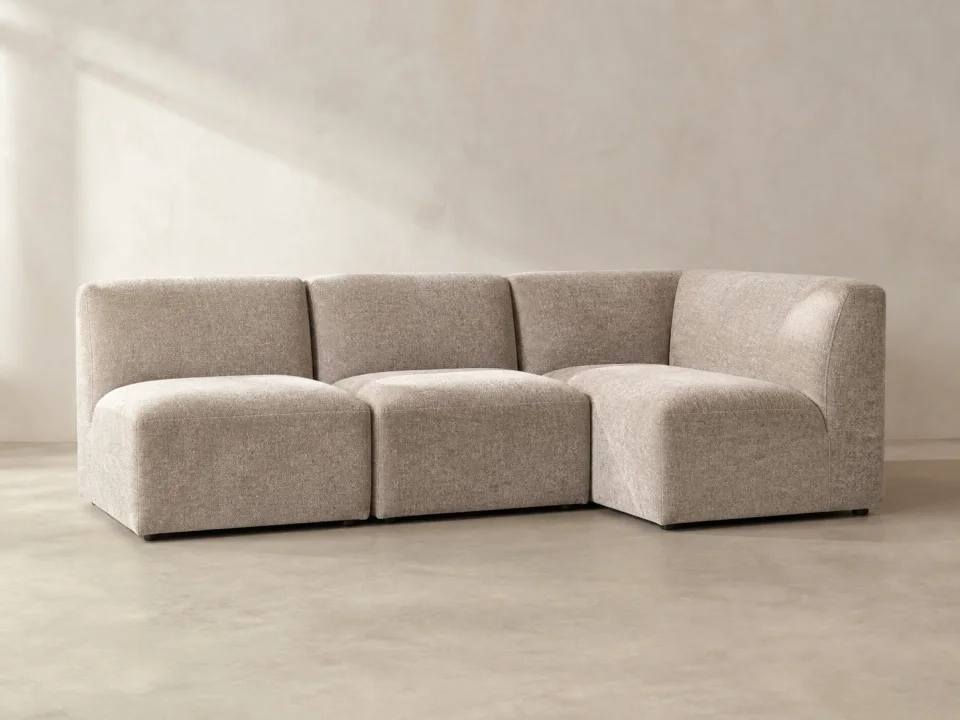
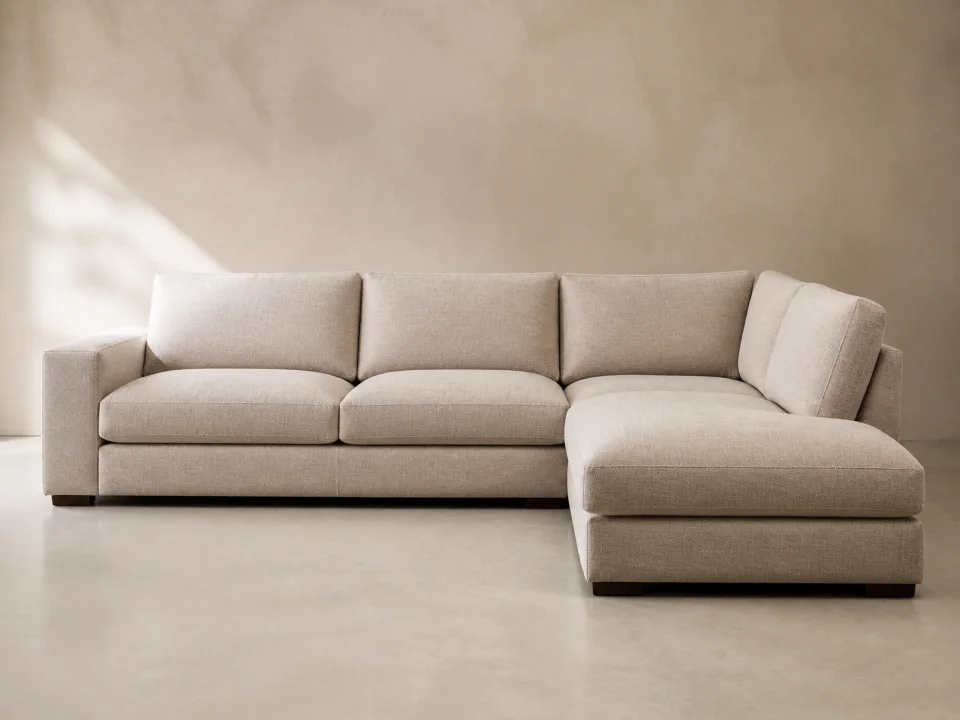
A modular sofa range that behaves like one system.
The hypothetical brief asks for an armless seat, corner, ottoman and chaise that can create several room layouts. The collection needs shared comfort, aligned surfaces and cartons that warehouse teams and customers can distinguish.
Configuration review exposes accumulated variation that may not be obvious when a module is inspected alone.
The risk
Developing each module separately can produce small differences in seat height, front alignment, depth and firmness. The pieces may look acceptable alone yet create steps and gaps in a complete sectional. Mirrored orientations and similar cartons add fulfillment risk.
The decisions
Create a module library with shared datums, finished dimensions, loaded-height relationships, foam zones, seam lines and connection or anti-movement strategy. Define allowed configurations and give every orientation a clear SKU and visual identifier.
The approval evidence
Review individual samples and at least the priority full configurations. Record module measurements, sitting continuity, front and back alignment, gaps, cover fit and carton identity. The bill of materials, configuration map and packaging artwork need the same revision.
Scenario 02 · Representative pathway
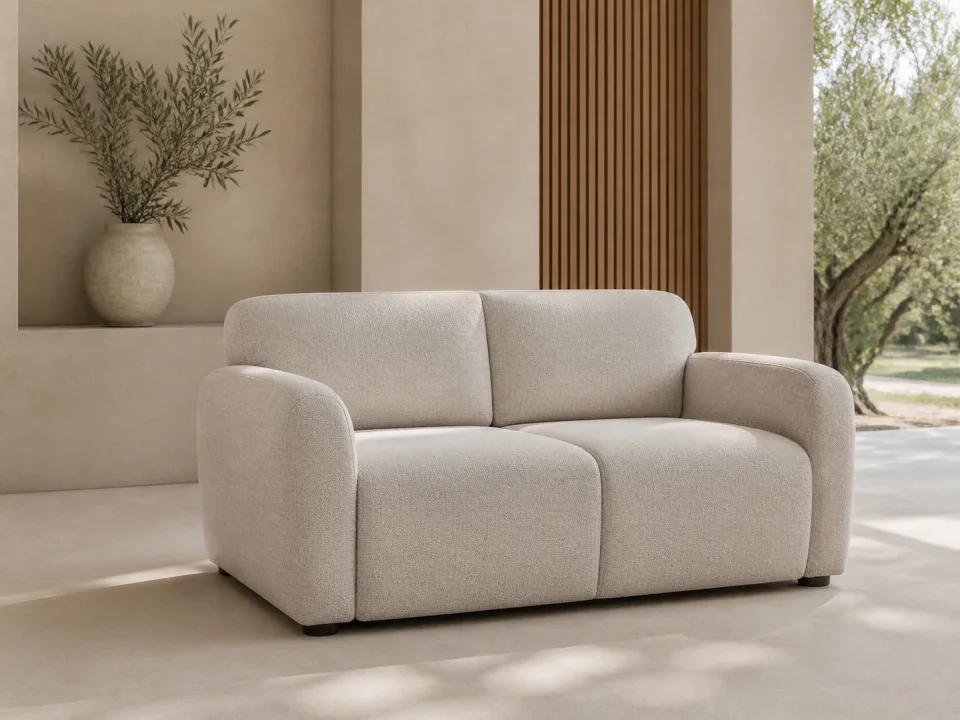
A compact loveseat for an e-commerce delivery limit.
The hypothetical brief begins with a two-seat foam sofa and a marketplace carton constraint. The temptation is to chase the smallest possible package before the sitting experience and recovery standard are stable.
A compact footprint still requires usable two-person seating and a model-specific packaging trial.
The risk
A carton target may drive thinner foam, excessive folding or pressure on arms and seams. An early dimensional estimate can also fail the channel's packed-weight, girth or handling rules once protection and the real carton are added.
The decisions
Confirm finished dimensions, usable seat, comfort direction and upholstery first. Identify the fulfillment rules, then trial orientation, protection, compression and carton construction using the approved product. Keep the product claim aligned with observed recovery.
The approval evidence
Record the product before packing, bag and protection, external carton dimensions, gross weight, hold condition and opening method. Observe silhouette, measurements, cover, seams and function at defined intervals after unpacking.
Scenario 03 · Representative pathway
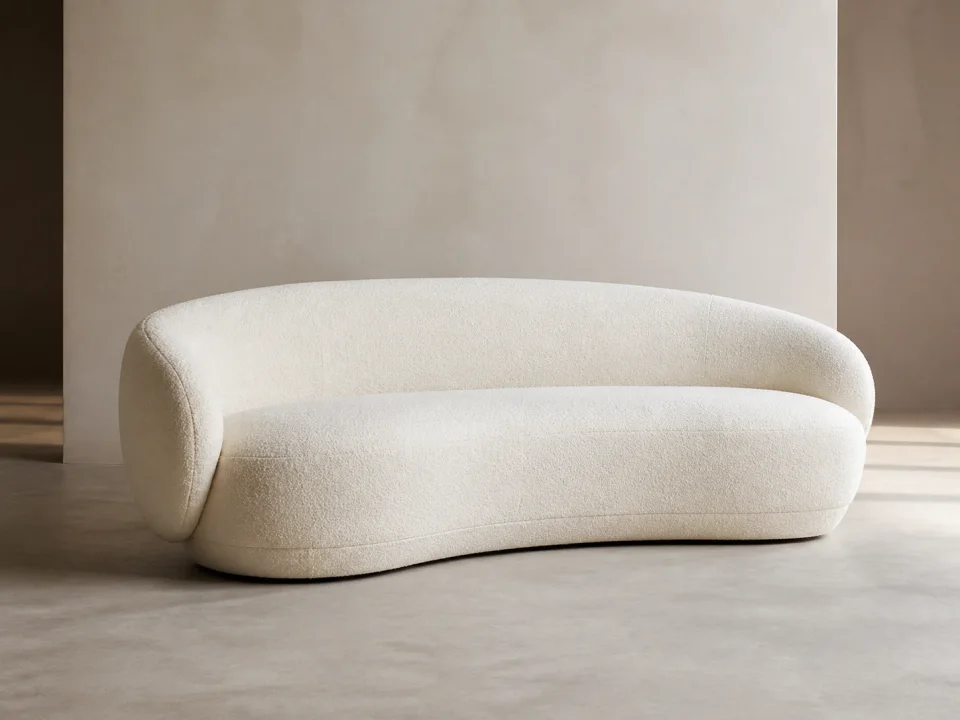
A sculptural boneless sofa that keeps its visual identity.
The hypothetical brief is a low, curved sofa with no rigid frame. Its retail appeal depends on a continuous silhouette, generous sitting posture and upholstery that follows the form without distracting seams.
When foam creates the support and silhouette, internal geometry and cover pattern must be approved together.
The risk
A photo communicates mood but not internal support. Foam changes intended only to improve shape can alter sitting feel; cover tension changes can pull curves out of proportion. Flexible edges make unrealistic precision another source of disagreement.
The decisions
Define posture, usable depth, support zones, reference curves, seam map, fabric direction and visible priority points. Use authorized design material and record what can change when material availability or packing creates a conflict.
The approval evidence
Pair the golden sample with dimensioned drawings, foam construction, fabric code and photographed appearance references. Review symmetry, loaded response, seam position, cover fit and post-pack form under consistent conditions.
Patterns across projects
The product changes; the evidence questions stay recognizable.
Who owns the design?
Confirm the buyer owns or is authorized to use drawings, branding and protected product elements before development.
Which market decides the rules?
Destination, channel and product classification guide labels, tests, documents and retail claims.
What is the approval unit?
It may be a single chair, a full modular configuration, both sofa-bed modes or a packed-and-recovered unit.
Which result is measurable?
Define dimensions, appearance, function, carton data and timing conditions before comparing outcomes.
Photographs become stronger evidence when paired with model identity, revision, measurement points and written decisions.
Build a real case record
Start collecting evidence before the launch story is written.
A credible case begins with a dated brief and known baseline. Keep sample revisions, annotated decisions, approved material codes, trial conditions, inspection records and final carton data. If an outcome is measured, retain the method and source rather than only the percentage used in marketing.
Customer permission should define whether the brand, product image, order size or result can be published. Confidential material can sometimes be anonymized, but it should not be transformed into a claim the evidence cannot support.
Owned design or authorized reference, use, dimensions and configurations
Market
Destination, channel, labeling, testing and responsible-party requirements
Commercial
Quantity by model and color, target timing, quotation scope and Incoterm
Approval
Golden sample, documents, decision owners and change-control route
Packaging
Fulfillment limits, trial conditions, carton data and customer instructions
Evidence
Inspection plan, test reports, traceability and permission for future publication
Project example FAQ
Transparency before storytelling.
These examples teach process and do not claim anonymous commercial success.
Are these named customer case studies?
No. They are representative development scenarios without claimed customer identities, order volumes or commercial results.
Why are compression savings not shown?
They depend on the exact model, trial and current logistics rules. A category-wide number would be misleading.
Can confidential customer projects be shared?
Only with authorization. Relevant capability evidence or anonymized records may be discussed without exposing protected information.
How should buyers use these examples?
Select the nearest pathway, then rebuild it around the actual product, market, quantity, constraints and evidence.
What makes a publishable case study?
Customer permission, a dated brief, identified revision, baseline method, verified outcomes, records and stated limitations.
Content responsibility
Reviewed by the ALF Home Product Team
Every scenario is explicitly representative. No brand relationship, completed order, shipment volume, saving, quality improvement or sales outcome is implied. Specific results will only be published with evidence and appropriate permission.
Share the product, destination, order plan, carton constraint and evidence requirements. We will organize a development route around the actual project.