Foam sofa manufacturer for comfort you can specify.
“Soft” is an impression, not a production standard. ALF Home develops foam sofas by translating the intended sit into layer positions, material properties, dimensions, cover behavior and sample checkpoints that purchasing and quality teams can understand.
Full-foam furniture uses shaped and layered foam to establish support, comfort and the finished silhouette.
Technical definition
What is a foam sofa?
A foam sofa is seating in which foam makes up a substantial part of the comfort and support system. In a full-foam sofa, shaped foam also creates most of the body and form without a conventional rigid frame. Other products may combine foam cushions with supporting components, so the name alone does not reveal the complete construction.
A useful specification identifies the foam type or grade, density, firmness, thickness, location and approved supplier reference where applicable. It also records how the layers are bonded or contained, how the cover fits and how the finished sofa is measured. Buyers should approve the system rather than selecting material from a single number.
Foam language
Density, firmness and resilience answer different questions.
These terms are often mixed together in furniture conversations. Separating them makes sample feedback clearer and quotations easier to compare.
D
Density
Density is mass per unit volume. It can help identify a material grade and contributes to cost and performance discussions, but it does not tell you exactly how firm a seat will feel. Density should be confirmed with the foam type and layer position.
F
Firmness
Firmness describes resistance to indentation under a defined method. Two foams can have similar density and different firmness. Buyers should use an agreed test reference or approved physical sample rather than terms such as medium-soft without context.
R
Resilience
Resilience concerns how foam responds and returns after loading. It influences the liveliness of the sit and is relevant to recovery after packaging. The appropriate response depends on whether the design aims for supportive seating or a slower, enveloping feel.
C
Compression set
Compression-set behavior helps indicate how well foam returns after being held under compression under specified conditions. The test method and conditions matter; a broad claim without method, duration and sample details is not useful for approval.
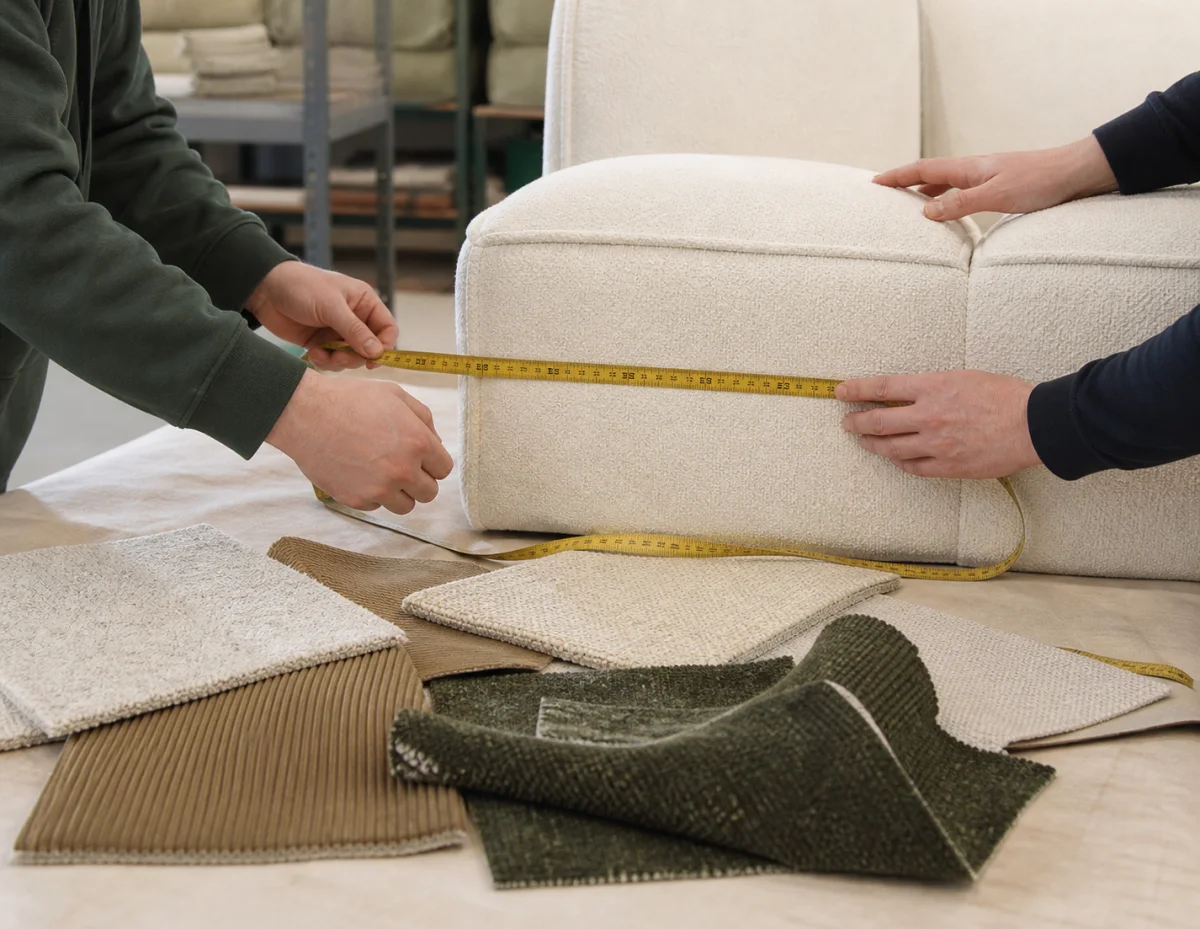
A physical sample allows teams to compare measurable dimensions with the real sitting and upholstery experience.
Layer construction
One foam rarely needs to do every job.
A sofa may use a stable lower section to support the overall form, a transition layer to spread load and a softer upper layer for immediate comfort. Arms and backs can require different shaping from the seat. Layering makes it possible to tune the product, but extra layers are not automatically better; each should have a purpose and a controlled material reference.
For deep seating, the relationship between seat depth and back support is as important as the foam itself. A very soft seat can feel inviting at first yet make standing difficult for some customers. An upright retail sofa may need a different balance from a low boneless couch intended for lounging.
Sample evaluation should include more than a brief hand press. Sit in common positions, use the seat edge, assess the back angle and compare recovery after loading. Record approved changes by layer and dimension so that “make it a little softer” becomes an actionable revision.
Private label directions
Choose the sitting experience before choosing the fabric.
These formats show how one material category can serve distinct consumer needs. All dimensions and material specifications are confirmed for the individual project.
Balanced support
Everyday foam sofa
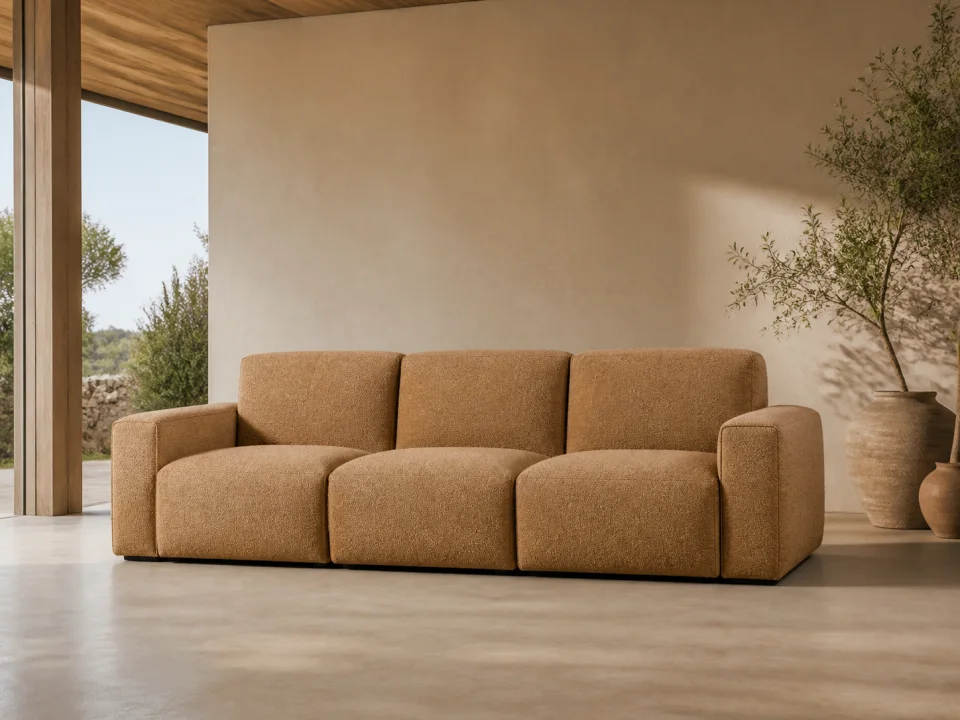
A familiar sofa proportion with a controlled seat edge and supportive back. It suits brands that want foam-led construction without an extremely low or sculptural appearance.
Deep comfort
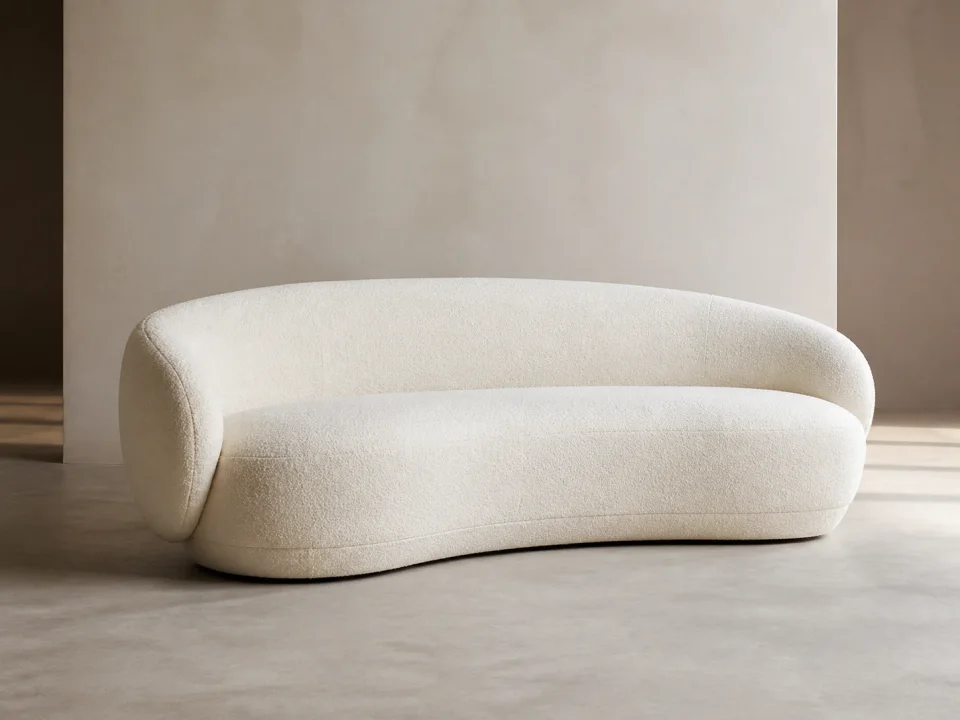
Lounge-soft sofa
A low, deep and rounded direction for relaxed seating. The design requires careful back angle, edge support and cover tension to keep softness intentional.
Dual use
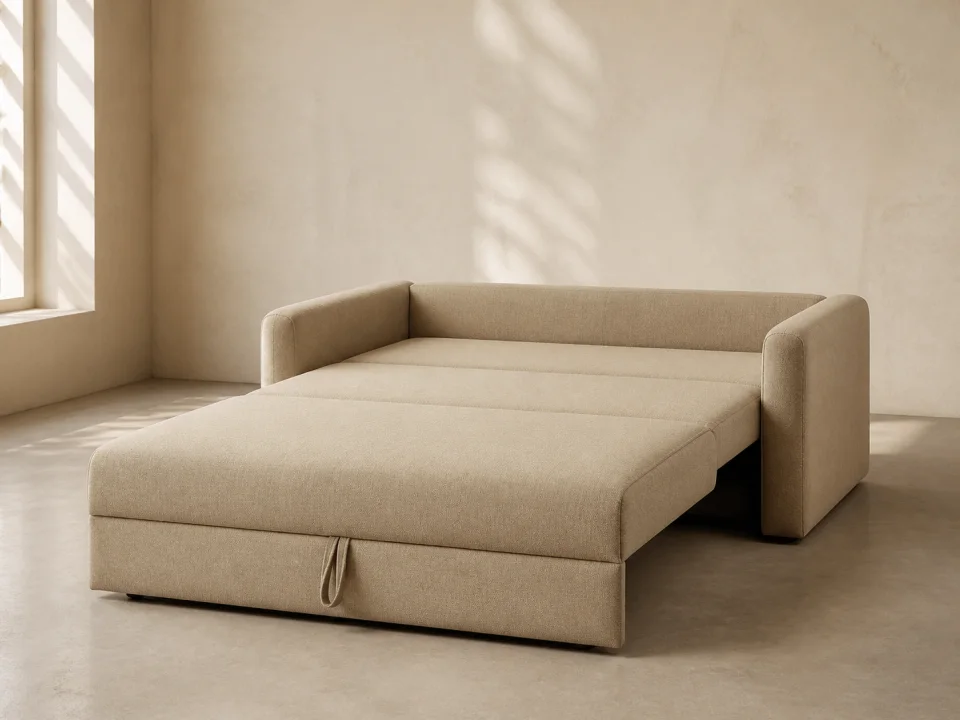
Foam sofa bed
A convertible format for occasional sleeping without a heavy pull-out mechanism. Sitting and sleeping surfaces should be evaluated separately before approval.
Durability questions
“How long will the foam last?” needs a defined product and use case.
Service life cannot be predicted responsibly from density alone. User weight distribution, frequency of use, layer thickness, firmness, climate, cover tension and the underlying support all influence how a seat changes. Test results are meaningful only when the method and acceptance criteria are known.
Perceived sagging can also come from several sources. The foam may soften, the upper comfort layer may settle, the cover may stretch or the structure beneath may not support the span. A buyer investigating an issue should compare dimensions, foam samples, cover fit and usage conditions rather than assuming one cause.
Define before production
Approved foam grade for each layer and location
Density and firmness references with test method
Finished dimensions and measurement tolerance
Appearance after agreed loading or conditioning
Material-substitution approval procedure
Recovery checkpoints if vacuum packaging is used
Foam meets upholstery
The cover changes how the same foam feels and looks.
Fabric stretch and pattern tension can make a surface feel tighter, show wrinkles differently or restrict a curved form from recovering cleanly.
Corduroy
Directional ribs create a casual, tactile surface. Panel orientation and alignment should be specified across seats, arms and modules.
Chenille
A versatile woven option with soft hand feel. Color shading, backing and seam performance need evaluation on the final shape.
Bouclé
Looped texture complements curved foam forms and can visually soften transitions. Snag resistance and cleaning expectations should match the sales channel.
Velvet and woven polyester
Velvet demands pile-direction control, while woven polyester covers a broad performance range. Neither description is a complete specification without a fabric code and approved swatch.
Compression suitability belongs to the approved construction, not to the broad term “foam sofa.”
Compression suitability
Full foam may be compressible, but every model still needs a trial.
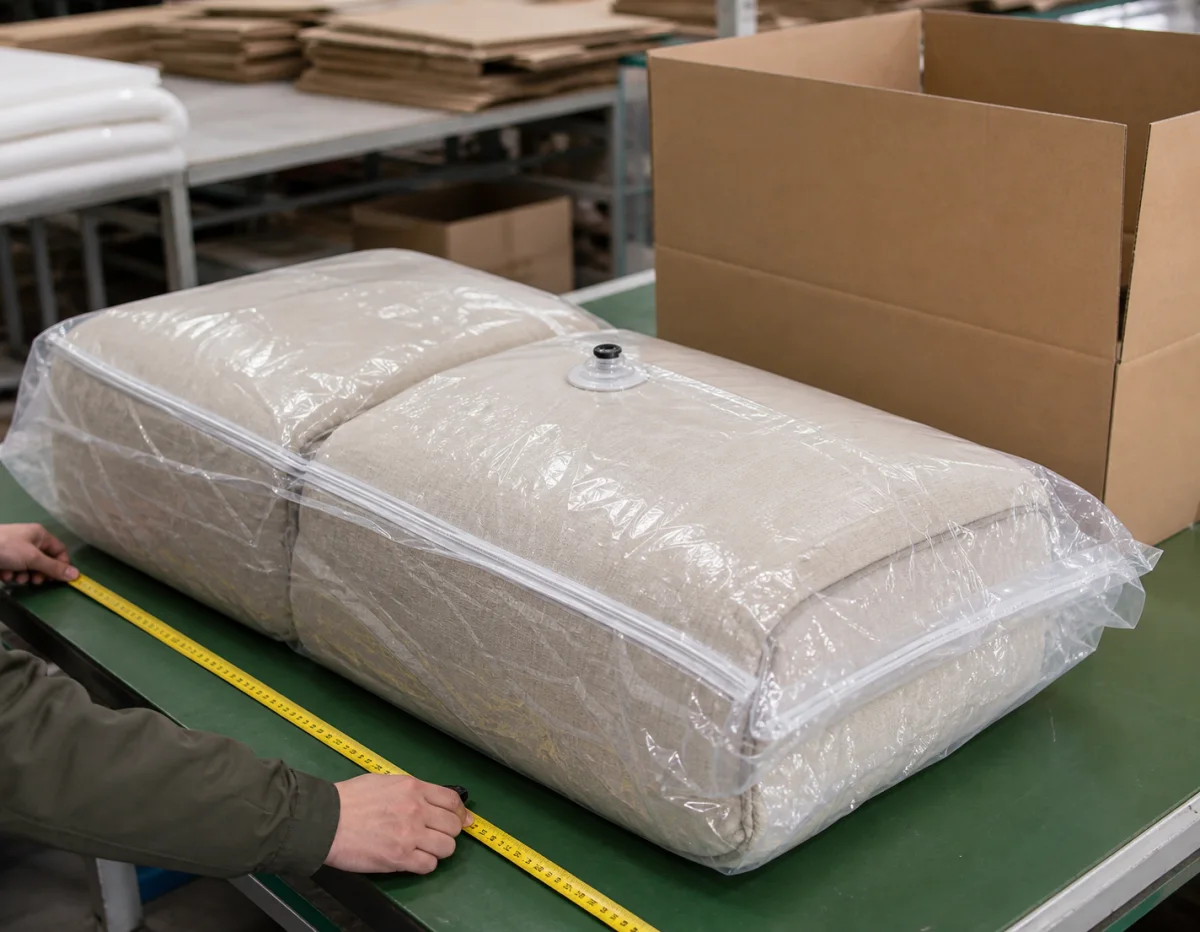
Foam-led construction often supports compact packaging. The actual result depends on layer properties, thickness, product geometry, fabric and compressed-storage conditions. A representative sample should be packed, held for an agreed period and checked after opening.
The review can include usable recovery, final dimensions, surface appearance, seams and sitting feel. Carton dimensions, gross weight and estimated loading quantity should be recorded after the package is approved. See the dedicated compression packaging process or compare the packaging-led compression sofa category.
Manufacturer evidence
Company information for supplier review.
ALF Home’s manufacturing business was registered on June 28, 2012. The company profile records 14 years of furniture-industry and export experience, a reported 250,000 m² building area and annual export revenue of US$10,965,053. Commercial communication is available in English.
FSC, two CE documents and REACH documentation are recorded as available for buyer review. Certification scope, certificate numbers, issuers, validity and relevance to the selected foam, fabric and finished product must be verified against current documents.
2012
Registered
14 years
Export experience
250,000 m²
Reported building area
FSC · CE · REACH
Documents subject to scope review
Foam sofa FAQ
Material answers for sourcing teams.
Final values must match the approved model and applicable test method.
What is a full-foam sofa?
A full-foam sofa relies predominantly on shaped foam for support, comfort and form rather than a conventional rigid frame. Multiple foam grades may be layered to balance stability and softness.
Is foam density the same as firmness?
No. Density measures mass per unit volume. Firmness describes resistance to indentation under defined conditions. Higher density does not automatically mean a firmer seat.
Which foam density is best for a sofa?
There is no universal best density. The choice depends on foam type, layer position, thickness, geometry, target comfort, expected use and test requirements. Approve the complete construction rather than one isolated value.
Can a foam sofa use memory foam?
Memory foam can be evaluated as a comfort layer, but it responds differently to temperature and load and may not provide adequate structural support by itself. Its role should be assessed within the full layer system.
How can buyers reduce the risk of sagging?
Use a construction appropriate for the span and intended use, define each material, test a representative sample and establish dimensional and appearance checkpoints. Cover tension and support beneath softer layers also matter.
Content responsibility
Reviewed by the ALF Home Product Team
Material explanations were reviewed for sourcing clarity. No specific density, firmness, durability period, MOQ, recovery time or lead time is presented as universal; those values require an approved construction and defined test conditions.