Foundation zone
Helps establish the main geometry and limits excessive movement. Its relationship with the floor, edges and adjoining modules influences stability and alignment.
 Request a quote
Foam · fabric · construction evidence
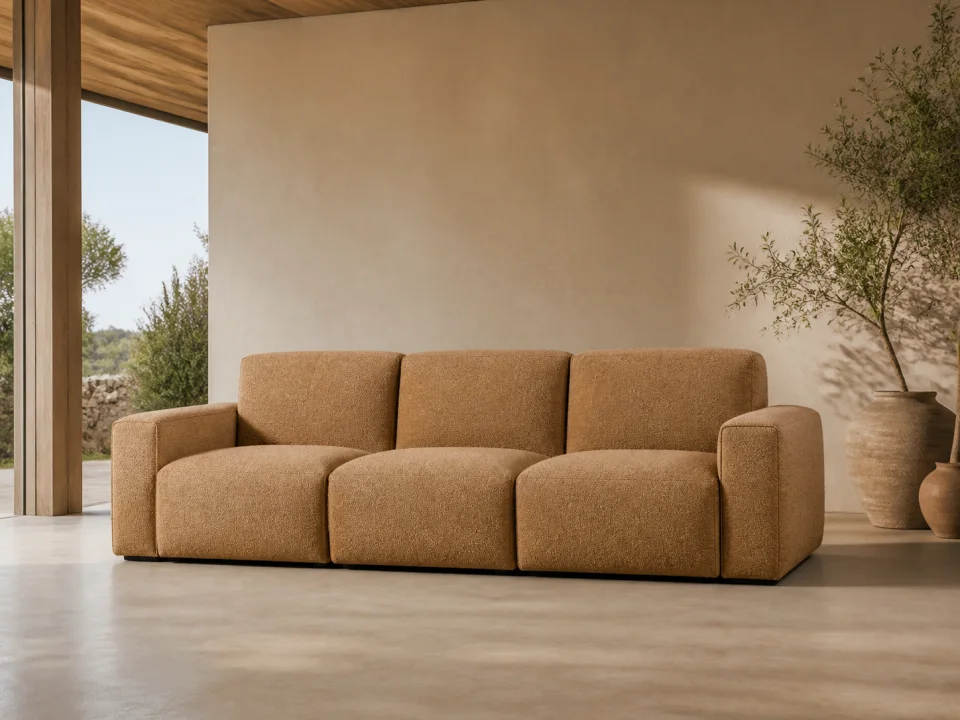
A list of material names does not explain how a sofa will sit, look, recover or age. ALF Home develops foam layers and upholstery around their position in the product, the approved sample, the packaging method and the requirements of the destination market.
Direct answer
Define what each foam zone must do, where it sits in the construction and how the finished sample should feel and recover. Record material identity, density and firmness test references where relevant, component dimensions, layer position and approved alternatives.
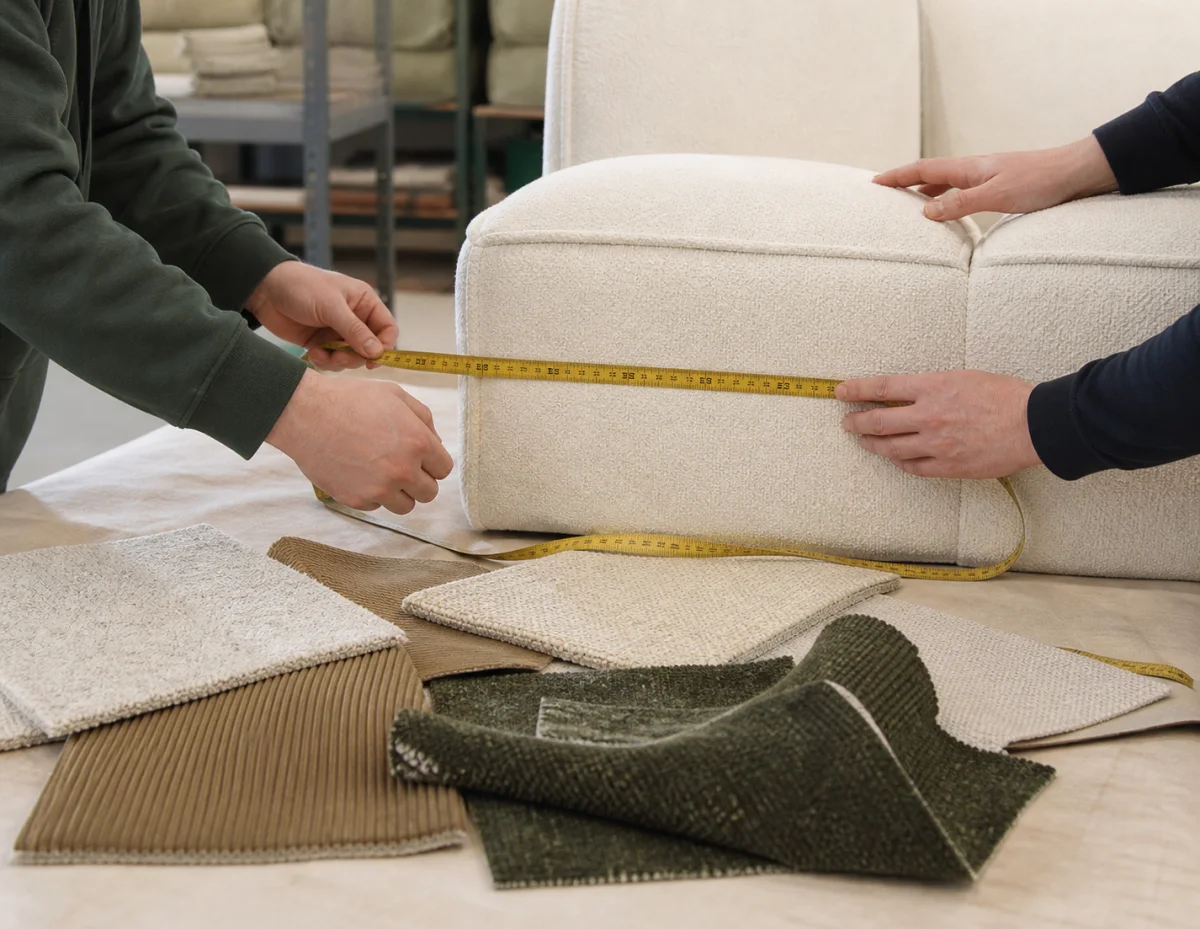
For upholstery, define supplier code, composition, color, direction, backing, hand feel, care, performance requirements and cover details. Then approve the textile on the actual sofa, because stretch, seam appearance and compression behavior depend on the full construction.
Foam as a system
Layer names vary by construction. The useful specification describes the function and position rather than assuming one grade can solve every area.
Helps establish the main geometry and limits excessive movement. Its relationship with the floor, edges and adjoining modules influences stability and alignment.
Balances initial softness with support through the intended posture. Thickness, area and layers beneath it affect how a firmness value feels in use.
Softens contact at fronts, arms and curved profiles while preserving the approved silhouette and seam relationship.
Works with back angle, height and seat depth. A soft back cannot correct proportions that place support in the wrong location.
Creates boneless curves, channels or raised forms. Cutting, bonding and cover tension must maintain the visual reference.
Every zone must be reviewed after the proposed compression method; a successful seat surface does not guarantee corners or thin transitions recover equally.
Common sourcing confusion
Foam density describes mass within a stated volume. Firmness describes resistance under a defined test method and conditions. A higher density is not automatically a harder sitting feel, and two foams with similar firmness results can have different composition or long-term behavior.
Numbers need units, methods and tolerances. A quotation that says only “high-density foam” leaves the team without enough information to purchase, inspect or compare alternatives. The specification should also state where the material is used and which approved sample it supports.
Comfort remains a product-level decision. Seat geometry, layer thickness, bonding, cover tension and body contact area influence perception. ALF Home combines measurable references with physical sample approval rather than claiming that one number predicts every user's preference.
From roll to cover
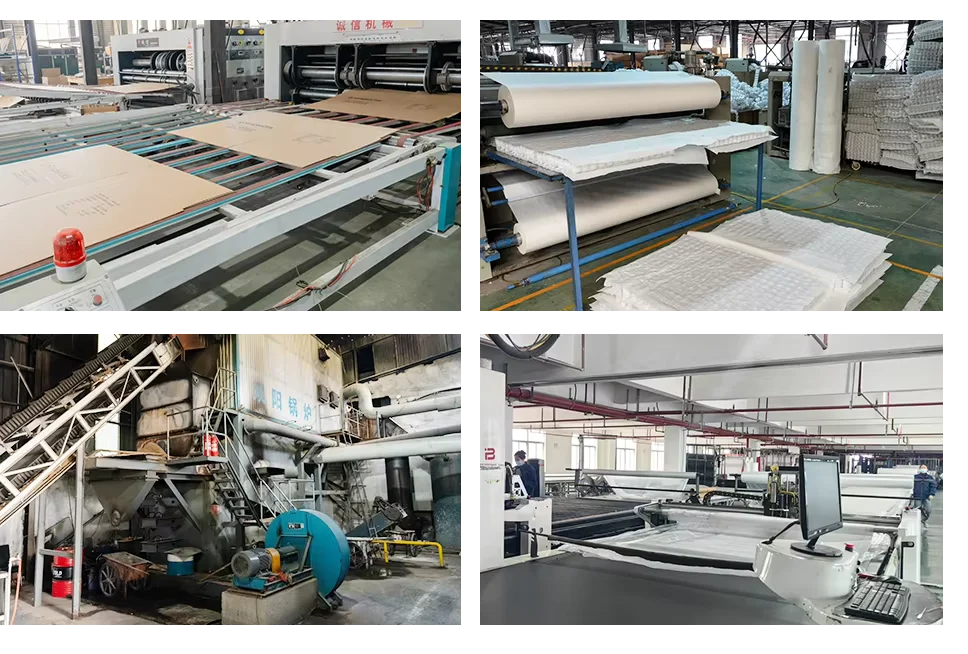
A small swatch helps evaluate color and hand feel, but the finished cover reveals scale, direction, stretch, seam behavior and the way light moves across the sofa. Pile, nap or pattern direction should be controlled so neighboring panels and modules look intentional.
Fabric inspection and marker planning can address visible defects, width and direction before cutting. Sewing then controls seam type, allowance, stitch appearance, reinforcement, closures and panel identity. Curved full-foam shapes make tension differences especially visible.
Review the actual cover after fitting and, for compression products, after the approved packaging trial. Backings, coatings and textured faces can respond differently to folding and pressure.
Textile brief
The destination and intended use guide which properties require evidence. No generic “performance fabric” label covers every market or exposure.
Supplier, article code, composition, width, weight where applicable, backing, finish and approved color.
Hand feel, texture scale, sheen, face direction, pattern repeat, lot or shade relationship and sample reference.
Cutting behavior, seam appearance, stretch, edge handling, zipper areas and fit on curves or channels.
Fixed or removable cover, validated cleaning method, drying, replacement-cover logic and accurate care label.
Applicable abrasion, colorfastness, pilling, seam, light or other criteria defined by product and market.
Creasing, backing condition, surface pressure, fold location and recovery after the exact compression method.
Fixed versus removable
A fixed cover can support a clean, closely controlled silhouette. The care plan should explain realistic spot cleaning, and the fabric must suit that use. Service access, where needed, should remain intentional rather than hidden behind an unresolved opening.
A removable cover adds closure, access, labeling and refitting decisions. “Washable” needs validated instructions for the selected textile and construction. The cover should return to its approved fit without exposing components or creating a misleading expectation of easy replacement across different product revisions.
Separate replacement covers can support an after-sales program when material codes, pattern revision, color control and compatibility remain documented.
Beyond foam and fabric
Application should maintain layer position without unplanned hard areas, odor concerns or incompatibility with the selected foam and process.
Type, position, puller access and concealment affect use, appearance and packaging. Children's products require age- and market-aware review.
Floor contact influences movement, ventilation and care. Performance depends on the real floor and complete product, not a material name alone.
Fiber or law labels, care, warnings, traceability and private label artwork should match the destination and approved product.

Documents with boundaries
Material evidence may include supplier specifications, composition declarations, safety data where relevant and test reports required by the buyer or market. Review sample identity, source, composition, color or finish where applicable, method, date, result and scope.
ALF Home records FSC, two CE documents and REACH documentation as available for buyer review. Their relevance must be verified against the legal entity, product or material and destination. A logo or report from another material should not be extended to the current sofa without justification.
Special contexts add questions. Children's seating requires age- and market-aware review. Covered-outdoor concepts require a defined exposure, care and storage plan.
Material change control
State the current material, proposed source or specification and reason for change.
Review measurable properties, appearance, hand feel, processing and documentation.
Determine which comfort, cover, testing, packaging and prior approvals may be affected.
Use sample or trial evidence appropriate to the risk before releasing production.
Update the bill of materials, sample status and relevant documents so teams use the same revision.
Supplier context
ALF Home's supplied registration date is June 28, 2012. The company profile records 14 years of furniture-industry and export experience, a reported 250,000 m² building area and annual export revenue of US$10,965,053.
Material selection is coordinated with OEM development, manufacturing, quality control and packaging approval.
Materials FAQ
Final specifications depend on the exact product and destination.
No. Density is mass per unit volume; firmness is resistance under a defined test. They are not interchangeable.
No single foam is best for every sofa. Layer role, posture, shape, recovery, upholstery and market requirements guide the construction.
Approve supplier code, composition, color, direction, backing, hand, care, performance requirements and the fabric on the finished sample.
Not automatically. Check sample identity, source, composition, finish, method, date and scope before applying a report.
Identify and compare the change, assess effects on earlier approvals, verify as needed and update controlled records.
Specification responsibility
This guide separates density, firmness, performance language and document scope. It does not prescribe invented foam grades, numeric tolerances or universal test requirements without a model and destination.
Last reviewed: August 11, 2026 · Read the sourcing FAQ · Discuss materials
Buyer knowledge cluster
These editorial guides answer narrower questions and return to this page when a buyer needs product scope, manufacturing support or a project discussion.
2 connected guides
Move from this capability into focused buyer questions without leaving the approved product and evidence context.
Material specification
Share the product, intended use, market, comfort direction, fabric preference, care expectation and required evidence.
Review material options