Recovery behavior
Layer types, geometry, thickness and bonding are reviewed for shape recovery and intended sitting response after opening.
 Request a quote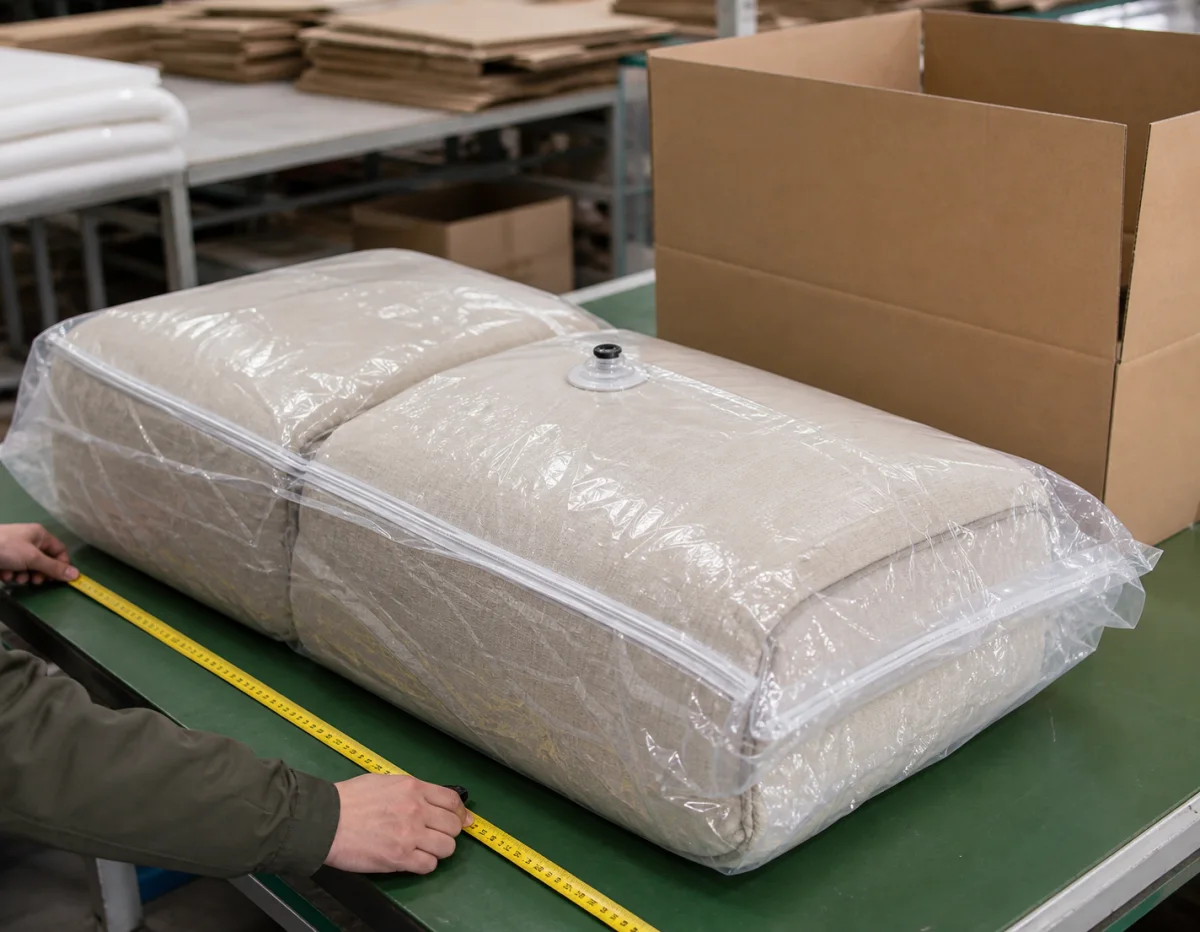
Reduced-volume furniture logistics
A smaller carton can improve handling and freight planning, but the product inside remains the priority. ALF Home develops vacuum packaging around the exact foam construction, upholstery, shape, protection and recovery criteria approved for each SKU.
Direct answer
Compression packaging removes air from a suitable foam sofa inside a protective barrier so the unit can be folded or contained within a reduced shipping volume. It is commonly used for full-foam, boneless and selected modular seating intended for e-commerce and global distribution.
The method is not simply “vacuum it smaller.” Pressure, orientation, duration, fabric behavior, seams, closures and carton protection affect the result. The factory approves a repeatable method only after the exact model has been packed, stored under defined trial conditions, opened and reviewed.
Go / revise / stop
Suitability is a technical decision. The product team reviews which elements can flex, which need protection and which may rule out the proposed method.
Layer types, geometry, thickness and bonding are reviewed for shape recovery and intended sitting response after opening.
Fabric backing, pile, coating, stretch, seams and closures can react differently to pressure, folding and time in the bag.
Arms, backs, corners and modular parts need an orientation that avoids unreasonable stress or permanent visual lines.
Connectors, mechanisms, zippers and accessories require isolation or may make a different pack-out more appropriate.
Define what acceptable shape, dimensions, surface and function look like—and when observations will be recorded.
Expected storage duration, temperature, handling, fulfillment limits and destination influence the trial design.
Trial sequence
Confirm SKU identity, conditioning, dimensions, shape, upholstery and visible condition before the trial begins.
Position closures and accessories, add approved barriers or edge protection, and arrange components in the documented orientation.
Use the selected bag, equipment and method. Observe the product rather than forcing it toward an arbitrary reduction target.
Secure the compressed form without damaging surfaces, then place it in the specified carton with labels and instructions.
Record duration and relevant environment so the later recovery observation has useful context.
Follow the customer-facing instructions, then review shape, dimensions, seams, cover and function at defined intervals.
Recovery is a curve
Foam begins expanding when the vacuum barrier is released, but different zones may recover at different rates. A thick seat, rounded arm and thin back transition do not necessarily move together. Upholstery can also settle as the internal shape returns.
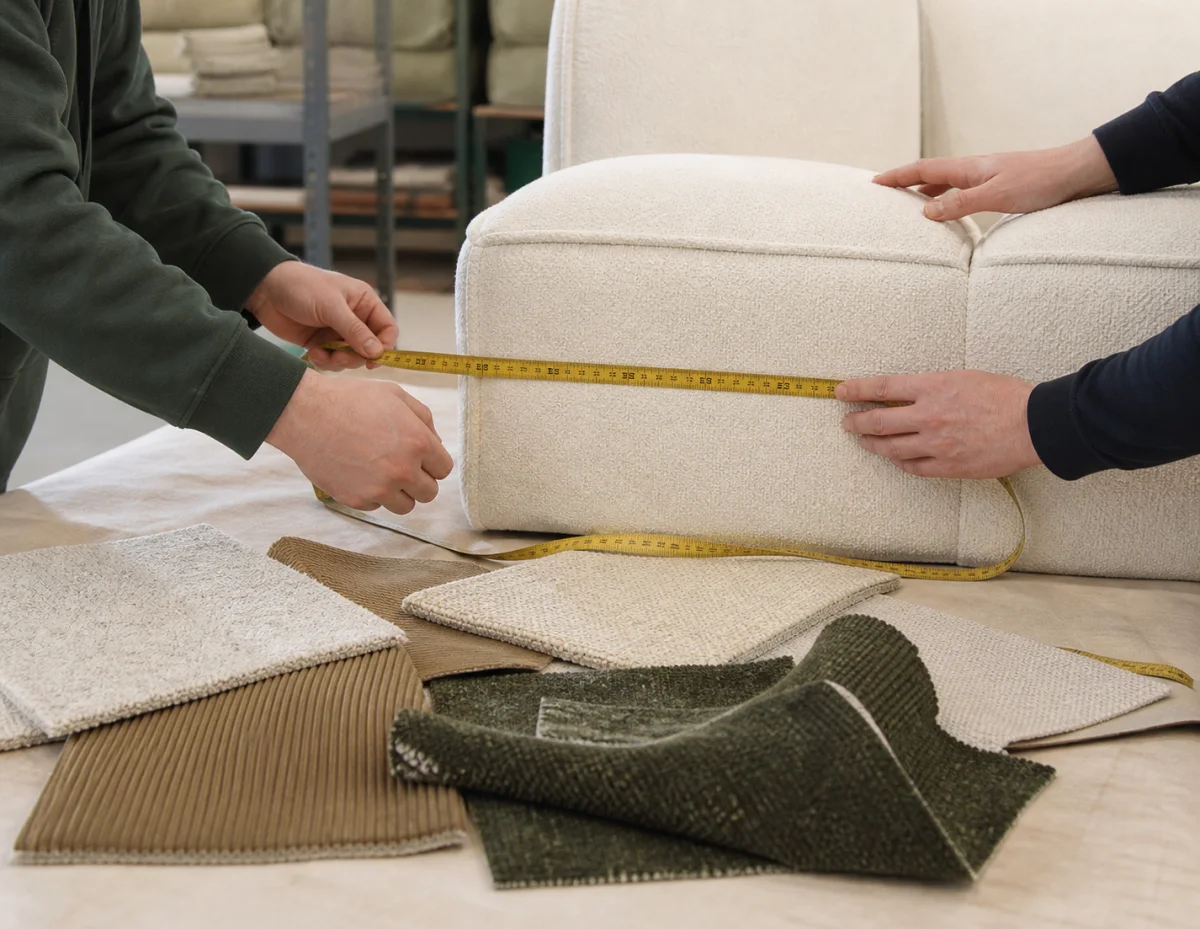
The trial plan records observations at useful intervals rather than selecting the most flattering moment. Measurements should use consistent reference points and conditions. Appearance review can include seam alignment, surface creasing, corner form and whether components meet correctly.
A published recovery instruction must reflect the tested model and expected customer environment. Temperature, storage duration and material changes may influence results. For that reason, ALF Home does not state one universal number for every compression sofa.

Carton anatomy
Retail, warehouse and customer information should all point to the same approved SKU.
Board and construction are selected against packed size, gross weight, handling and agreed distribution testing—not appearance alone.
Model, color, orientation, module number and quantity reduce fulfillment errors and incomplete sectional deliveries.
Orientation, opening cautions and required logistics symbols should be clear, applicable and consistent across artwork versions.
Brand elements, barcode, responsible-party details and market-required information remain controlled buyer approvals.
Illustrations and concise language explain tool caution, bag removal, placement, component identification and recovery expectations.
Packaging instructions can identify the included materials and applicable local disposal guidance without making unsupported sustainability claims.

Data after evidence
Carton cubic volume is calculated from the final external length, width and height. Container or truck planning then considers orientation, allowable stacking, weight distribution, palletization where required and practical loading clearances. A theoretical division of container volume by carton volume can overstate usable quantity.
E-commerce channels may use dimensional weight, girth limits or oversize surcharges. The buyer should provide the intended fulfillment rules before packaging approval so a carton does not meet one shipping plan while failing another.
Record net product weight, gross packed weight, carton dimensions and unit count from the released pack-out. Recheck them when construction, fabric, included parts or carton materials change.
Failure modes
Investigate foam zone, folding orientation, pressure, storage conditions and whether the acceptance window is realistic.
Review textile characteristics, panel arrangement, internal protection and whether care instructions reflect the actual result.
Check component geometry, bonding, loading direction and concentrated carton pressure.
Review material, sealing area, sharp contact points, handling and the required time under containment.
Evaluate board, packed form, empty space, closures, gross weight, distribution route and test protocol.
Improve carton identity, opening sequence, module map, recovery guidance and support information.
Release checklist
Supplier context
ALF Home's manufacturing business was registered on June 28, 2012. The company profile records 14 years of furniture-industry and export experience, a reported 250,000 m² building area and annual export revenue of US$10,965,053. Commercial communication is available in English.
FSC, two CE documents and REACH documentation are recorded as available. Each document's issuer, validity and product or material scope must be checked against the current project. None establishes a universal compression ratio or recovery result.
Packaging FAQ
Every numeric result depends on the exact approved model and trial conditions.
It removes air from a suitable protected foam sofa so it can be contained at reduced volume using a model-specific approved method.
There is no universal percentage. Trials balance carton objectives with recovery, cover condition and product protection.
It varies with foam, upholstery, method, duration, temperature and acceptance criteria. Use tested model guidance.
No. Construction, hard components, shape, cover and intended performance determine suitability.
Approve orientation, bag, protection, method, carton, labels, instructions, packed data, recovery checks and handling for the exact SKU.
Content responsibility
This guide explains packaging development without inventing a reduction percentage, recovery time, carton size, container quantity or freight saving. Those outputs require a model-specific trial and current logistics data.
Last reviewed: August 11, 2026 · Review manufacturing · Request a packing trial
Buyer knowledge cluster
These editorial guides answer narrower questions and return to this page when a buyer needs product scope, manufacturing support or a project discussion.
2 connected guides
Move from this capability into focused buyer questions without leaving the approved product and evidence context.
3 connected guides
Move from this capability into focused buyer questions without leaving the approved product and evidence context.
Model-specific packaging
Share the model, construction, fabric, destination, fulfillment limits and expected storage conditions. We will define the trial questions before promising the carton.
Plan compression packaging