Requirement review
Resolve contradictions among drawings, samples, purchase order, material list, artwork, tests and packaging instructions.
 Request a quote
OEM furniture quality framework
Final inspection cannot repair an unclear specification. ALF Home organizes quality around approved requirements, material identity, first-piece confirmation, production checkpoints, finished-product evidence and controlled corrective action.
Direct answer
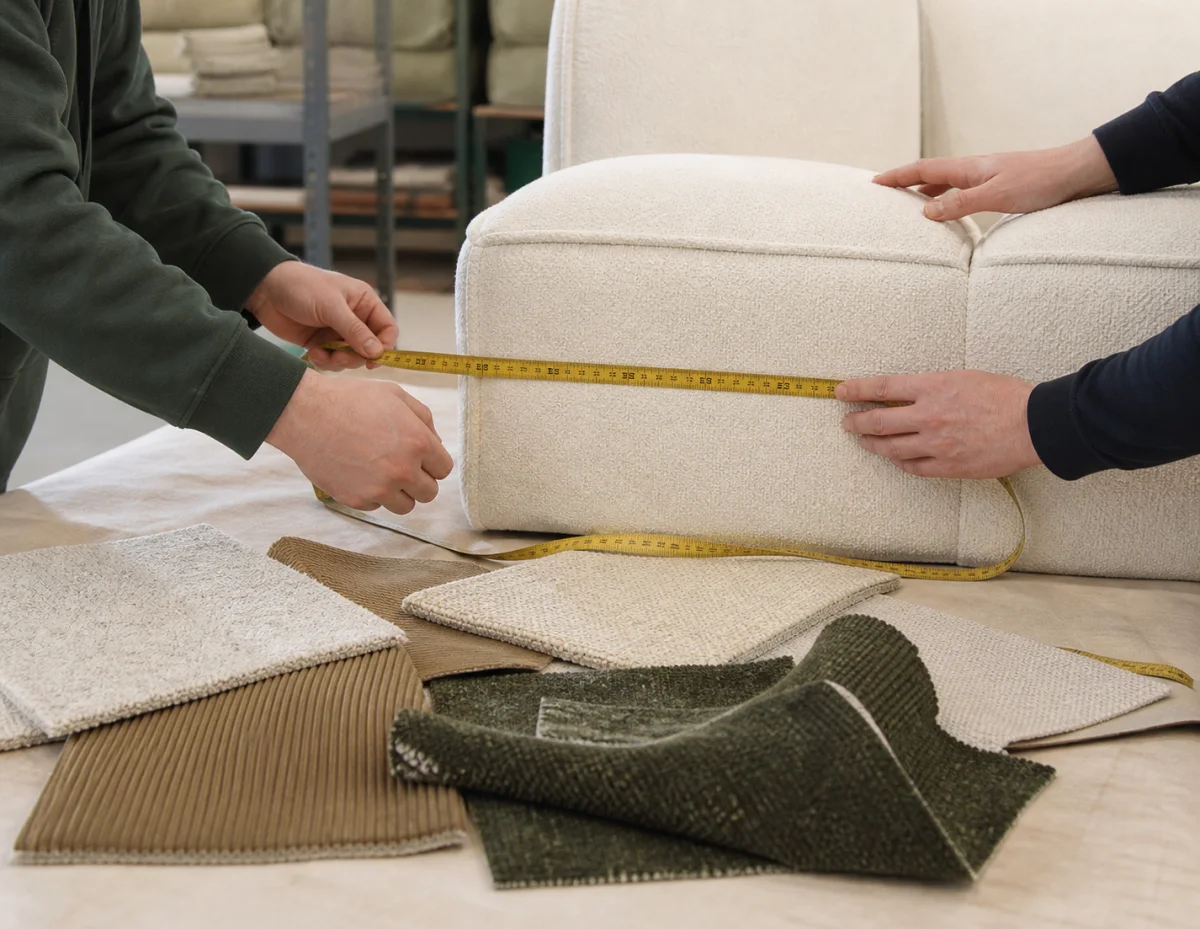
Inspection can verify model and color identity, construction, dimensions, foam and fabric references, shape, seam placement, upholstery fit, function, labels, components and carton information. For vacuum-packed products, the approved pack-out and defined recovery review add another set of checkpoints.
The list changes by model and order. A modular sectional emphasizes alignment and carton identity; a sofa bed requires both sitting and conversion checks; a sculptural boneless sofa makes symmetry and cover tension especially visible. The buyer and manufacturer should agree priorities before production.
Quality control loop
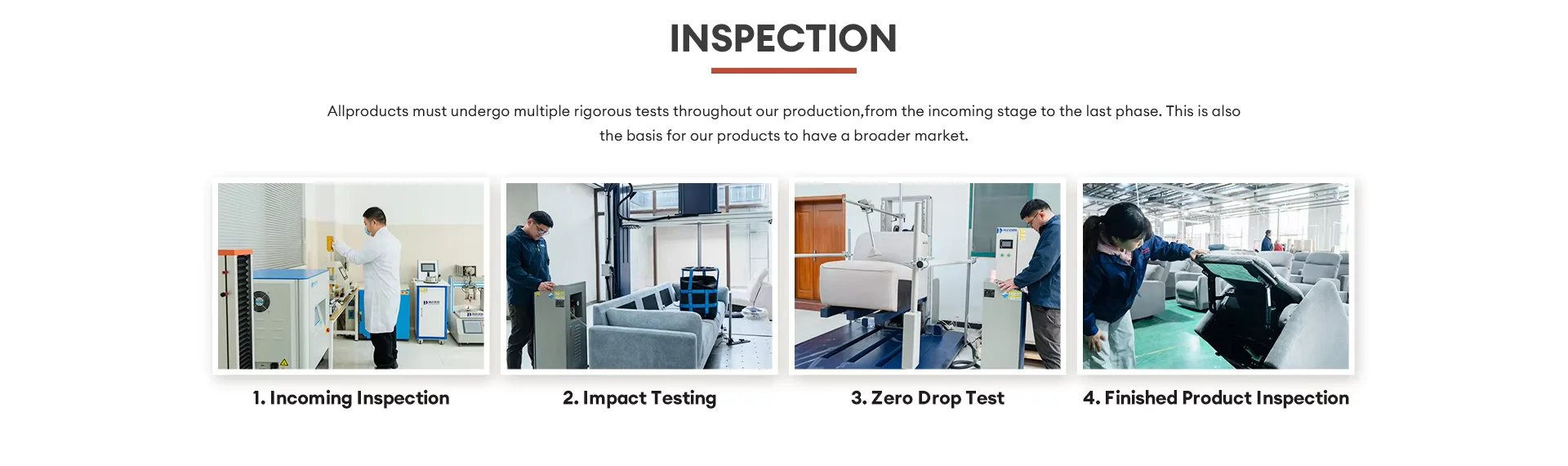
Checks are placed where a mismatch can still be contained, understood and corrected—not only when every unit is already boxed.
Resolve contradictions among drawings, samples, purchase order, material list, artwork, tests and packaging instructions.
Identify order-specific foam, fabric, closures, labels, cartons and components against released purchasing references.
Confirm that actual materials and line methods produce the specified construction, dimensions, appearance and function.
Observe critical results after foam conversion, bonding, cover sewing, assembly and fitting while correction remains practical.
Apply the agreed sampling and acceptance method to completed units before pack-out or shipment release.
Verify SKU, labels, parts, instructions, protection, compression method, carton and recorded packed data.
Contain affected product, describe the issue, investigate cause, assign actions and verify effectiveness.

Reference hierarchy
An approved physical sample communicates shape, hand feel and visual relationships that can be difficult to express in a table. It should be identified with model, date and revision, stored appropriately and protected from being confused with a rejected or superseded sample.
The sample does not answer every question. Drawings define measurement points; the bill of materials identifies construction and material codes; an appearance standard can show acceptable and unacceptable examples; the inspection plan defines sampling and decisions. When references conflict, the responsible team must resolve the priority in writing.
Flexible foam furniture needs realistic tolerances. The objective is consistent customer experience and module compatibility, not false precision. Critical measurements should state how the product is positioned and conditioned when checked.
Measure with context
Overall width and height are useful, but they may not reveal whether a sofa sits as approved. Seat height, usable depth, back angle, arm relationship and the alignment between modules can shape the experience more directly. The inspection plan selects points that matter for the design.
Measurements should use consistent tools, reference surfaces and product preparation. Soft edges can move under the tape, and recently unpacked foam can continue settling. The method should avoid creating variation through inconsistent handling.
For modular seating, one module can pass by itself while several pieces reveal accumulated variation. A configuration review checks front edges, seat planes, back lines, gaps and orientation identity across the intended arrangement.

Inspection evidence
A useful report identifies the purchase order, model, color, lot or carton reference, inspection date, sampling basis and current specification. Photographs should show the whole product, the location of the issue and a scale or measuring tool where relevant.
“Pass” is meaningful only against defined criteria. A seam offset, dimension or color observation should connect to the requirement and disposition. Reports should distinguish isolated workmanship, repeated pattern and safety- or function-related concern because each may require different containment.
Finished-product lens
The buyer can weight categories according to product design, customer promise and destination requirements.
Correct model, color, orientation, labels, modules, accessories, instructions and carton count.
Required foam build, component relationships, conversion, connections and intended operation.
Controlled reference points, loaded relationships, module fit and approved configuration.
Silhouette, fabric direction, shade, seams, puckering, cleanliness and visible finishing.
Pack method, protection, carton, barcode, production identity and customer information.
Applicable reports, approvals and change records connected to the current material and model revision.
Compressed-product controls
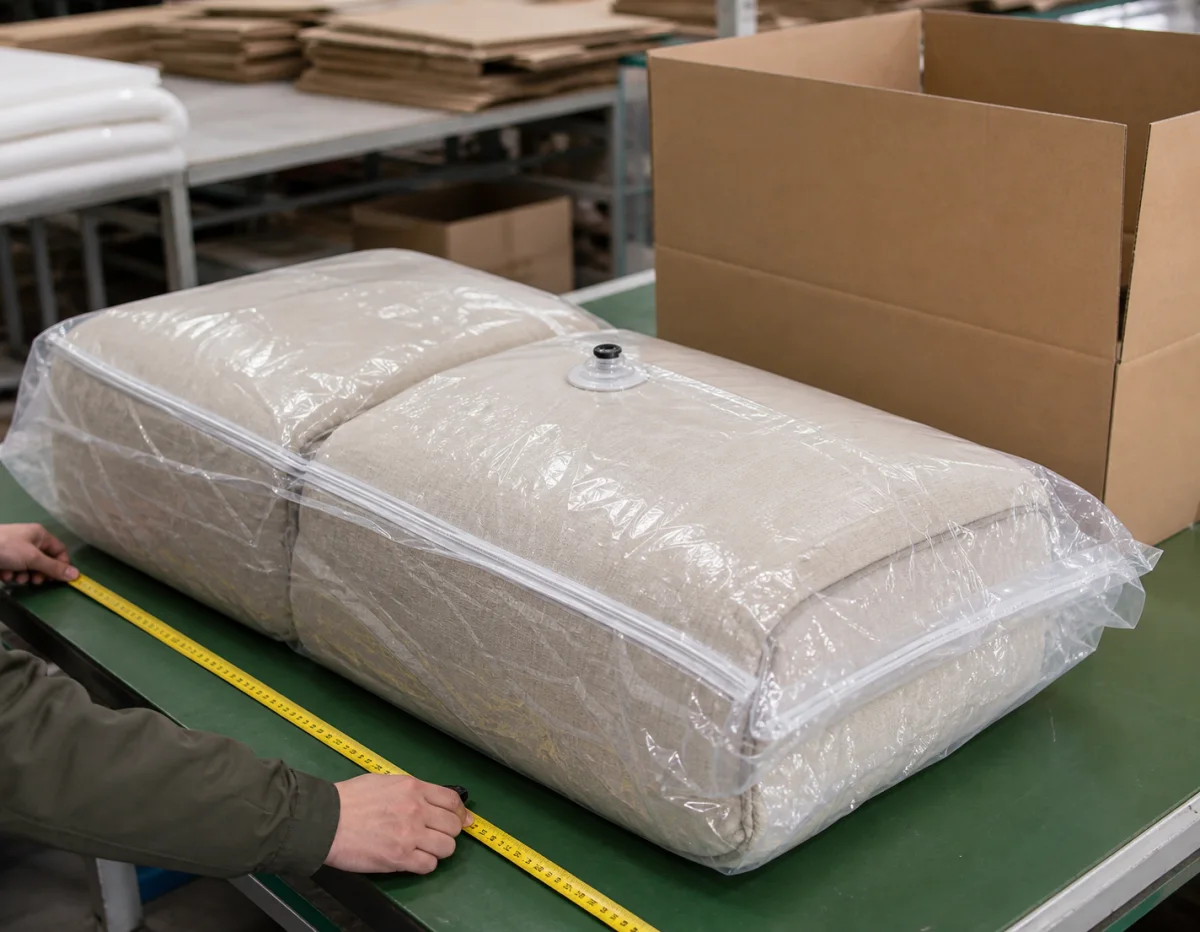
Before compression, the unit can be checked for identity, construction, visible condition and completeness. During packing, orientation, protection, bag integrity, containment, carton and labels follow the approved method. These checks confirm the packed unit, but they do not show how it will recover.
A defined recovery audit opens selected units using the customer instructions and observes the product at agreed intervals. Shape, dimensions, cover condition, seams, module relationships and function can be recorded. The sample basis and trial conditions should be clear enough to interpret the result.
Visit compression packaging for model qualification and recovery planning.
Do not confuse the evidence
Does sampled production match the agreed order requirements at this point in time? It relies on product references, sampling and recorded observations.
How did defined samples perform under a stated method and conditions? Relevance depends on product identity, materials, report scope and current revision.
What organization, system, material or product scope does the document cover, who issued it and for what validity period? A logo alone is insufficient.
Corrective action
Supplier review
ALF Home's manufacturing business was registered on June 28, 2012. The company profile records 14 years of furniture-industry and export experience, a reported 250,000 m² building area and annual export revenue of US$10,965,053. Commercial communication is available in English.
FSC, two CE documents and REACH documentation are recorded as available for review. Buyers should verify issuer, certificate number, validity and exact product or material scope. Availability does not mean every document applies to every sofa or market.
Quality control FAQ
Inspection plans remain model-, order- and market-specific.
Identity, materials, construction, dimensions, shape, upholstery, function, labels, components, packaging and applicable recovery criteria can be included.
An identified approved physical reference used with drawings and specifications. It communicates appearance and feel but does not replace measurable criteria.
No. Inspection compares production with requirements; laboratory testing applies defined methods to specified samples.
Yes, when agency, timing, sampling, scope, acceptance criteria, access and costs are agreed before the inspection point.
Contain affected product, document evidence, investigate cause, implement correction and preventive action, then verify effectiveness.
Content responsibility
This framework explains inspection responsibilities without inventing AQL levels, tolerances, pass rates, laboratory results or certificate coverage. Those requirements need written agreement and product-specific evidence.
Last reviewed: August 11, 2026 · Review OEM development · Request a quality-plan discussion
Buyer knowledge cluster
These editorial guides answer narrower questions and return to this page when a buyer needs product scope, manufacturing support or a project discussion.
4 connected guides
Move from this capability into focused buyer questions without leaving the approved product and evidence context.
Define quality before production
Share the product, destination, order quantity, test protocol and inspection requirements. We will organize the checkpoints around the approved specification.
Discuss quality requirements