
Quality assurance · Buyer guide
A compression sofa quality control checklist must follow the whole pack-and-recover cycle.
Finished appearance is only one checkpoint. A compression sofa may hide construction inside upholstery and introduce additional risks during vacuum packing, containment, storage, opening and recovery.
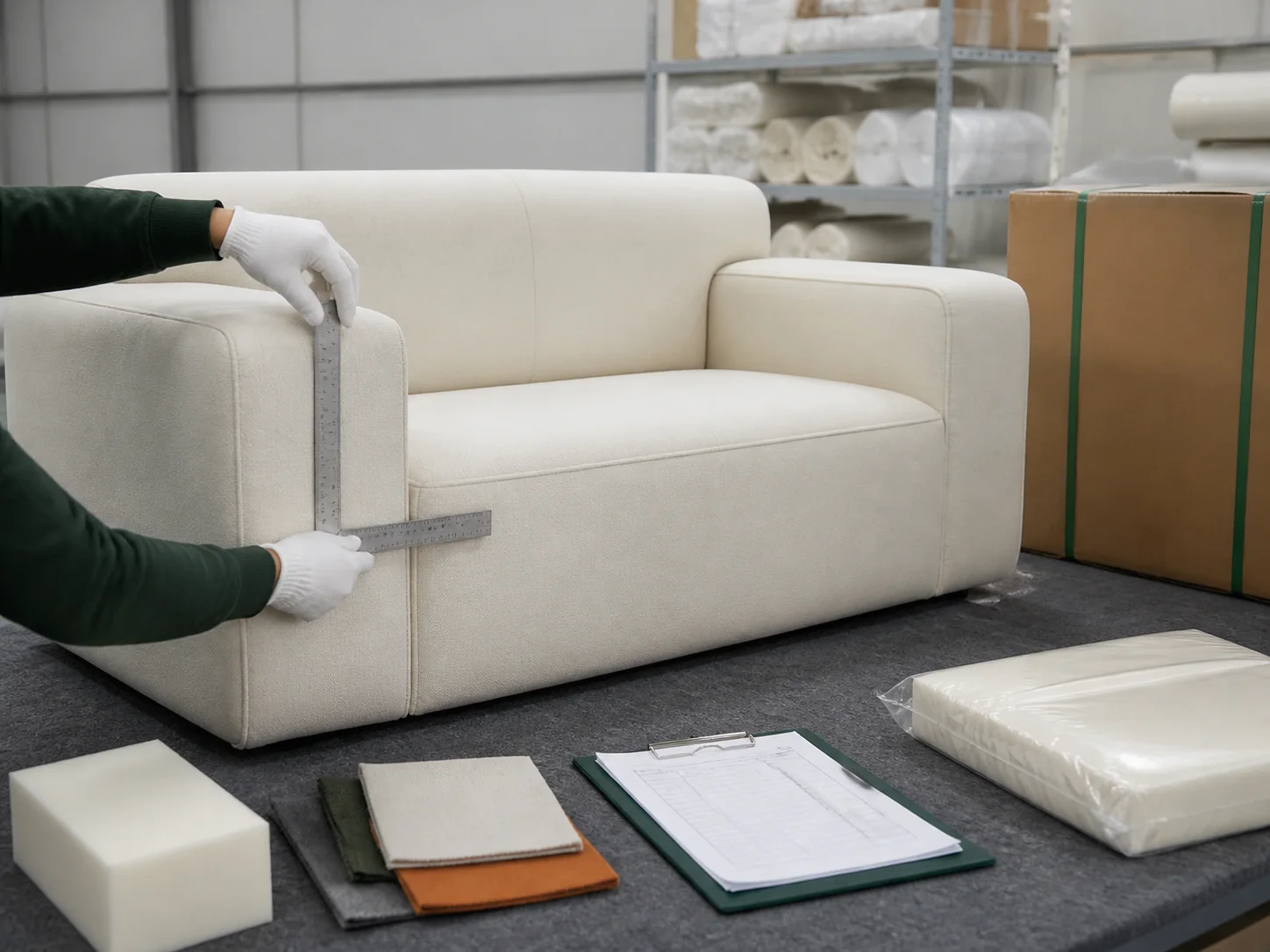
Build the checklist from the approved product
The controlling references are the released drawing, bill of materials, golden sample, workmanship criteria, packaging specification and order requirements. A generic checklist should be adapted rather than used as the acceptance standard.
Inspection points belong at incoming material, first piece, in-process assembly, finished product, pack-out and post-recovery stages. Record sampling and tolerances for the actual order.
09 · Corrective action
Turn findings into containment and learning.
Identify affected lots, stop or segregate where needed, establish root cause, correct the process and verify effectiveness. Rework needs an approved method and reinspection.
Photographs help communication, but evidence should include SKU, quantity, revision, date and location.
Responsibility for turn findings into containment and learning is shared but should not be vague. The buyer defines market intent and acceptance; development translates it into a buildable standard; production controls the released method; quality records conformance; marketing stays within verified claims. Clear ownership reduces the risk that one team assumes another approved the detail.
- Document mismatch
- Material substitution
- Hidden construction
- Appearance and function
- Pack-out error
- Recovery failure
- Record completeness
08 · Sampling
State how units are selected and judged.
Define lot, inspection level or project sampling, defect categories and acceptance before inspection. Increase attention where process history or changes create risk.
AQL terminology is not a universal permission to accept any defect; critical safety or regulatory issues need their own disposition.
Commercially, state how units are selected and judged can influence material minimums, sample rounds, carton development, test cost and launch timing. Put those dependencies next to the quotation rather than discussing them after price approval. A buyer can then decide whether to protect the feature, simplify it or move it into a later collection revision.

07 · Recovery
Open selected units using customer instructions.
After the agreed storage history, record safe opening, package condition, observations at defined intervals, dimensions, silhouette, seams, surface and function. Compare to the authorized criteria.
Do not massage, steam or reshape silently. If an intervention is part of normal setup, instructions and the record must say so.
Inspection of open selected units using customer instructions needs a repeatable viewpoint. Define product conditioning, placement, measuring points, lighting or configuration where relevant, then distinguish a one-off workmanship issue from a repeated process pattern. Sampling and acceptance can be set for the real order instead of copied from an unrelated furniture program.
06 · Pack-out
Control every item entering the carton.
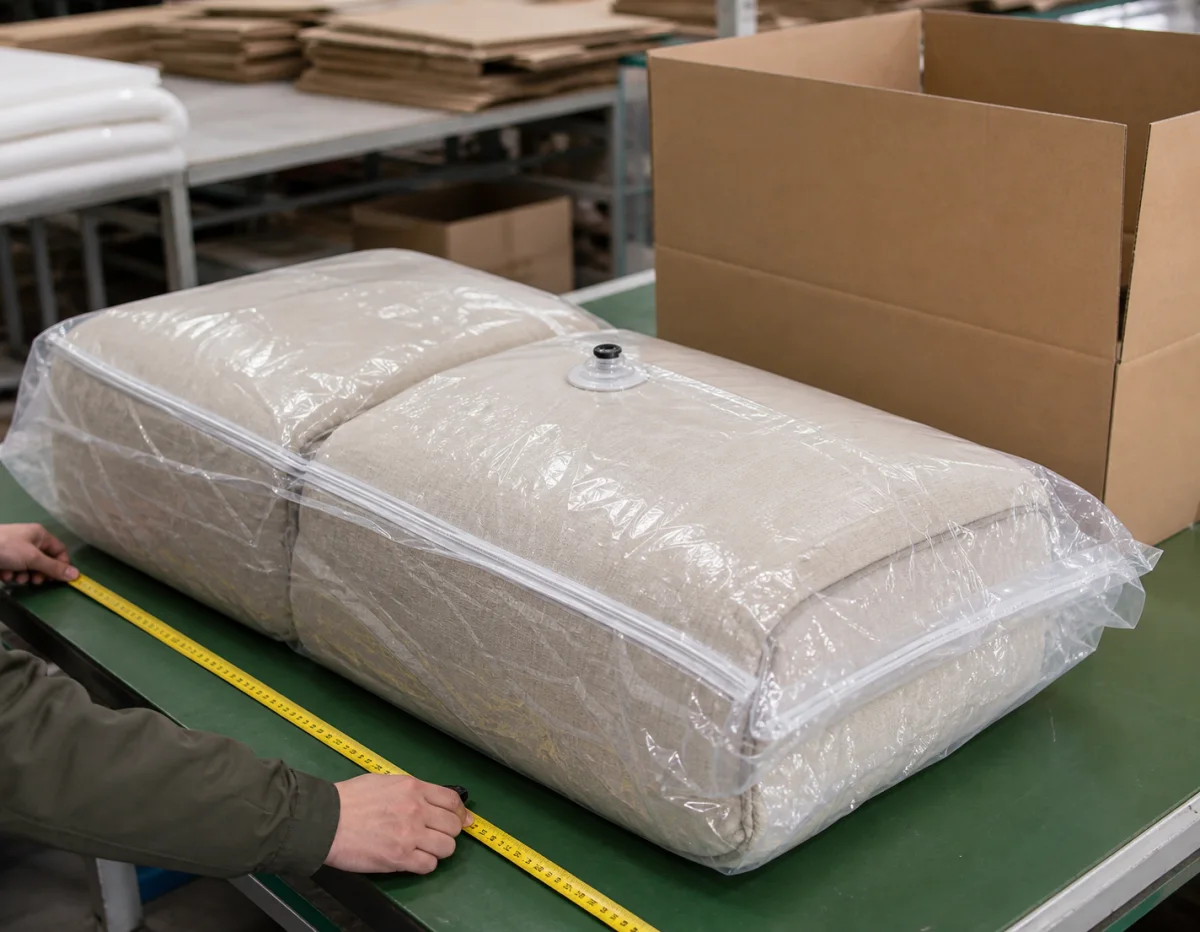
Verify protective layers, component orientation, bag seal, vacuum or containment condition, closures, hardware, instructions, carton, barcode and marks. Record external dimensions and weight using approved methods.
Prevent sharp tools, connectors or concentrated pressure from reaching upholstery during containment.
Retail language should describe control every item entering the carton at the same level the evidence supports. Avoid turning a conditional trial observation into words such as always, instant, waterproof, maintenance-free or guaranteed. Clear dimensions, setup steps, limitations and care instructions help the customer understand the actual product and give after-sales teams a fair reference.
05 · Finished form
Measure function and appearance before packing.
Place the sofa on a defined level surface and confirm identity, overall dimensions, useful seat, alignment, stability, module fit and accessories. Review visible surfaces from agreed viewpoints.
Comfort language needs a reference method or sample; one inspector’s preference is not a reproducible specification.
The evidence file for measure function and appearance before packing may combine drawings, material codes, photographs, measurements, trial notes and third-party reports. These items answer different questions. Keep the model and revision attached to every record so a later team does not apply a result from one construction to another sofa that merely looks similar.
04 · Cover
Review sewing and upholstery under consistent conditions.
Check fabric direction, shade, nap, panels, seams, stitch condition, closures, labels, tension, wrinkles and symmetry. Evaluate patterned material against the agreed matching rule.
Some surface relaxation changes after conditioning; distinguish expected behavior from workmanship defects in the acceptance criteria.
When a source, color, foam zone, pattern or packing method changes, reopen the decisions affected by review sewing and upholstery under consistent conditions. “Equivalent” is not a result until relevant properties and the finished sample have been compared. The change record should identify why the revision was accepted and which earlier tests or appearance references remain applicable.
03 · Foam build
Inspect geometry before the cover conceals it.
Confirm component count, orientation, dimensions at defined points, bonding location, alignment and cleanliness. Look for gaps, hard glue zones, unintended steps or damaged edges.
Critical transitions deserve first-piece photographs or templates where drawings alone are difficult to interpret.
For an RFQ, state the market, quantity and intended claim behind inspect geometry before the cover conceals it. Suppliers may propose different technical routes, but each route should disclose material assumptions, sample work, testing needs and effects on MOQ or timing. Keeping alternatives visible prevents a low headline price from silently describing a different product.
02 · Incoming
Protect material identity and condition.
Check supplier and lot identification for foam, fabric, zippers, thread, labels, adhesives and hard parts as applicable. Review damage, contamination, shade grouping and required documentation.
Measurement methods and conditioning must match the written standard; casual spot readings can create false disputes.
During sample review, evaluate protect material identity and condition on the complete product rather than on an isolated material swatch or component. Record the starting condition, the requested change and the observations after that change. Recheck connected features such as dimensions, seam location, sitting response and packaging whenever the adjustment can move an earlier approval.
01 · Documents
Verify the revision before touching the product.
Confirm purchase order, SKU list, approved drawing, material codes, color, labels, packaging version and authorized sample. Remove obsolete references from the inspection area.
Record any conflict immediately. Inspectors should not choose which document wins.
Translate this point into an approval item for quality control checklist. Name the SKU, responsible reviewer, reference sample, document revision and decision date. If the requirement cannot yet be measured, describe the visual or user outcome and retain photographs from a consistent angle. That record gives production and inspection something more useful than a general preference about verify the revision before touching the product. It also gives a later buyer enough context to distinguish a deliberate product decision from an undocumented deviation, reducing repeated debate when the collection is reordered, expanded into another color or reviewed by a different quality team.
Put the guide to work
Turn quality control checklist into a decision record.
Begin with the actual model and destination rather than a category assumption. The first review should connect verify the revision before touching the product, protect material identity and condition and inspect geometry before the cover conceals it. Record which statements are confirmed by drawings or samples, which rely on supplier information and which still need a packaging trial, inspection or third-party test.
Next, assign decisions to people and dates. The buyer owns the market promise and final acceptance. Product development owns the translated specification. Purchasing protects approved material identity, production follows the released method, and quality records the agreed evidence. When review sewing and upholstery under consistent conditions or measure function and appearance before packing changes, reopen every dependent approval instead of treating the revision as isolated.
Finally, keep the quotation and retail copy inside the same evidence boundary. MOQ, price, lead time, carton data and performance language can only be as reliable as their disclosed assumptions. This approach may take more questions at the beginning, but it creates a clearer sample review and a more defensible purchase order.
Topic cluster · OEM Manufacturing & Quality
Continue from explanation to a sourcing decision.
This guide belongs to a connected evidence path. Use the commercial overview for scope, the category archive for the complete subject, and the adjacent guides for the questions that normally follow.
Article FAQ
Short answers for the next decision.
What should inspectors check first?
The product identity and current approved documents.
Is AQL mandatory?
Sampling is a project decision; agree the method and defect rules.
How long should recovery inspection wait?
Use the model-specific trial and agreed observation intervals.
Can inspectors reshape a sofa?
Only if the approved customer setup includes the same disclosed action.
What happens after a failed inspection?
Contain affected goods, investigate cause, approve correction and reinspect.
Editorial responsibility
Editorial and technical review
No universal tolerance, sampling level or recovery time is invented; each must be approved for the project.
Updated: August 11, 2026 · About the publisher · Ask about a project