Dimensions and configuration
Overall size, usable seat, module library, orientation, edge radii and loaded alignment.
 Request a quote
Custom foam furniture · OEM & private label
A reference photo can start the conversation, but it cannot control production. ALF Home turns a product idea into agreed dimensions, foam construction, upholstery, appearance, packaging, labels and approval checkpoints for brands, importers and retailers.
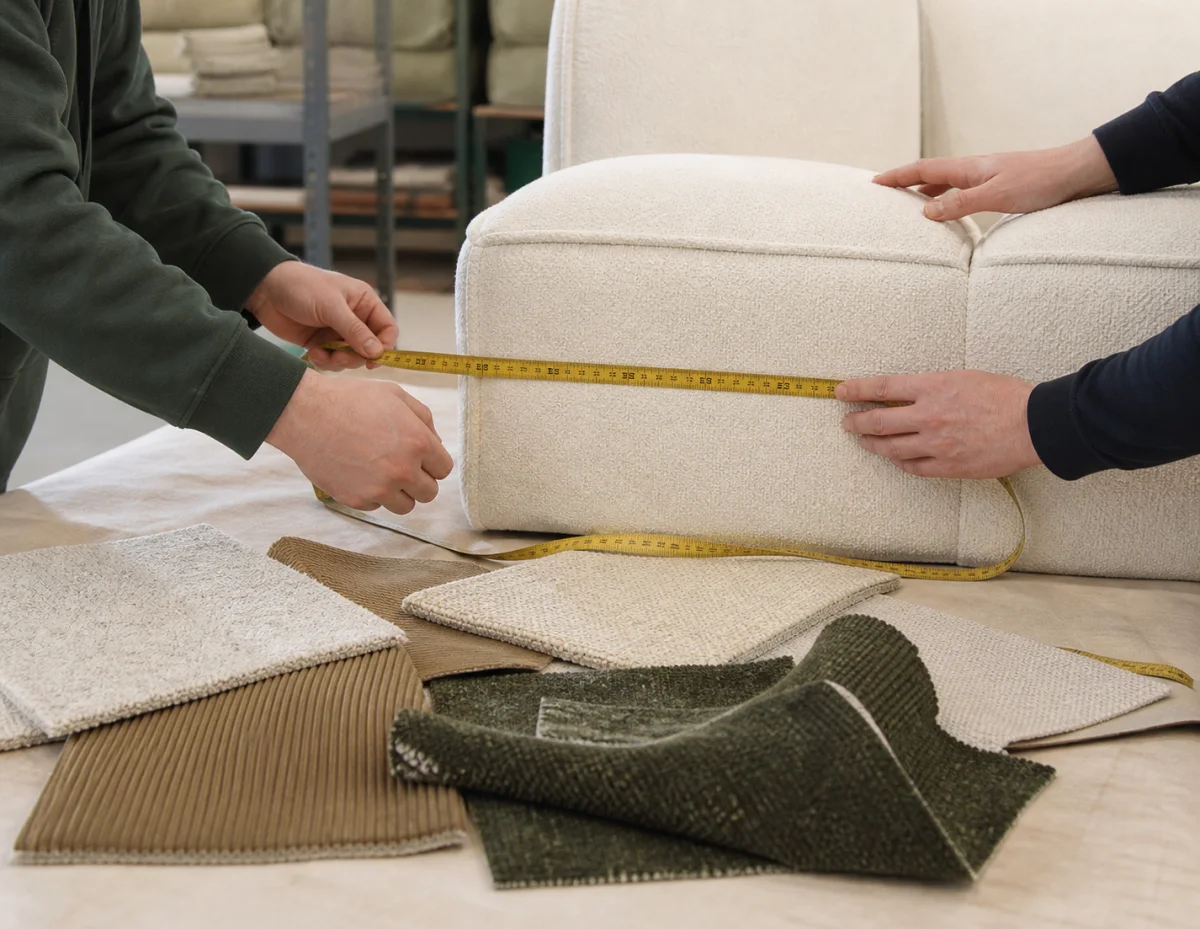
Direct answer
A custom sofa manufacturer translates a buyer's owned design, drawing or authorized reference into a producible specification. For compression furniture, the work includes the sitting experience, foam layers, cover pattern, recovery behavior and carton strategy—not only the outer shape.
OEM normally means manufacturing to the buyer's approved requirements. Private label adds brand-facing details such as sewn labels, care information, carton artwork and customer instructions. Responsibilities, ownership, testing and commercial terms should be written before production.
Development route
The route can adapt to the project, but skipping a decision usually moves uncertainty into sampling or mass production.
Confirm product type, dimensions, intended market, expected quantity, positioning, timeline, testing and packaging direction. Identify missing decisions and incompatible expectations early.
Translate the intended sit and silhouette into foam zones, layer relationships, component geometry, cover construction and any required connection concept.
Record foam direction, fabric code, approved color, backing, zipper or closure, label materials and potential order minimums for project-specific inputs.
Build the first physical interpretation and identify practical issues in posture, shape, seam placement, assembly, material behavior and packaging readiness.
Compare measurements, loaded feel, visual details, upholstery fit and intended-use requirements. Comments should name the location and desired change.
Use the approved construction and cover to establish packing orientation, protection, carton data, recovery observations and customer instructions.
Freeze the applicable sample, specification, artwork and known tolerances. Later revisions move through controlled change review rather than informal messages.
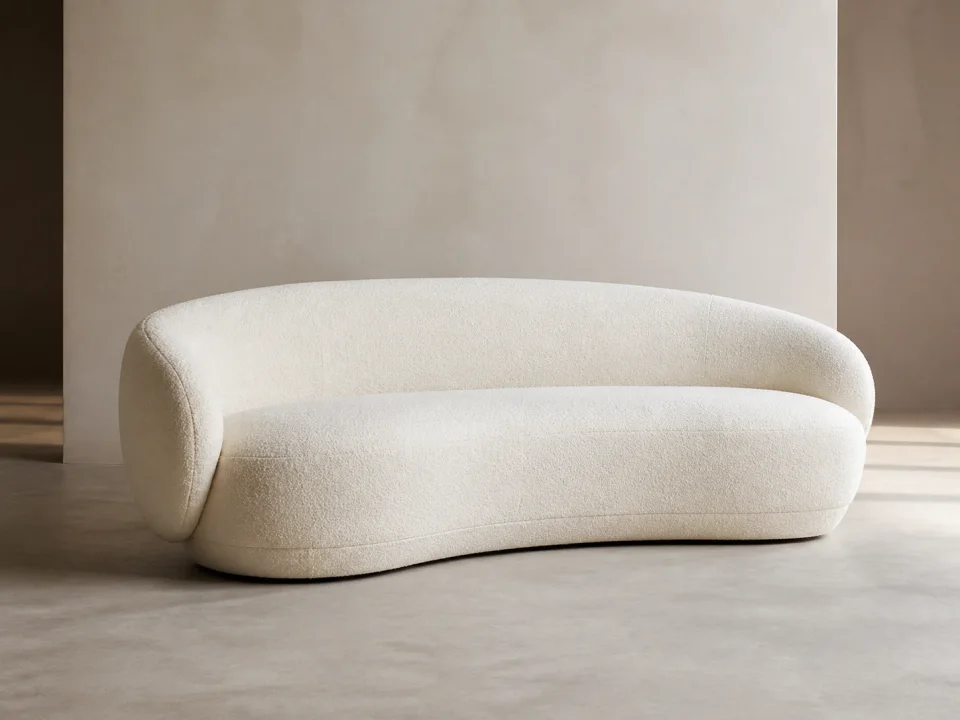
A better first email
The strongest inquiry is not necessarily the longest. A dimensioned drawing, destination, intended use and quantity range immediately create better questions. If you only have an inspiration image, mark which features matter: low profile, rounded arm, deep seat, modular join or a particular upholstery mood.
State whether the design belongs to your company or you have authority to develop it. ALF Home can use market references to understand a direction, but third-party logos, protected artwork and another brand's proprietary design should not be copied without permission.
Tell us what cannot change and where alternatives are acceptable. This gives purchasing and development room to propose available foam, fabric or packaging options without losing the commercial idea.
Control points
Every approved option needs an identifier so purchasing, production, inspection and carton artwork refer to the same version.
Overall size, usable seat, module library, orientation, edge radii and loaded alignment.
Layer placement, support direction, transition zones and the approved sample response.
Supplier code, face direction, lot control, care method and applicable performance plan.
Panel map, stitch appearance, zipper access, removable-cover logic and visible tolerance.
Sewn label, law label, care label, instruction sheet and buyer-supplied artwork approval.
Compression method, protection, carton marks, barcode, included-parts list and opening guide.
Feedback that works
Sample feedback is easiest to act on when it identifies the view, measurement or sitting area involved. “Increase the front edge support” gives the team a direction; “not comfortable” requires another round of interpretation. Annotated photographs can connect comments to seams, corners and proportions.
Changes interact. Raising the seat can alter the arm relationship. Changing foam may affect recovery and cover fit. Switching fabric can change seam appearance and packaging behavior. The revision log should therefore state what changed, why it changed and which earlier approvals need to be checked again.
For product-specific considerations, explore compression sofas, boneless sofas and modular collections.
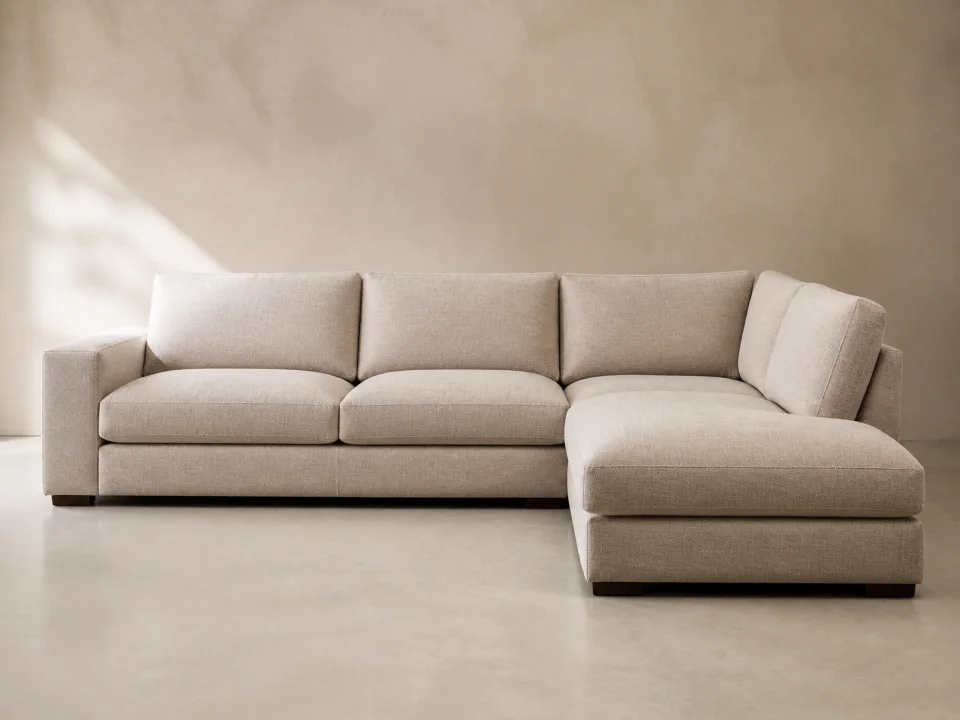
Verification gates
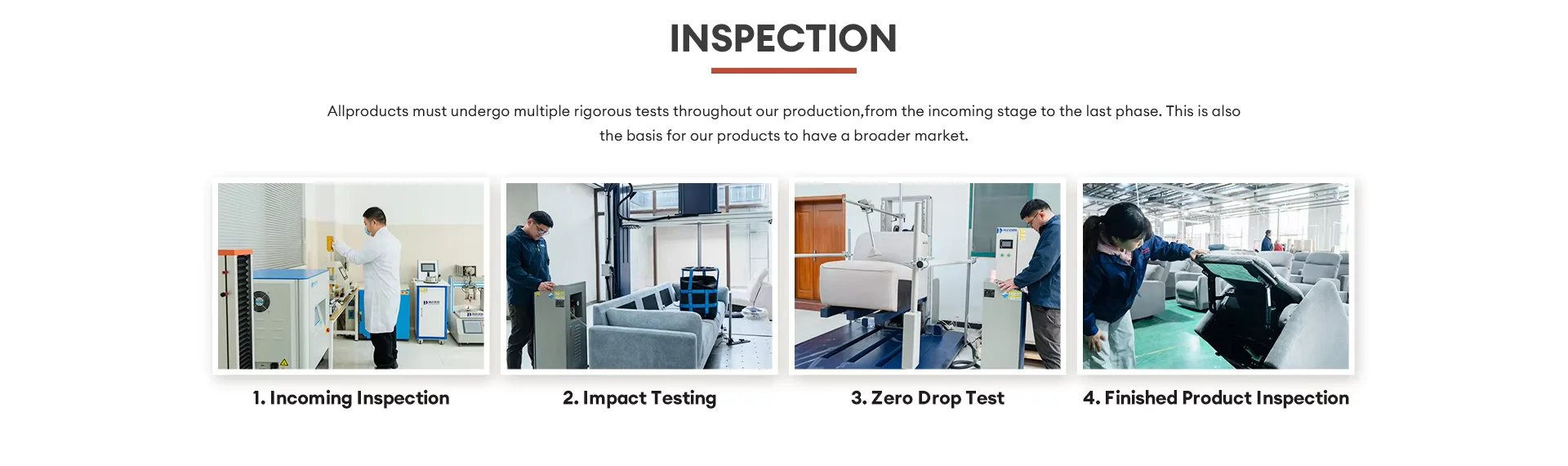
Incoming checks, construction or impact evaluations, drop-related tests and finished-product inspection can serve different purposes. The exact method, equipment, sample quantity and acceptance criteria must be defined for the model, destination and buyer protocol.
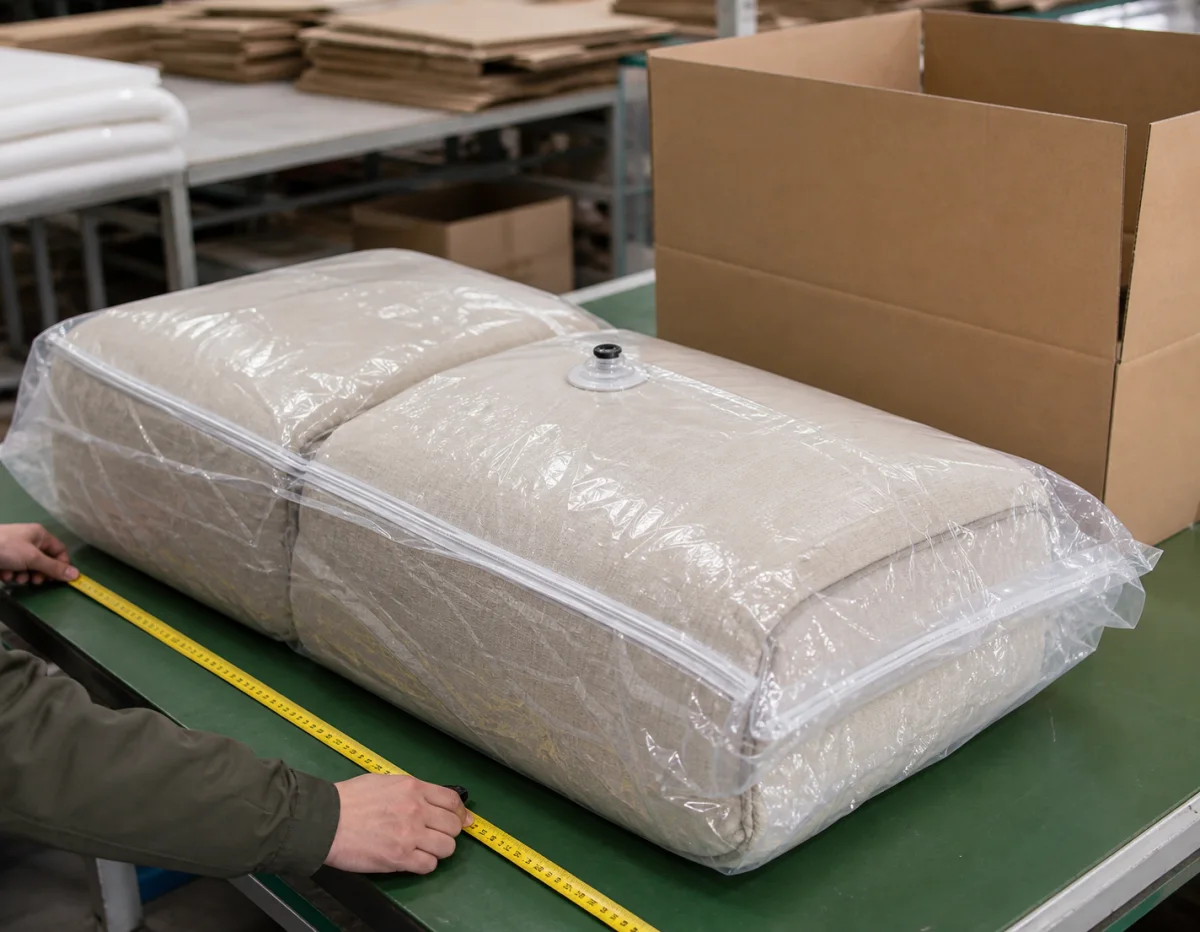
Product and carton together
A carton target can influence component geometry, cover protection and retail handling. Early packaging trials show whether the approved comfort construction and upholstery tolerate the proposed compression method. The product should not be weakened simply to reach an unsupported logistics claim.
Trial observations include packed orientation, pressure points, seam condition, protection, carton integrity and recovery after opening. Final carton dimensions, gross weight, loading calculations and recovery guidance are model-specific outputs.
Review the complete compression packaging process before setting marketplace dimensions or freight assumptions.
Commercial clarity
There is no responsible universal MOQ or lead time for all custom sofas. Order quantity can be affected by construction, fabric minimums, color count, custom labels, printed cartons, testing and production scheduling. Price also changes with dimensions, materials, packaging and inspection requirements.
A quotation should identify what it includes, the applicable Incoterm, sample costs, tooling where relevant, payment terms, packing assumption and quote validity. Forecast quantity and launch timing help the supplier evaluate sourcing and capacity more realistically than an isolated target price.
E-E-A-T supplier context
ALF Home's manufacturing business was registered on June 28, 2012. The company profile records 14 years of furniture-industry and export experience, a reported 250,000 m² building area and annual export revenue of US$10,965,053. Commercial communication is available in English.
FSC, two CE documents and REACH documentation are recorded as available for review. Applicability is verified by certificate number, issuer, validity, product or material scope and destination; these documents are not represented as universal approval for every custom sofa.
OEM service FAQ
Commercial and technical details are confirmed for the specific project.
Send owned drawings or authorized references, product type, dimensions, comfort, upholstery, destination, quantity, packaging, testing and target timing.
Buyers should submit designs they own or have authority to use. References can communicate preferences, but protected branding and third-party intellectual property should not be copied without permission.
After construction, materials, colors, packaging, testing and order conditions are reviewed. These variables prevent one valid number for every project.
Yes. Model-specific trials coordinate compression, protection, carton planning and recovery with the approved foam and cover.
Compare it with a written standard for dimensions, construction, feel, upholstery, appearance, labels, packaging and applicable tests, then record approval and controlled changes.
Content responsibility
The workflow reflects practical OEM decision points and separates available capability from project-specific commitments. No MOQ, price, timing, test result, compression ratio or certification scope is promised before written review.
Last reviewed: August 11, 2026 · About the manufacturer · Submit an OEM brief
Buyer knowledge cluster
These editorial guides answer narrower questions and return to this page when a buyer needs product scope, manufacturing support or a project discussion.
4 connected guides
Move from this capability into focused buyer questions without leaving the approved product and evidence context.
Start with a usable brief
Share the concept, destination, quantity, dimensions, comfort direction, material expectations and launch window. We will identify the decisions required for sampling.
Start a custom project