Document release
The order, approved drawings, bill of materials, fabric and color codes, label files, packaging method and inspection criteria are aligned before cutting begins.
 Request a quote
Full-foam furniture production · China
Machines can repeat a cut; they cannot decide which version is correct. ALF Home begins production with approved construction, material, cover, appearance, packaging and inspection references so every team works toward the same sofa.

Direct answer
After the sample and documents are approved, materials are received and identified. Foam components are cut, shaped and bonded into the specified construction. Fabric panels are cut with the correct face direction, sewn into covers and fitted to the foam form. The finished sofa is checked before the approved compression and carton process.
The exact sequence changes with the product. A monolithic boneless seat, a multi-module sectional and a convertible foam sofa bed do not share one universal work instruction. Manufacturing follows the model revision and order requirements.
Six linked stages
A controlled flow reduces the chance that an early material or document error becomes a finished-carton problem.
The order, approved drawings, bill of materials, fabric and color codes, label files, packaging method and inspection criteria are aligned before cutting begins.
Foam, upholstery and order-specific components are checked against purchasing references. Lots remain identifiable according to the defined control plan.
Blocks and sheets are cut into controlled components. Profiles, radii, mirrored parts and bonding faces are recognized before assembly.
Fabric is inspected, laid, cut and sewn with attention to direction, panel identity, seam construction, closures and visible workmanship.
The foam body is built and conditioned, then the cover is fitted and aligned. Dimensions, shape, seams and component relationships are reviewed.
Defined checks are completed before the correct label, protection, compression method and retail carton are applied to the released SKU.

Inside the silhouette
In full-foam furniture, the internal construction is the support system. Component thickness, orientation, profile and bonding position influence the loaded seat as well as the empty silhouette. Parts are therefore identified by the drawing rather than treated as interchangeable blocks.
Cutting accuracy matters at joins and cover reference points. A small mismatch across several layers can move an edge or seam on the finished product. Bonding should hold the intended relationship without creating an unplanned hard line, excess adhesive area or distortion.
Conditioning and measurement conditions are agreed because recently handled or compressed foam may not present exactly like settled material. Final acceptance uses the project standard and realistic tolerances—not a claim that flexible furniture behaves like machined metal.
Upholstery line
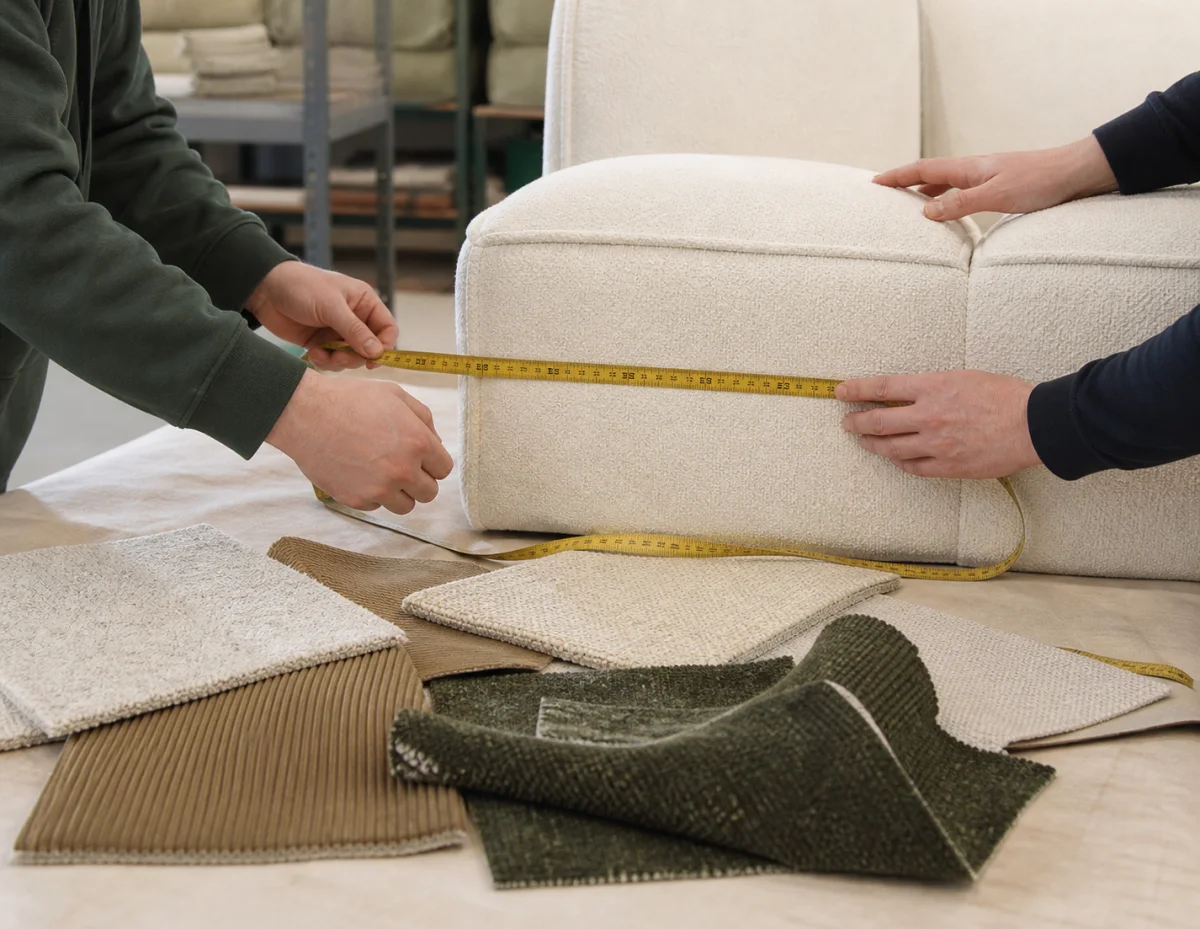
Fabric can have nap, pile, pattern, stretch or color direction. Markers and cutting instructions need to preserve the intended face across panels. Shade and lot controls should match the buyer's approved textile reference and the order plan.
Sewing controls include seam type, allowance, stitch appearance, reinforcement, zipper or closure details and panel identity. Highly curved boneless forms can reveal tension differences quickly. The cover must work with the foam geometry rather than pulling it into a different shape.
During fitting, the team aligns seams with reference edges and checks puckering, twisting, loose areas and access details. If the cover is removable, the closure and refitting method remain part of the approved construction.
First-piece control
The first completed units provide a practical check that released documents, actual materials and production methods still lead to the approved result.
Model, orientation, color, fabric lot, label version and carton artwork match the order.
Foam components, layer relationships, bonding and required accessories follow the bill of materials.
Defined measurement points are checked under the agreed conditioning and positioning method.
Shape, seam position, cover fit, color relationship and visible workmanship are compared with references.
Modules align, intended conversions operate and specified connectors or removable components are reviewed.
The correct labels, instructions, parts, protection and carton are present before the method is repeated.
Batch consistency
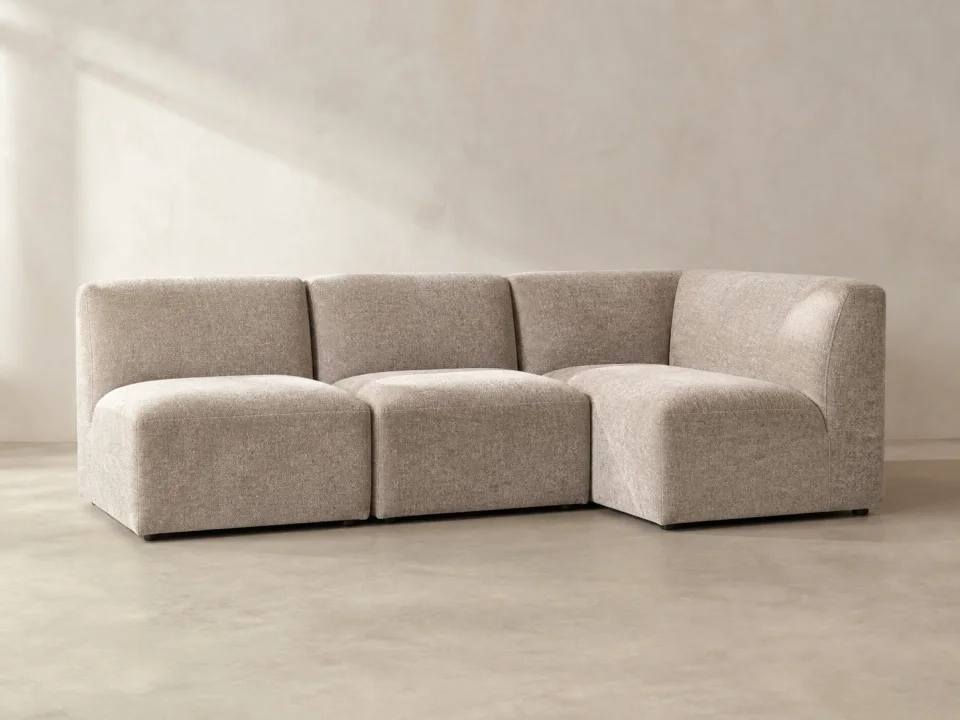
Flexible foam and upholstery have natural variation, so the standard needs realistic, measurable priorities. Overall dimensions matter, but a modular collection may depend even more on shared seat height, aligned front edges and consistent visual gaps. A chair with a sculptural curve may prioritize symmetry and seam placement.
Process checks can be placed where correction remains possible: after cutting, foam assembly, cover sewing and first-piece finishing. Defect records should identify the problem and location rather than only count rejected units. This helps production address causes and helps quality teams watch recurrence.
For configurable seating, carton identity is also a consistency control. A correctly made left corner in the wrong carton still creates a customer failure. Visit quality control for the inspection framework.
Packaging cell
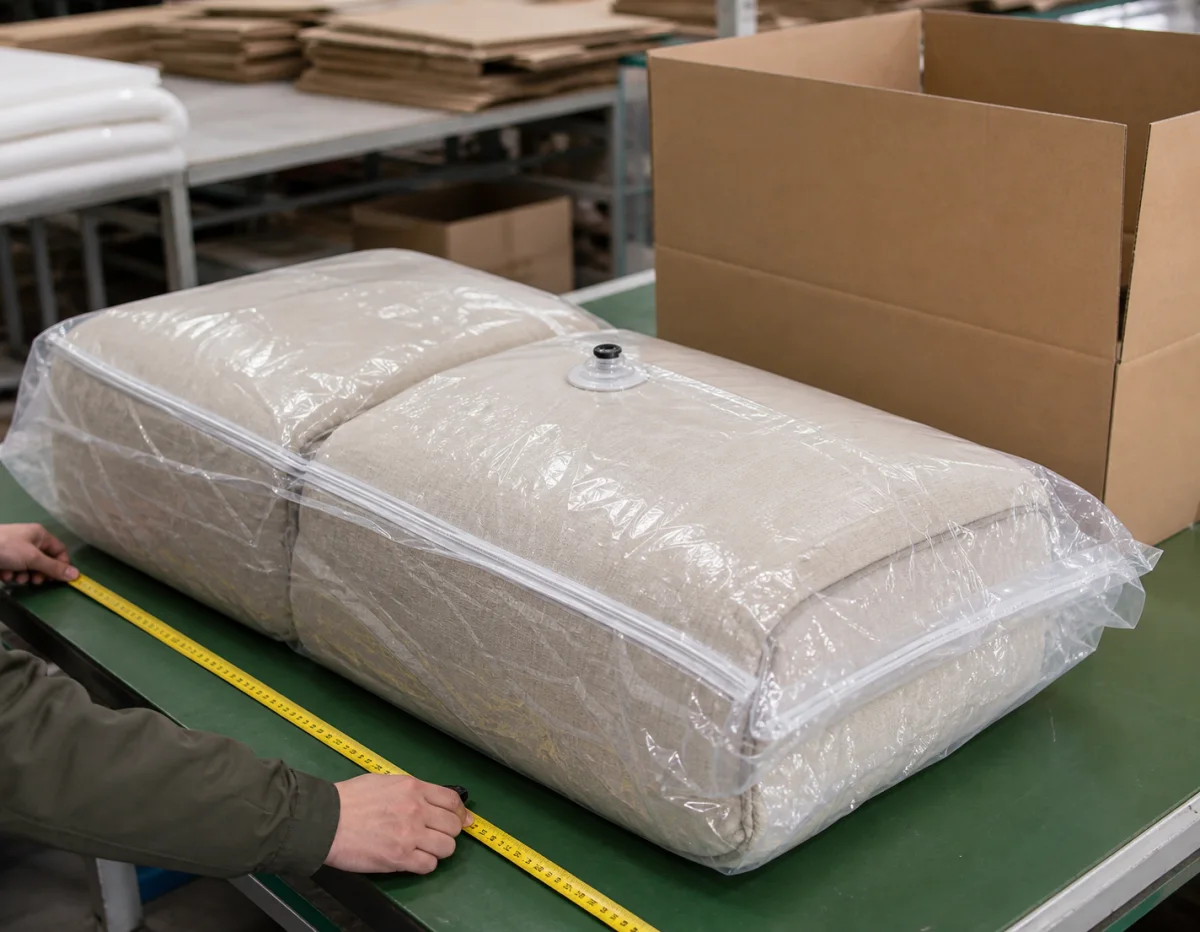
Foam construction, overall shape, upholstery and closure details influence how a sofa responds to reduced-volume packing. Orientation, protection and pressure are established through the approved trial rather than copied from another SKU.
Operators need a clear packing sequence and an identifiable hold point if the product or bag does not present as expected. The carton should protect the compressed unit and display the right SKU, color, quantity and handling information. Gross weight and carton dimensions are recorded from the approved pack-out.
Recovery review completes the feedback loop. Observations after opening can lead to changes in folding, protection, cover arrangement or instructions before mass packing. Learn more about compression packaging.
Evidence, not theater
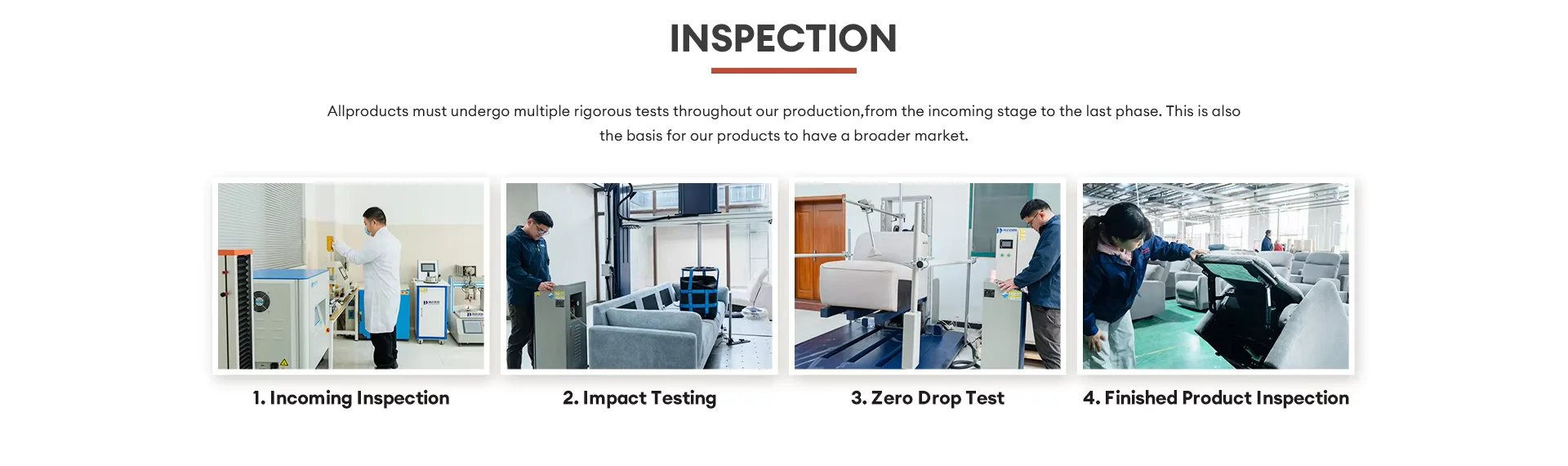
Incoming inspection, impact-related evaluation, drop testing and finished-product inspection can be useful only when the relevant standard, method, sample, equipment and acceptance criteria are known. A photograph of equipment is not a test report, and a result from another product is not evidence for the current sofa.
ALF Home works with project-defined requirements and can coordinate buyer or authorized third-party inspection when commercially agreed. Scope and access should be scheduled before the inspection point.
Manufacturing context
ALF Home's manufacturing business was registered on June 28, 2012. The company profile records 14 years of furniture-industry and export experience, a reported 250,000 m² building area and annual export revenue of US$10,965,053. Commercial communication is available in English.
FSC, two CE documents and REACH documentation are recorded as available for buyer review. Their issuer, validity and scope must be checked against the selected materials, exact product and destination requirements.
Manufacturing FAQ
Final methods and acceptance criteria remain product- and order-specific.
Approved documents are released, materials identified, foam converted, covers cut and sewn, the sofa assembled and finished, then inspected and packed to the model standard.
Storage, cutting and compression history can influence presentation. Defined conditioning and measurement conditions make comparisons more consistent.
Through controlled documents, identified materials, first-piece review, process checks, suitable measurement, defect records and final inspection.
No. Packing orientation, pressure, protection and recovery criteria depend on the exact foam, dimensions and upholstery.
Buyer or authorized third-party inspection can be discussed. Scope, timing, sampling, access and commercial arrangements should be agreed in advance.
Content responsibility
This manufacturing overview explains control logic without inventing machine capacity, daily output, tolerances, test results or compression settings. Those facts require an actual product, order and controlled document.
Last reviewed: August 11, 2026 · View factory information · Discuss production controls
Production readiness
Share the approved concept, quantity, market, material direction, packaging needs and inspection protocol. We will identify the required production references.
Review manufacturing requirements