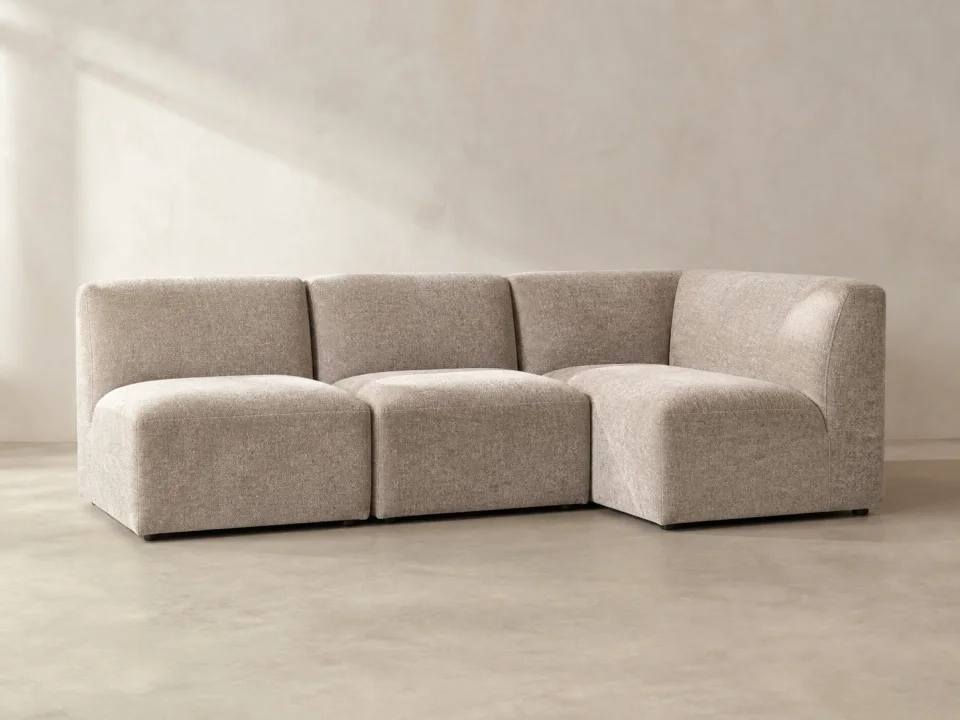
OEM compression sofas engineered for vacuum packing and controlled recovery.
Compact shipping matters. The sofa your customer sits on matters more. ALF Home develops full-foam compression sofas by coordinating comfort, cover fit, recovery behavior and carton planning from the sample stage.
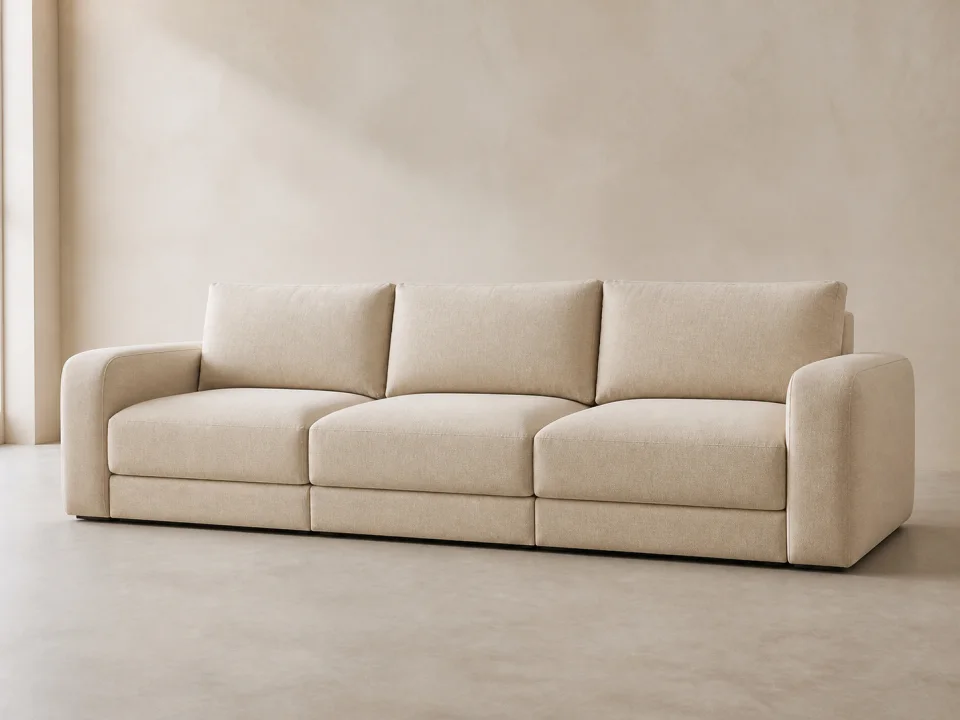
A familiar upholstered-sofa profile adapted for foam-led construction and compact packaging.
Direct answer
What is a compression sofa?
A compression sofa is upholstered seating designed to be vacuum packed into a smaller shipping volume, then expand after unpacking. The term may also appear as compressed sofa, compressible sofa, vacuum packed sofa, compressed couch or sofa in a box. These names share a packing intent, but they do not guarantee the same construction or recovery performance.
A responsible specification identifies what sits beneath the fabric, how long the product can remain compressed, what carton it uses and how the recovered item will be judged. The packing method should support the furniture proposition, not replace it.
Product anatomy
Four systems determine the final sofa.
A change in one system can influence the others. That is why quotation, sampling and packaging review should refer to one controlled specification.
01
Foam structure
Density and firmness describe different properties. Density relates to foam mass per volume; firmness describes resistance under load. A sofa can combine a supportive base, a comfort layer and shaped sections for arms or back. The right construction depends on seat depth, customer expectation and the amount of compression the approved design must tolerate.
02
Cover engineering
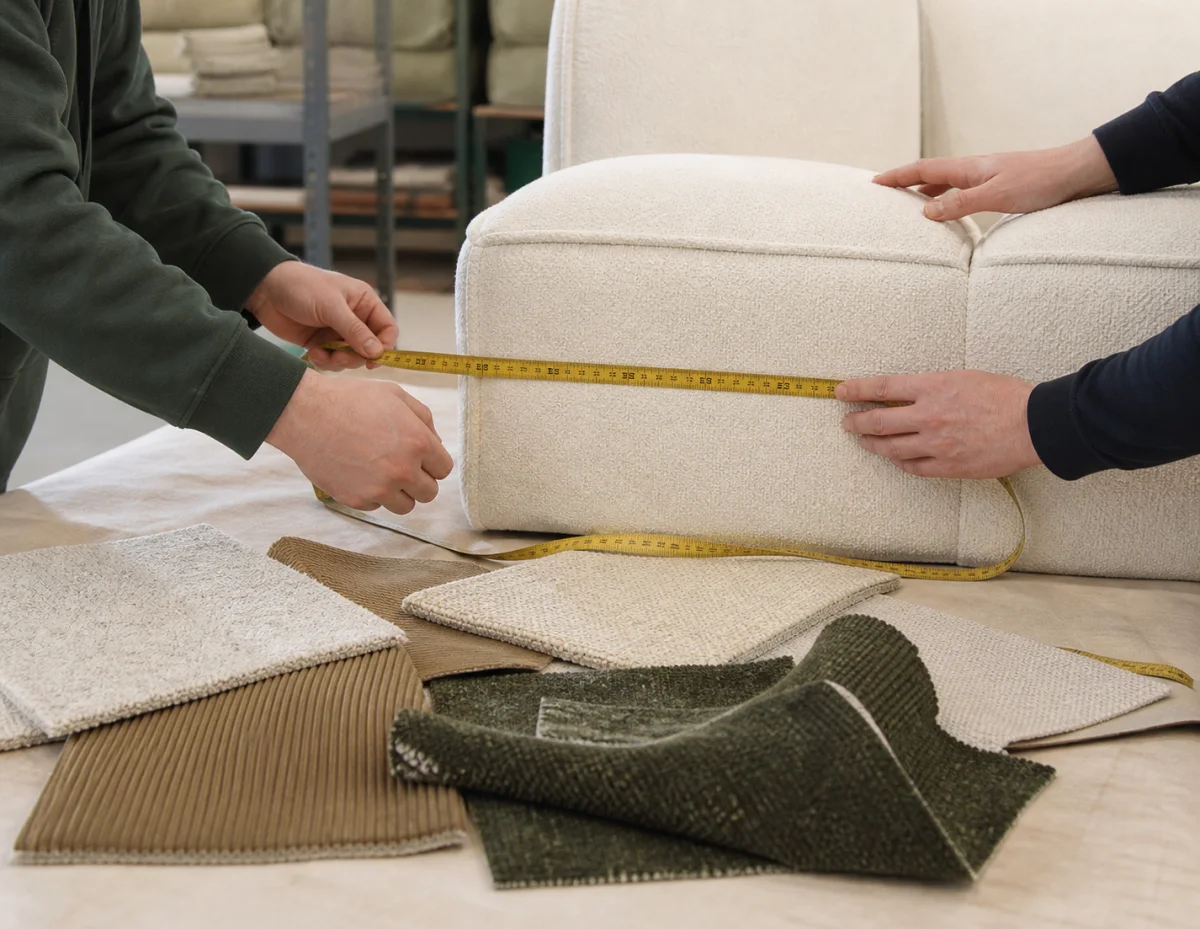
Pattern shape, seam position, fabric stretch and panel tension affect both appearance and recovery. Corduroy, chenille, bouclé, velvet and woven polyester do not behave identically. A fabric should be evaluated on the actual sample because a flat swatch cannot show how it settles around corners after vacuum packing.
03
Product geometry
Arm thickness, back height, seat proportion and edge radius create the silhouette. Very deep or sharply shaped areas may need special attention to recover evenly. Dimensions should be recorded after the agreed conditioning period, using written measurement points and tolerances.
04
Package design
The protective bag, compression method, carton strength, opening sequence and printed instructions form a package system. The smallest possible carton is not always the safest target. The package must protect seams and surfaces while remaining practical for warehouses and customers to handle.
Sample approval connects subjective comfort with repeatable dimensions, materials and workmanship details.
OEM development
Turn a visual reference into a production standard.
A reference photograph is useful for direction, but it does not tell a factory how the sofa should feel, what lies inside it or how the cover should be constructed. We begin by identifying the intended market, sales channel, target dimensions, configuration and comfort direction. Existing drawings or physical samples can shorten that conversation, although every reference still needs a construction review.
The first sample is where proportions and feel become tangible. Buyers should assess seat height, usable depth, back support, arm comfort and the ease of getting up—not only the front-view silhouette. We record agreed changes so that the next sample has a clear purpose.
Once the appearance and sit are close, details such as zipper position, removable components, labels, care information and retail packaging can be settled. Explore the complete OEM and private label process for development responsibilities and inquiry preparation.
Buyer specification
Data worth putting on the approval sheet.
Not every project needs the same fields, but an agreed record reduces ambiguity between the showroom sample, packed sample and production inspection.
Area
Details to confirm
Why it matters
Finished dimensions
Overall width, depth, height, seat height, seat depth and tolerance
Defines customer fit, photography and inspection points
Foam
Layer position, material type, density, firmness and shaped parts
Controls comfort, support, weight and recovery behavior
Upholstery
Fabric code, color, composition, backing, direction and approved swatch
Prevents substitution and inconsistent visual results
Construction
Cover pattern, seams, zippers, removable parts and module connections
Links appearance with repeatable assembly and customer use
Compression
Method, hold period, opening procedure and recovery checkpoints
Establishes whether the packed design remains acceptable
Logistics
Carton dimensions, gross weight, CBM and estimated loading quantity
Supports landed-cost and warehouse planning
Private label
Care label, law label where applicable, insert, carton marks and artwork
Creates a consistent retail and compliance package
Vacuum packing
Measure recovery, not only compression ratio.
A dramatic reduction in volume can look persuasive in a sales presentation. In practice, buyers need to know what happens after the bag is opened. The product should be checked at defined intervals for usable shape, final dimensions, upholstery appearance and seating feel. Temperature, storage duration and foam formulation can change the result, so a universal expansion promise is not credible.
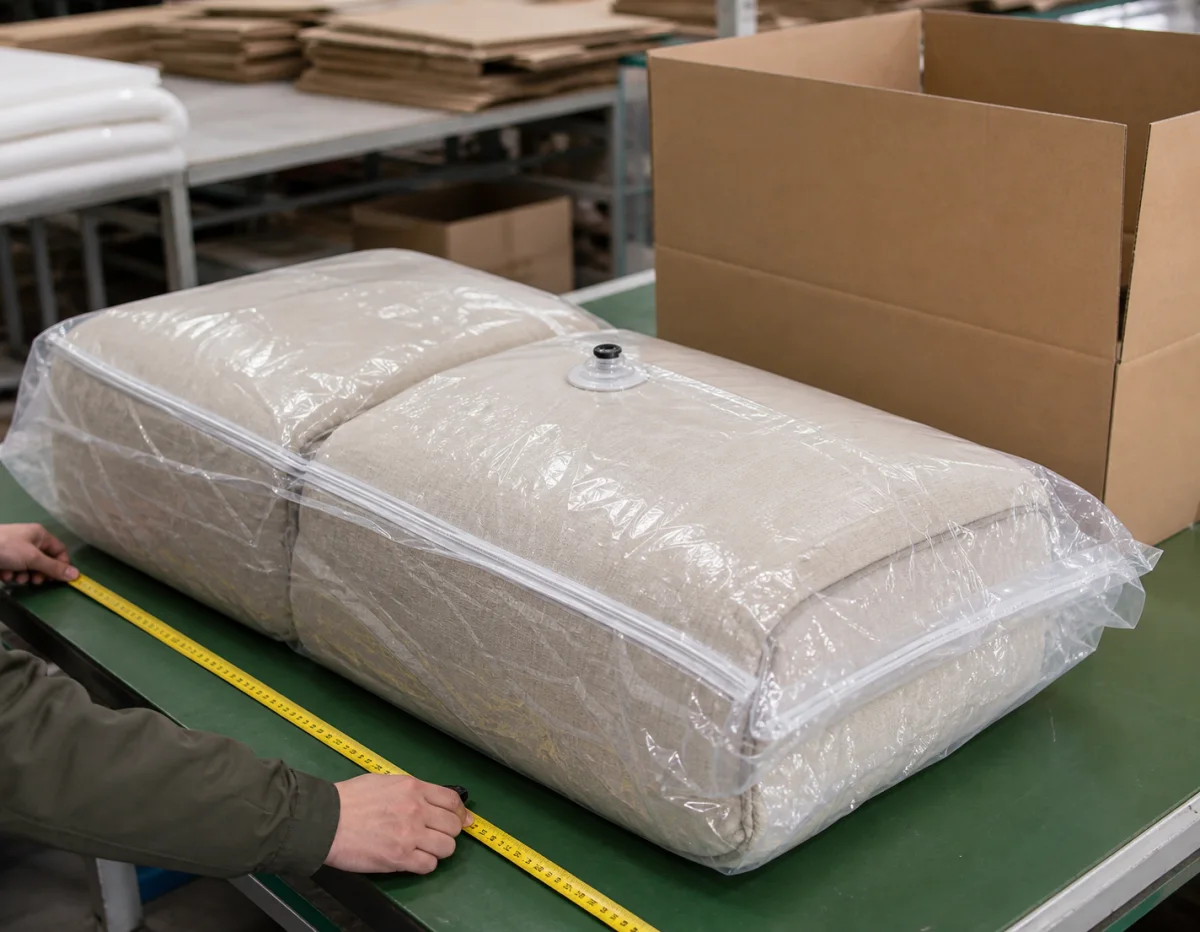
During a package trial, the team records the sofa before compression, verifies the sealed pack and carton, then opens the unit after an agreed hold period. Corners, arms, back sections, seams and fabric surfaces receive particular attention. Instructions should tell the customer how to remove packaging without cutting the cover and what to expect during recovery.
After approval, the final carton dimensions and weight support shipping calculations. Read more about vacuum compression packaging and how it connects to container planning.
The approved packed sample provides the basis for carton size, handling guidance and recovery expectations.
Collection planning
One compression sofa concept can serve different channels.
Ecommerce brands
Priorities often include manageable cartons, clear unboxing, consistent photography and protection against avoidable returns. A limited choice of configurations can make inventory easier to explain and replenish.
Importers and wholesalers
Container utilization, mixed-SKU planning, repeatable specifications and documentation become central. Coordinated loveseats, chairs or ottomans can extend the assortment without creating a completely unrelated construction.
Retail collections
Showroom comfort and fabric presentation carry more weight. Buyers may use compression to improve back-end logistics while keeping a conventional upholstered appearance on the sales floor.
Build one model or a coordinated compression sofa family.
The formats below are development directions rather than fixed retail SKUs. Dimensions, materials, colors, packaging and commercial terms are confirmed for each approved project.
Core format
Three-seat sofa
A familiar living-room proportion that can anchor a wholesale or direct-to-consumer collection. Development focuses on seat support, arm recovery and the balance between finished volume and carton size.
Compact format
Two-seat loveseat
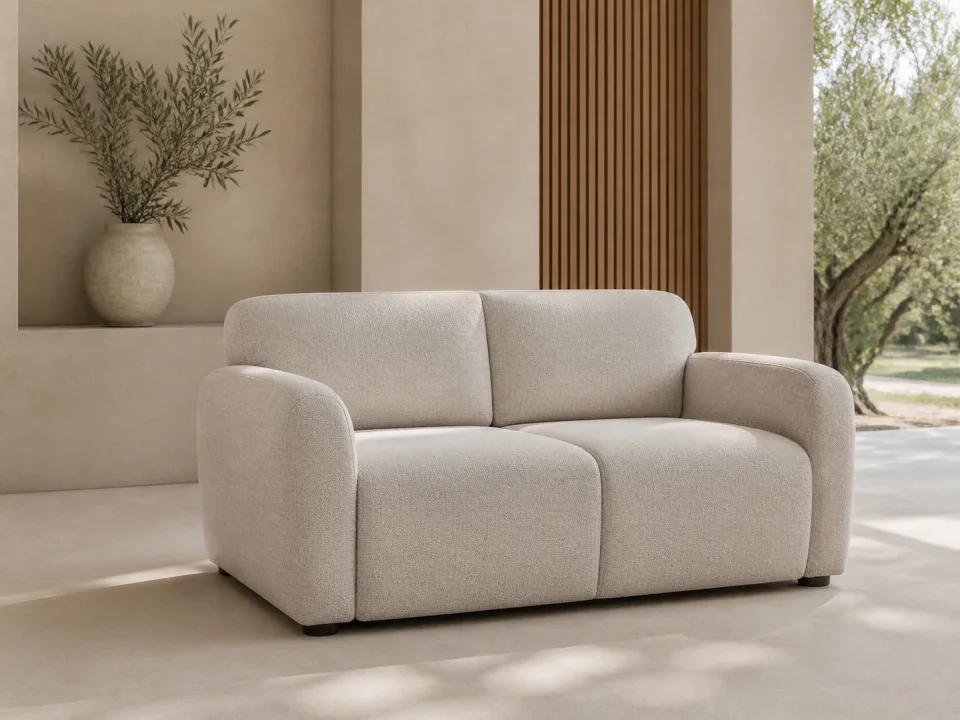
A smaller footprint for apartments, secondary rooms and coordinated sets. Loveseats can share fabric and design language with the main sofa while using their own verified package.
Expandable format
Modular sofa
Armless, corner and ottoman modules extend the collection into multiple room layouts. Module dimensions, connections, carton codes and configuration instructions become part of the approval standard.
Supplier qualification
Company information for your sourcing file.
ALF Home’s manufacturing business was registered on June 28, 2012. The company profile records 14 years of furniture-industry and export experience, a reported 250,000 m² building area and annual export revenue of US$10,965,053. Sales communication is available in English.
FSC, two CE documents and REACH documentation are recorded as available for buyer review. Certificate numbers, issuing bodies, validity dates, tested materials and product scope should be checked against the documents supplied for the specific order. Certification names are not presented as blanket coverage for every compression sofa configuration.
2012
Registered
14 years
Export experience
250,000 m²
Reported building area
EN
Sales languages
Content responsibility
Reviewed by the ALF Home Product Team
Product and sourcing statements were reviewed for consistency with the company’s compression furniture development process. No model-specific density, recovery time, MOQ, lead time or loading quantity is published without an approved product specification.
Product-specific performance must be established through the approved sample and current order specification.
How does a compression sofa work?
A resilient foam-led construction is vacuum packed into a reduced volume. After opening, air returns to the foam and the sofa recovers toward its approved dimensions and shape over an agreed period.
How long does a compressed sofa take to expand?
There is no universal recovery time. Foam composition, thickness, compression duration, temperature and storage conditions all influence expansion. Establish expected usable and full-recovery windows with a packed sample of the specific model.
Can compression sofas be customized for private labels?
Yes. Dimensions, seat feel, foam layers, arms, back shape, upholstery, colors, labels, inserts and carton artwork can be reviewed. Feasibility, MOQ and timing depend on the approved specification.
What packaging data can a buyer request?
After product and packaging approval, request dimensions before compression, packed carton dimensions, gross weight, cubic volume and estimated container quantity. Confirm all figures against the final production package.
Is a compression sofa the same as a boneless sofa?
No. Compression describes the packing method. Boneless describes a frameless or predominantly foam structure. Many boneless sofas can be compressed, but the two terms identify different characteristics.
Buyer knowledge cluster
Use this capability as the commercial reference point.
These editorial guides answer narrower questions and return to this page when a buyer needs product scope, manufacturing support or a project discussion.