OEM & private label foam furniture for global brands

L-shaped & U-shaped OEM seating · China

Compression sectional sofa manufacturer for rooms that need a plan.

A sectional is purchased as one room solution but often produced and shipped as several pieces. ALF Home coordinates configuration, orientation, comfort, carton identity and setup information so every part leads to the layout the customer expected.

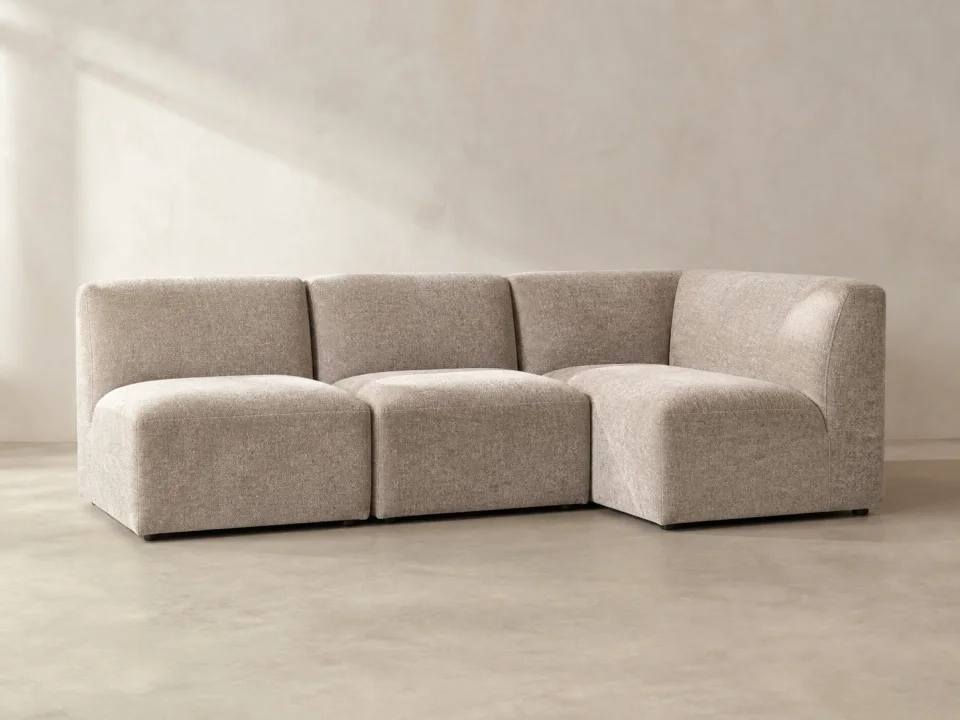
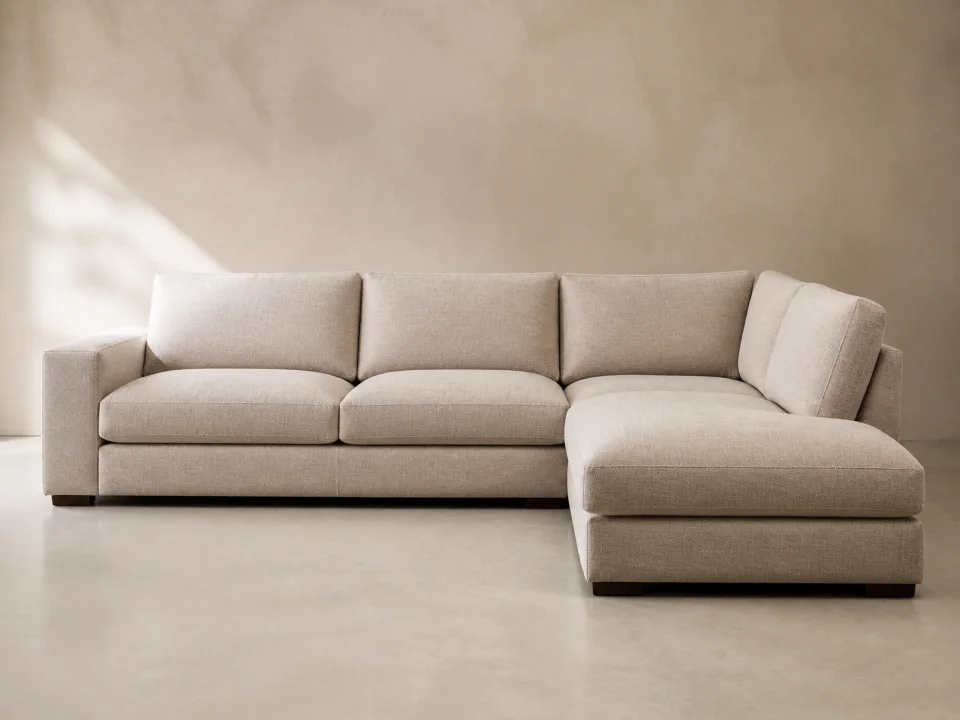
Beige L-shaped compression sectional sofa with deep chaise
An L-shaped sectional combines a main seating run with a return or chaise that must be defined by orientation.

Direct answer

What is a compression sectional sofa?

A compression sectional sofa is a multi-piece seating configuration designed so its foam-led units can be vacuum packed into reduced-volume cartons. The finished layout may be L-shaped, U-shaped, corner-based or a straight sofa with chaise. Buyers may also search for a boneless sectional sofa, modular foam sectional or compressed sectional couch.

The key difference from a single sofa is coordination. Every unit needs a defined position, orientation and carton identity. Product data must describe the complete configuration while production and logistics records control the individual pieces.

Room planning

Choose the footprint before selecting the fabric.

Sectional dimensions affect circulation, doors, focal points and how people converse. A beautiful configuration can still be wrong for the room if the return blocks a walkway.

L

L-shaped sectional

A main seating run turns once through a corner, return or chaise. It provides strong seating capacity without enclosing the room on both sides and often fits standard living spaces more easily than a U-shape.

  • Confirm left or right orientation
  • Measure return depth and passage clearance
  • Identify fixed versus movable chaise
U

U-shaped sectional

Returns on both sides create a larger conversation zone. This format supports more seats but requires wider floor area, additional cartons and a clear component diagram for setup.

  • Confirm internal opening width
  • Balance both returns visually
  • Plan carton and module sequence
CH

Sofa with chaise

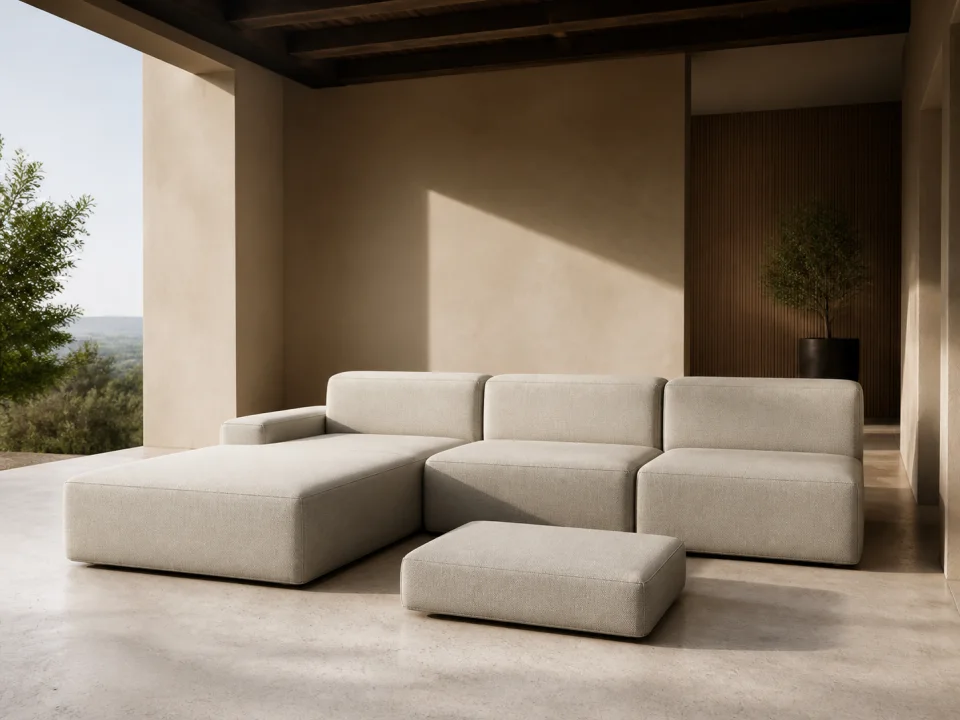
A straight sofa gains a lounging extension through a fixed chaise or coordinated ottoman. A movable extension offers flexible orientation; a fixed chaise creates a more continuous appearance.

  • Match seat and chaise height
  • Control movement where required
  • Show exact retail configuration
Separate foam seating units arranged to demonstrate modular sectional orientation
Orientation names should be supported by a top-view diagram rather than assumed from product photography.

Left versus right

Orientation terminology must survive every handoff.

Furniture retailers do not always use left-facing and right-facing in the same way. One team may describe the side when standing in front of the sofa; another may use the seated person’s perspective. That ambiguity can lead to wrong listings, wrong cartons or wrong deliveries.

The technical specification should state the reference position in plain language and include a top-view drawing. The same orientation code must appear in the bill of materials, purchase order, carton mark, warehouse data, photography and customer setup guide.

Reversible designs reduce orientation risk by using a movable ottoman or interchangeable components. They also require honest presentation: a movable extension may not look or feel identical to a fixed chaise. Both options should be tested for alignment and movement on expected floor surfaces.

Dimensional control

Measure the configuration and every component.

Overall room fit is only one layer of the specification. Production and replacement decisions depend on module-level measurements.

Overall footprint

Record total width, total depth and return dimensions for the assembled layout. Include a top-view diagram showing the measurement points.

Seat geometry

Control seat height, usable depth, back angle and cushion transitions across all units so the configuration feels continuous.

Module dimensions

Record width, depth and height for armless, corner, end and chaise pieces. Tolerances should reflect how visible misalignment becomes after assembly.

Door and delivery context

Compact cartons may help access, but gross weight, carton size, lift restrictions and the number of boxes still influence the real delivery experience.

Private label directions

Three sectional programs for different rooms.

These are development directions rather than fixed stocked SKUs. Final dimensions, materials, colors, packaging and commercial terms are confirmed per project.

L-shaped beige compression sectional with fixed chaise

Efficient footprint

L-shaped sectional

A practical main configuration for family rooms and open-plan spaces, available with a corner return or chaise direction.

Large foam sectional arrangement with two-sided conversation layout

Conversation scale

U-shaped sectional

A larger configuration with returns on both sides, designed around seating capacity, internal opening and coordinated cartons.

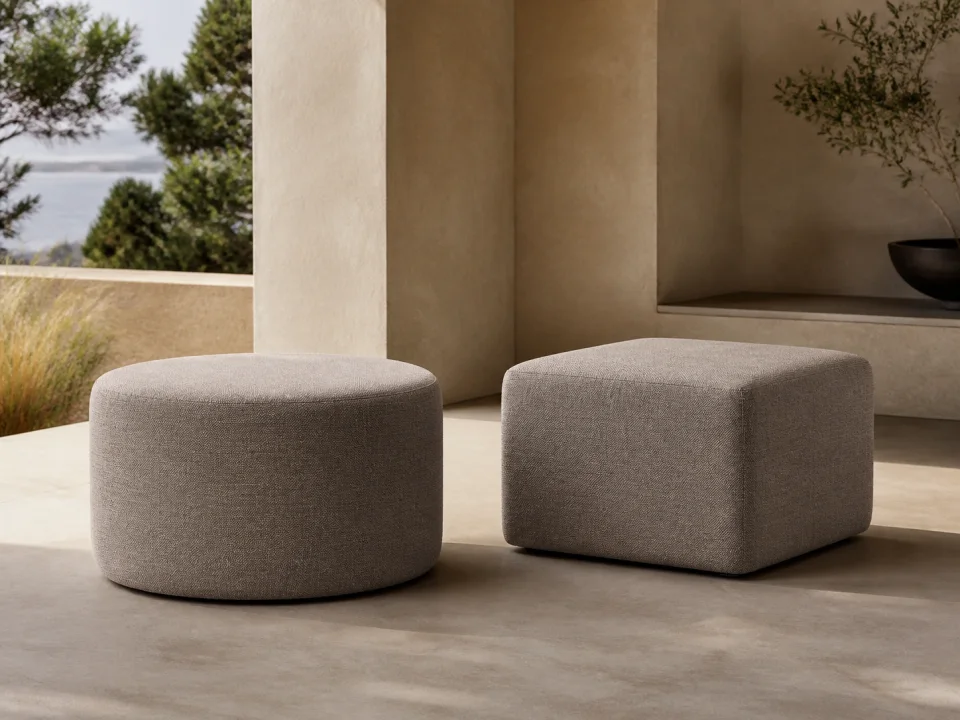
Movable full-foam ottomans used for a reversible chaise extension

Flexible orientation

Reversible chaise set

A sofa and matching ottoman create a flexible lounging extension without committing inventory to left and right versions.

Multi-carton control

The customer orders one sectional—not a puzzle of anonymous boxes.

Large configurations are commonly divided across several cartons. Each box should identify the collection, configuration, module, orientation, fabric, color and carton sequence where applicable. Retailer data should state the total carton count so warehouses and customers know when the order is complete.

A master configuration record connects the sellable SKU to its module list. The packing list and setup guide use the same codes. If one carton is delayed or damaged, customer service can identify the missing component without asking the buyer to describe it from memory.

For container planning, module-level carton data can be combined according to the real order mix. A theoretical 40HQ quantity based on one easy-to-pack unit may not represent an order containing several sectional configurations.

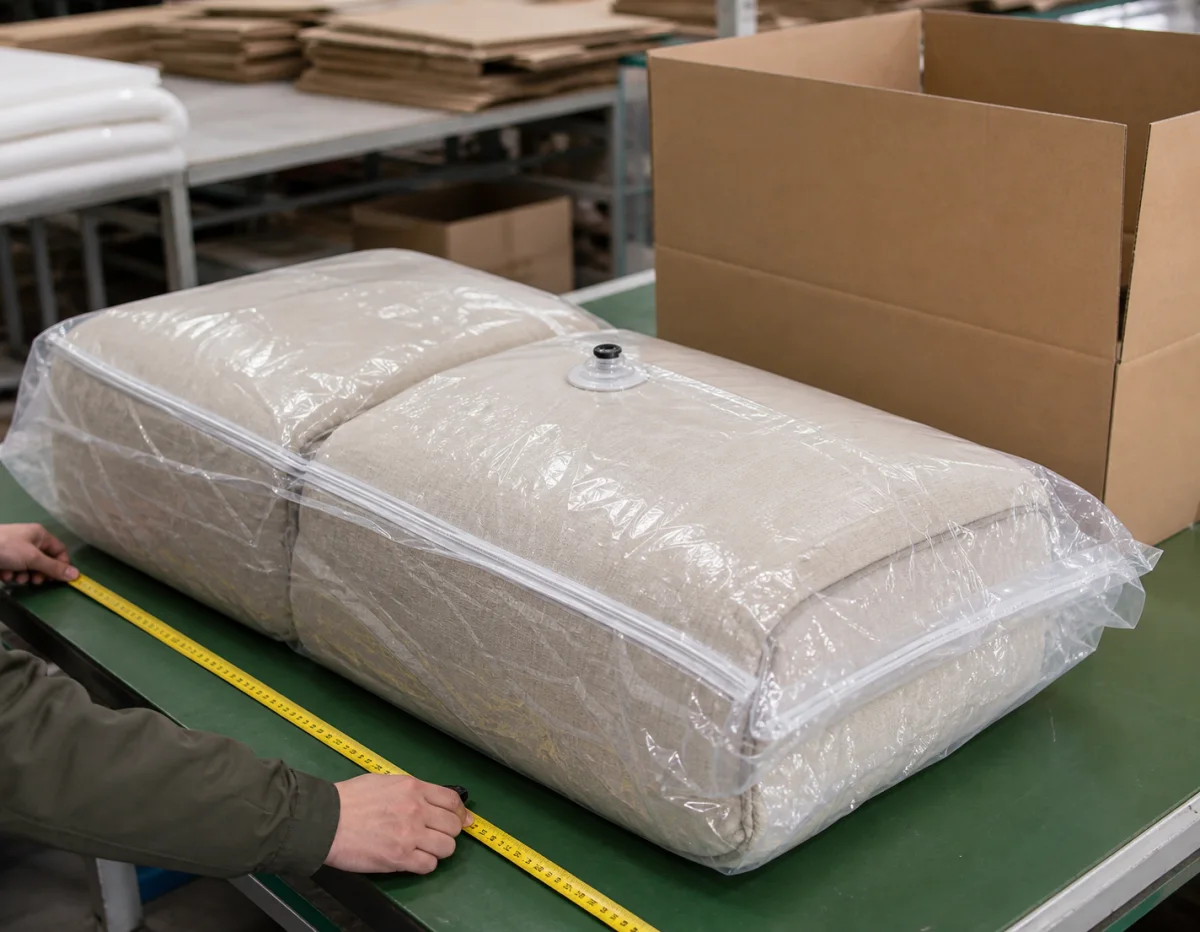
Compressed sectional sofa component measured beside shipping cartons
Verified module packages become the building blocks for configuration-level carton and loading plans.

One continuous sit

Several pieces should still feel like one sofa.

Sectional comfort problems often appear at the transitions: seat heights differ, corner support changes abruptly or a chaise feels softer than the main seats.

Seat alignment

Finished heights and front edges should align after the agreed recovery period. Cover tension can influence the visual result even when the foam dimensions are close.

Corner comfort

The corner is not only a connector. It should support sitting across angles without an awkward hard or empty zone.

Chaise balance

A chaise needs enough underlying support for legs and occasional sitting. Match its top feel to the adjacent seat unless the design intentionally differs.

Gap control

Some gap is necessary for separate modules, but it should remain consistent and within the approved appearance standard.

Supplier qualification

Company information for buyer review.

ALF Home’s manufacturing business was registered on June 28, 2012. The company profile records 14 years of furniture-industry and export experience, a reported 250,000 m² building area and annual export revenue of US$10,965,053. Commercial communication is available in English.

FSC, two CE documents and REACH documentation are recorded as available for review. Certificate scope, issuer, validity, tested materials and product relevance must be confirmed against the documents supplied for the sectional project.

2012
Registered
14 years
Export experience
250,000 m²
Reported building area
FSC · CE · REACH
Documents subject to scope review

Sectional sofa FAQ

Answers before layout approval.

Final carton count and configuration details depend on the approved model.

What is a compression sectional sofa?

It is a multi-part seating configuration with foam-led units designed for reduced-volume packing. Common layouts include L-shaped, U-shaped and sofas with a chaise.

How is left- or right-facing orientation defined?

Define the viewing position in writing, include a top-view diagram and apply the same naming to technical data, cartons, photography and instructions. Do not rely on an undefined industry assumption.

How do I choose between L-shaped and U-shaped?

Compare room dimensions, circulation, seating capacity, focal point and delivery constraints. L-shapes generally fit more rooms; U-shapes create a larger conversation zone and need more floor area.

How many cartons does a sectional use?

The count depends on configuration, module dimensions, packing method and handling limits. Confirm it after product and package trials, then publish it consistently.

Can a movable ottoman create a reversible chaise?

Yes, if height, depth, comfort and movement control coordinate with the sofa. It offers flexible orientation but differs from a fixed chaise in stability and visual continuity.

Content responsibility

Reviewed by the ALF Home Product Team

Configuration, orientation and packaging guidance was reviewed for practical consistency. No carton count, module tolerance, recovery time, loading quantity, MOQ or lead time is claimed without an approved sectional specification.

Last reviewed: August 11, 2026 · About the manufacturer · Request a configuration review

OEM sectional program

Which layout fits your customer’s room?

Share the target footprint, orientation, seating capacity, sales channel and expected quantity. We will organize the specification before sampling.

Discuss your sectional