
Supplier landscape · Buyer guide
Compression sofa sourcing from China: a practical buyer guide.
China offers deep furniture supply networks, but geography alone says nothing about whether a factory can develop, pack and repeat your exact model. A useful evaluation connects the product brief to real processes and evidence.
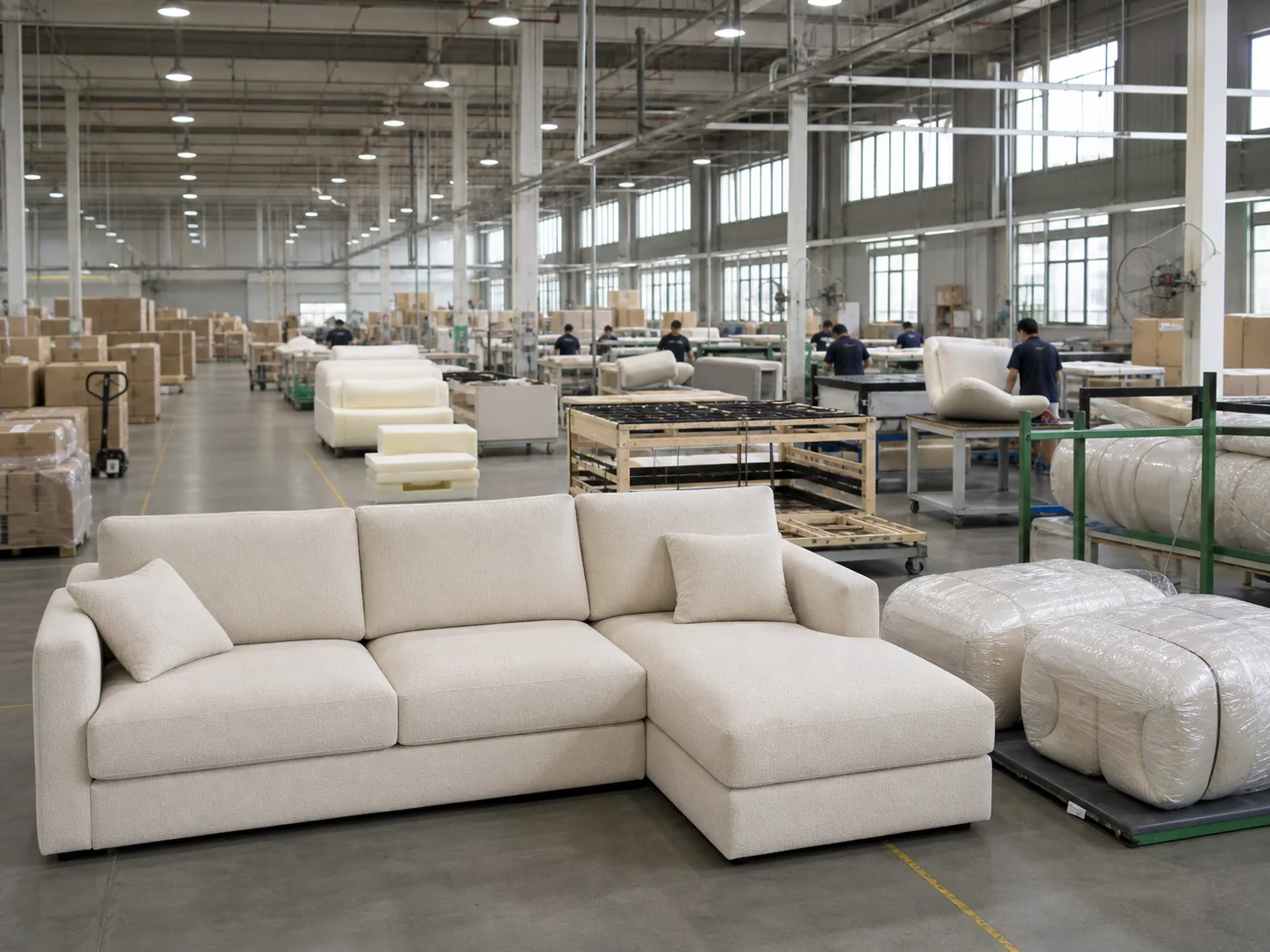
Start with capability that can be demonstrated
A suitable manufacturer should be able to translate a target product into controlled materials, drawings, workmanship standards, packing instructions and an approved sample. The buyer should see how those controls continue into production.
Do not select on a catalogue image, factory area or headline capacity alone. Confirm legal identity, process ownership, subcontracting boundaries, tested model scope and the people responsible for development and quality.
09 · Due diligence
Use a scored decision record.
Weight product fit, development response, process evidence, quality system, packing validation, compliance scope, communication and commercial terms. Record open issues and owners.
A visit or third-party audit can deepen confidence, but neither replaces approval of the actual product and order.
Responsibility for use a scored decision record is shared but should not be vague. The buyer defines market intent and acceptance; development translates it into a buildable standard; production controls the released method; quality records conformance; marketing stays within verified claims. Clear ownership reduces the risk that one team assumes another approved the detail.
- Contracting entity
- Owned and outsourced processes
- Comparable model evidence
- Golden sample control
- Packaging and recovery trial
- Document scope
- Quotation assumptions
08 · Commercial fit
Compare assumptions, not only unit prices.
MOQ may be driven by fabric, color, printed packaging or module mix. Lead time depends on approvals and material availability. Clarify Incoterm, payment, sample cost, tooling and quote validity.
Normalize competing quotations against the same specification so an omitted test or cheaper carton does not appear as manufacturing efficiency.
Commercially, compare assumptions, not only unit prices can influence material minimums, sample rounds, carton development, test cost and launch timing. Put those dependencies next to the quotation rather than discussing them after price approval. A buyer can then decide whether to protect the feature, simplify it or move it into a later collection revision.
07 · Compliance
Map evidence to product, market and claim.
CE, REACH or FSC references can apply differently depending on product type, material, chain of custody and destination. Request the document, issuing body, holder, validity and exact scope.
ALF Home reports FSC, CE and REACH-related credentials, but applicability must be confirmed for the ordered model and destination.
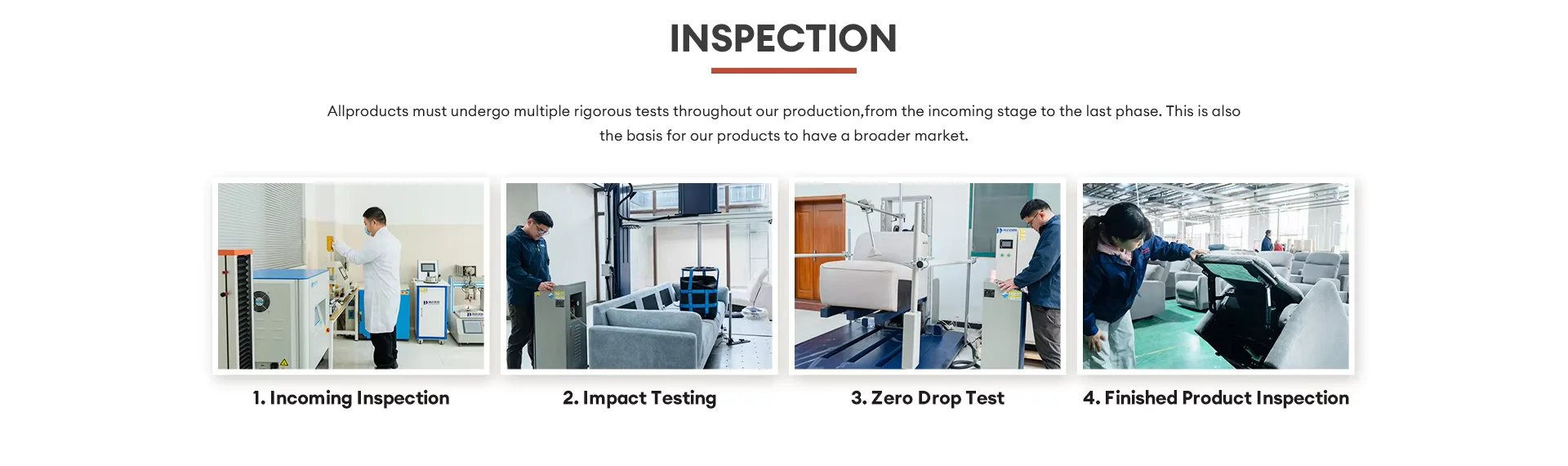
Inspection of map evidence to product, market and claim needs a repeatable viewpoint. Define product conditioning, placement, measuring points, lighting or configuration where relevant, then distinguish a one-off workmanship issue from a repeated process pattern. Sampling and acceptance can be set for the real order instead of copied from an unrelated furniture program.
06 · Quality
Build controls around failure opportunities.
Incoming material identity, foam cutting, bonding, cover fit, appearance, function, pack-out and recovery each expose different risks. A final visual check cannot reconstruct hidden construction.
Ask for a project control plan and sample records, then verify that the criteria agree with the purchase specification.
Retail language should describe build controls around failure opportunities at the same level the evidence supports. Avoid turning a conditional trial observation into words such as always, instant, waterproof, maintenance-free or guaranteed. Clear dimensions, setup steps, limitations and care instructions help the customer understand the actual product and give after-sales teams a fair reference.
05 · Packaging
Require model-specific compression evidence.
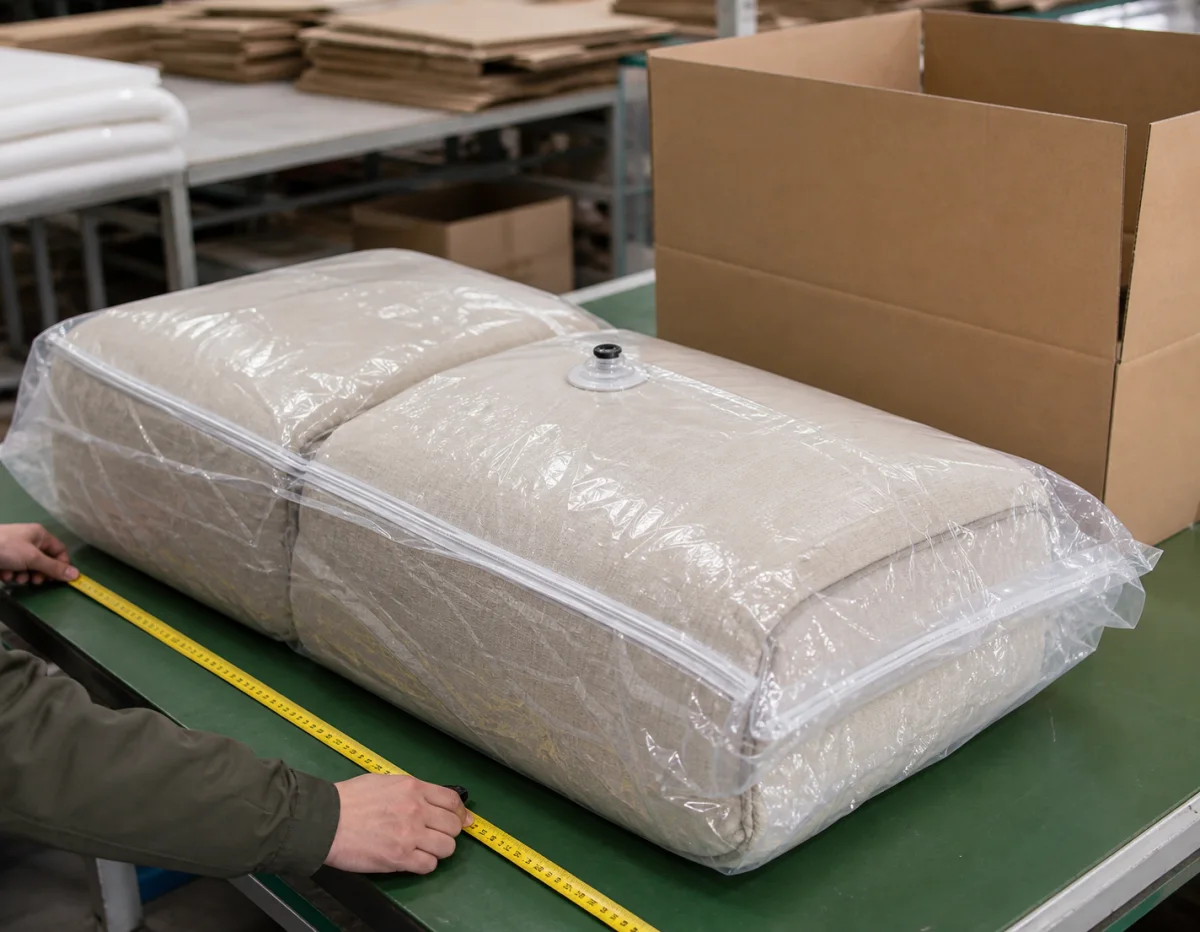
Packing performance belongs to the exact foam, cover, fold path, bag, carton and storage history. Review opening safety, recovery observations and the authorized carton dimensions.
A compression percentage without original dimensions, calculation method and test conditions is not a logistics specification.
The evidence file for require model-specific compression evidence may combine drawings, material codes, photographs, measurements, trial notes and third-party reports. These items answer different questions. Keep the model and revision attached to every record so a later team does not apply a result from one construction to another sofa that merely looks similar.
04 · Development
Evaluate how the team handles incomplete briefs.
A capable development team identifies missing dimensions, ambiguous curves, seam risks, fabric constraints and packing conflicts before quoting them as settled. It records decisions through drawings and sample comments.
Observe whether feedback is converted into measurable changes or merely acknowledged in email.
When a source, color, foam zone, pattern or packing method changes, reopen the decisions affected by evaluate how the team handles incomplete briefs. “Equivalent” is not a result until relevant properties and the finished sample have been compared. The change record should identify why the revision was accepted and which earlier tests or appearance references remain applicable.
03 · Capability
Trace one comparable product through the actual process.
A guided process walk is more informative than a showroom tour. Follow material receipt, identification, cutting, bonding, sewing, assembly, in-process checks, vacuum packing and carton release.
Ask where unresolved material, rejected parts and approved references are held. The answers show whether controls are operational or only described.
For an RFQ, state the market, quantity and intended claim behind trace one comparable product through the actual process. Suppliers may propose different technical routes, but each route should disclose material assumptions, sample work, testing needs and effects on MOQ or timing. Keeping alternatives visible prevents a low headline price from silently describing a different product.
02 · Legal identity
Match the quotation, factory and contracting entity.
Verify the registered business name, address and role of any trading or export entity. Ask which site performs foam conversion, sewing, upholstery, packing and inspection.
Documents bearing a supplier name are not automatically evidence for every factory, product or destination. Record the relationship and scope.
During sample review, evaluate match the quotation, factory and contracting entity on the complete product rather than on an isolated material swatch or component. Record the starting condition, the requested change and the observations after that change. Recheck connected features such as dimensions, seam location, sitting response and packaging whenever the adjustment can move an earlier approval.
01 · Search brief
Define the supplier role before building a shortlist.
State whether the project needs original development, adaptation of an existing platform, private-label packaging or repeat production. Include destination, channel, quantities, timing and evidence requirements.
A factory strong in repeat production may not offer design engineering; a development-led partner may require a longer sample stage. The correct shortlist depends on the job.
Translate this point into an approval item for china manufacturer guide. Name the SKU, responsible reviewer, reference sample, document revision and decision date. If the requirement cannot yet be measured, describe the visual or user outcome and retain photographs from a consistent angle. That record gives production and inspection something more useful than a general preference about define the supplier role before building a shortlist. It also gives a later buyer enough context to distinguish a deliberate product decision from an undocumented deviation, reducing repeated debate when the collection is reordered, expanded into another color or reviewed by a different quality team.
Put the guide to work
Turn china manufacturer guide into a decision record.
Begin with the actual model and destination rather than a category assumption. The first review should connect define the supplier role before building a shortlist, match the quotation, factory and contracting entity and trace one comparable product through the actual process. Record which statements are confirmed by drawings or samples, which rely on supplier information and which still need a packaging trial, inspection or third-party test.
Next, assign decisions to people and dates. The buyer owns the market promise and final acceptance. Product development owns the translated specification. Purchasing protects approved material identity, production follows the released method, and quality records the agreed evidence. When evaluate how the team handles incomplete briefs or require model-specific compression evidence changes, reopen every dependent approval instead of treating the revision as isolated.
Finally, keep the quotation and retail copy inside the same evidence boundary. MOQ, price, lead time, carton data and performance language can only be as reliable as their disclosed assumptions. This approach may take more questions at the beginning, but it creates a clearer sample review and a more defensible purchase order.
Topic cluster · OEM Manufacturing & Quality
Continue from explanation to a sourcing decision.
This guide belongs to a connected evidence path. Use the commercial overview for scope, the category archive for the complete subject, and the adjacent guides for the questions that normally follow.
Article FAQ
Short answers for the next decision.
Is every China sofa factory an exporter?
No. Confirm export responsibility, contracting entity and destination experience.
Does a large building prove capacity?
No. Capacity needs a defined product, process, period and current load.
Can one certificate cover all sofas?
Not necessarily; check holder, scope, material, model and destination.
Should buyers visit the factory?
A visit can add evidence, but product samples and written controls remain essential.
What belongs in the first inquiry?
Product, dimensions, market, channel, quantity, materials, packaging, tests and timing.
Editorial responsibility
Editorial and technical review
Company facts and credentials are presented with scope cautions; no universal capacity, compliance or performance conclusion is implied.
Updated: August 11, 2026 · About the publisher · Ask about a project