
Materials specification · Buyer guide
The best foam density for a sofa is not one universal number.
Density can help identify and compare foam, but it does not independently predict sitting feel, support, durability or compression recovery. Buyers need the unit, test basis, layer role and complete sample.
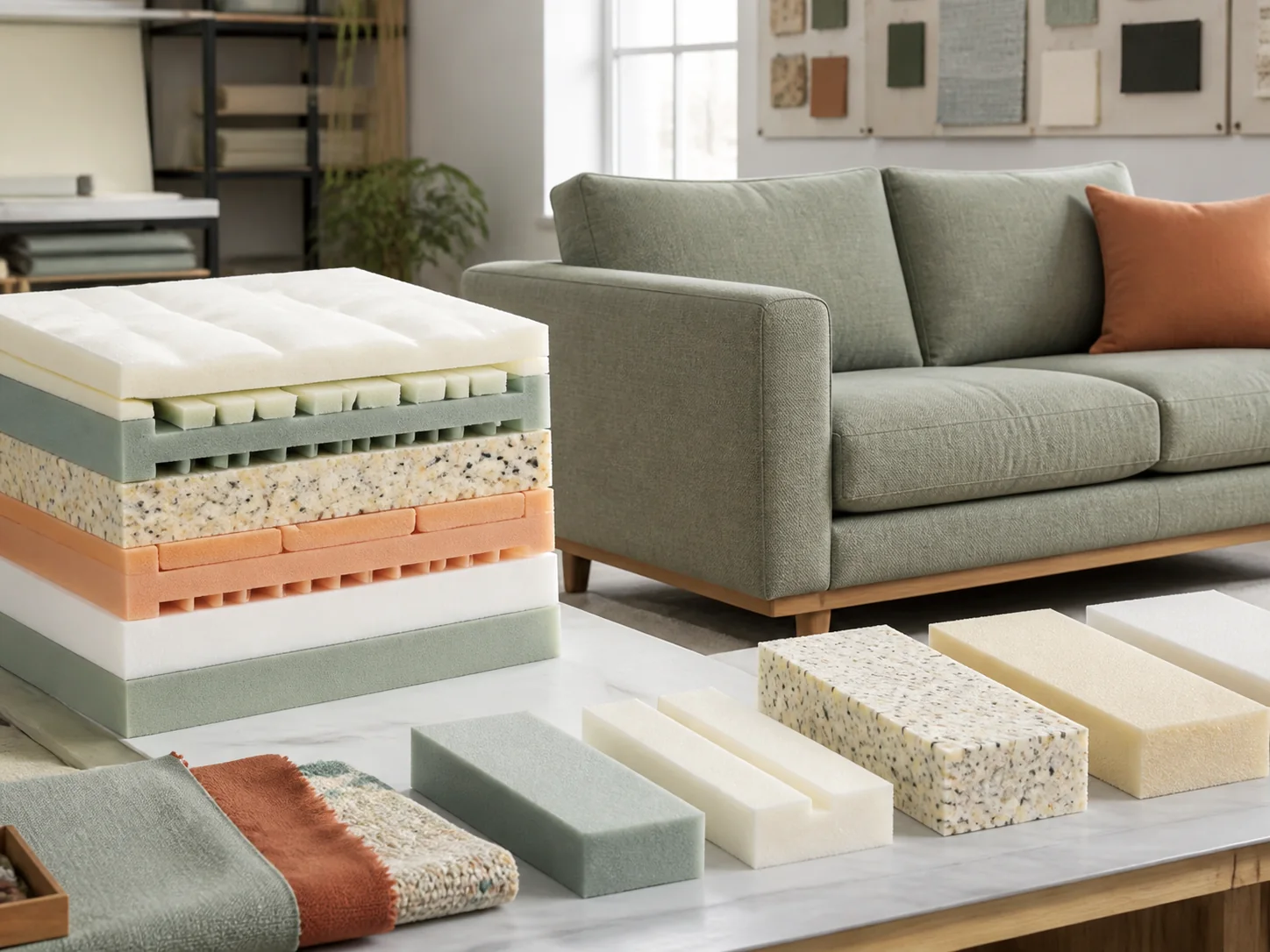
The direct sourcing answer
There is no single best foam density for every sofa. The appropriate material depends on whether it forms a foundation, comfort surface, back, edge or sculptural zone, and on the geometry and performance required from that zone.
Density is mass per unit volume. Firmness measures resistance under defined conditions. A denser foam is not automatically firmer, and a firmness number without a method is incomplete.
01 · Definition
Density needs a unit and a sampling method.
Ask whether the value is expressed in kilograms per cubic metre, pounds per cubic foot or another unit, and how the sample was conditioned and measured. A bare number can be misread across markets.
Use the material code and supplier beside the value. Density is one identity check, not permission to replace the foam with anything that shares a rounded number.
Translate this point into an approval item for best foam density for a sofa. Name the SKU, responsible reviewer, reference sample, document revision and decision date. If the requirement cannot yet be measured, describe the visual or user outcome and retain photographs from a consistent angle. That record gives production and inspection something more useful than a general preference about density needs a unit and a sampling method. It also gives a later buyer enough context to distinguish a deliberate product decision from an undocumented deviation, reducing repeated debate when the collection is reordered, expanded into another color or reviewed by a different quality team.
02 · Distinction
Firmness answers a different question.
Firmness results depend on test method, sample thickness, compression percentage and condition. They are useful when the method and tolerance are stated.
The finished seat also depends on layer thickness, area, cover tension and support beneath it. Do not use density as a shortcut for “soft” or “hard.”
During sample review, evaluate firmness answers a different question on the complete product rather than on an isolated material swatch or component. Record the starting condition, the requested change and the observations after that change. Recheck connected features such as dimensions, seam location, sitting response and packaging whenever the adjustment can move an earlier approval.
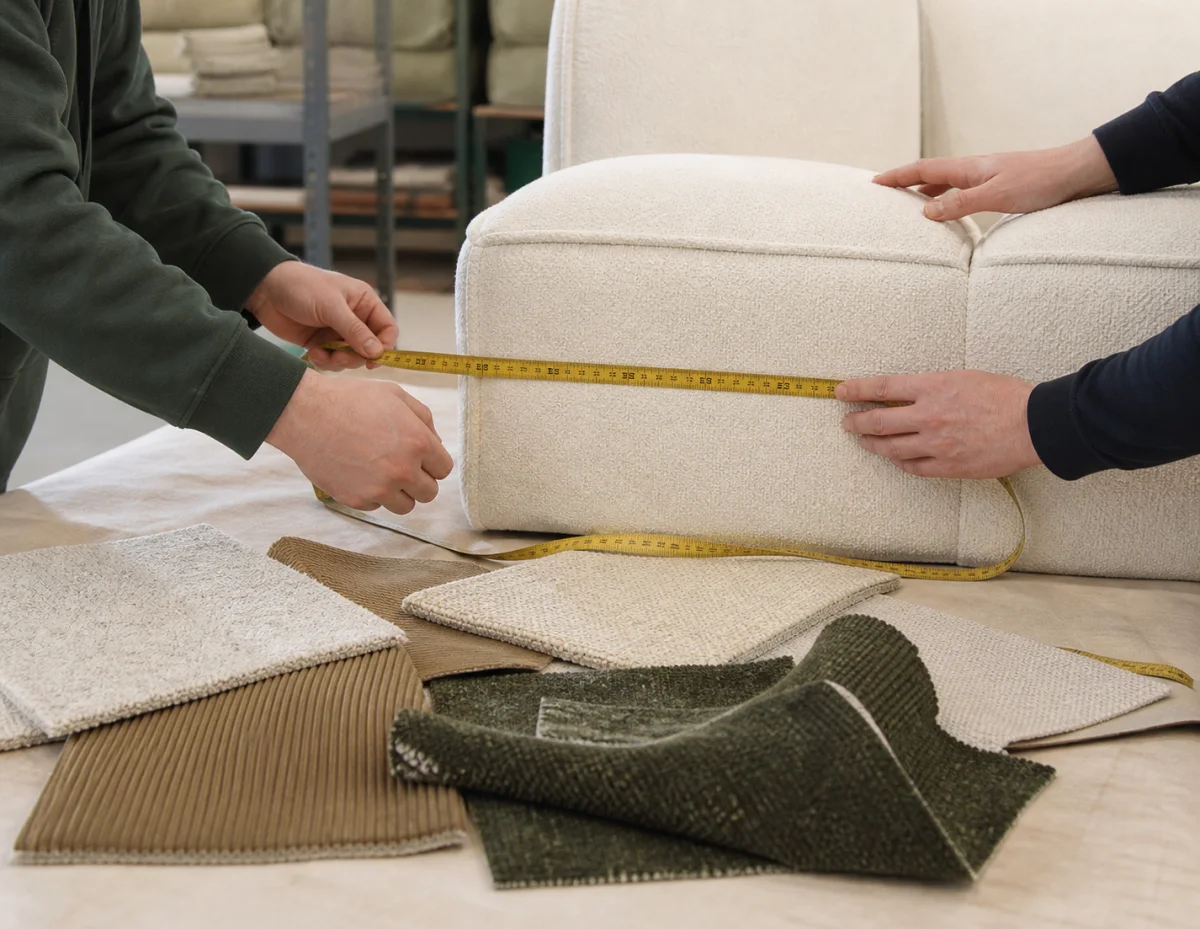
03 · Layer map
Foundation and comfort layers have different jobs.
A lower zone may hold geometry and limit bottoming while a surface layer manages initial contact. Back and arm zones have their own thickness and edge requirements.
Specify each component by location, dimensions and role. One material across the whole product may simplify purchasing but may not deliver the intended transitions.
For an RFQ, state the market, quantity and intended claim behind foundation and comfort layers have different jobs. Suppliers may propose different technical routes, but each route should disclose material assumptions, sample work, testing needs and effects on MOQ or timing. Keeping alternatives visible prevents a low headline price from silently describing a different product.
04 · Product geometry
The same foam can feel different in another sofa.
A thick broad seat, narrow edge and curved back distribute load differently. Seat depth and posture change where the user applies pressure.
Compare the complete prototype, not loose blocks. A material result from one silhouette should not be extended to a new design without review.
When a source, color, foam zone, pattern or packing method changes, reopen the decisions affected by the same foam can feel different in another sofa. “Equivalent” is not a result until relevant properties and the finished sample have been compared. The change record should identify why the revision was accepted and which earlier tests or appearance references remain applicable.
05 · Compression
Packaging adds recovery to the material brief.
Foam that feels acceptable before packing must still restore useful dimensions, shape and sitting response after the approved compression history. Thick and thin zones may recover differently.
Trial the selected fabric too, because recovering foam and cover tension interact. Record conditions instead of publishing a universal expansion time.
The evidence file for packaging adds recovery to the material brief may combine drawings, material codes, photographs, measurements, trial notes and third-party reports. These items answer different questions. Keep the model and revision attached to every record so a later team does not apply a result from one construction to another sofa that merely looks similar.

06 · Durability
Density is not a complete life-span claim.
Composition, cell structure, fatigue behavior, bonding, environment and use influence change over time. The applicable test plan should reflect the destination and product claim.
Avoid turning a supplier specification into a warranty. Identify the sample and method behind any performance evidence.
Retail language should describe density is not a complete life-span claim at the same level the evidence supports. Avoid turning a conditional trial observation into words such as always, instant, waterproof, maintenance-free or guaranteed. Clear dimensions, setup steps, limitations and care instructions help the customer understand the actual product and give after-sales teams a fair reference.
07 · Inspection
Incoming checks protect material identity.
Purchasing references, labels, lot records and suitable checks help keep released foam separate from unresolved substitutions. Measurements require agreed conditions.
Process checks should confirm component position and bonding before the cover hides the construction. Finished feel alone may not reveal an internal error.
Inspection of incoming checks protect material identity needs a repeatable viewpoint. Define product conditioning, placement, measuring points, lighting or configuration where relevant, then distinguish a one-off workmanship issue from a repeated process pattern. Sampling and acceptance can be set for the real order instead of copied from an unrelated furniture program.
08 · Change control
Equivalent foam needs finished-product evidence.
Compare supplier, measurable properties, processing, appearance, odor where relevant, recovery and sitting response. Identify which earlier tests could be affected.
Update the bill of materials and sample status after approval. Informal substitution undermines both inspection and later problem analysis.
Commercially, equivalent foam needs finished-product evidence can influence material minimums, sample rounds, carton development, test cost and launch timing. Put those dependencies next to the quotation rather than discussing them after price approval. A buyer can then decide whether to protect the feature, simplify it or move it into a later collection revision.
09 · RFQ
Ask for a foam construction, not a marketing adjective.
Provide posture, dimensions, intended use, packaging, market and performance expectations. Ask the supplier to map material options to each zone.
Approve numerical references and the physical sample together. That creates a standard purchasing and product teams can both use.
Responsibility for ask for a foam construction, not a marketing adjective is shared but should not be vague. The buyer defines market intent and acceptance; development translates it into a buildable standard; production controls the released method; quality records conformance; marketing stays within verified claims. Clear ownership reduces the risk that one team assumes another approved the detail.
- Unit and method
- Material and supplier code
- Layer location and thickness
- Firmness test reference
- Packaging recovery criteria
- Approved alternatives
Put the guide to work
Turn best foam density for a sofa into a decision record.
Begin with the actual model and destination rather than a category assumption. The first review should connect density needs a unit and a sampling method, firmness answers a different question and foundation and comfort layers have different jobs. Record which statements are confirmed by drawings or samples, which rely on supplier information and which still need a packaging trial, inspection or third-party test.
Next, assign decisions to people and dates. The buyer owns the market promise and final acceptance. Product development owns the translated specification. Purchasing protects approved material identity, production follows the released method, and quality records the agreed evidence. When the same foam can feel different in another sofa or packaging adds recovery to the material brief changes, reopen every dependent approval instead of treating the revision as isolated.
Finally, keep the quotation and retail copy inside the same evidence boundary. MOQ, price, lead time, carton data and performance language can only be as reliable as their disclosed assumptions. This approach may take more questions at the beginning, but it creates a clearer sample review and a more defensible purchase order.
Topic cluster · Sofa Materials & Recovery
Continue from explanation to a sourcing decision.
This guide belongs to a connected evidence path. Use the commercial overview for scope, the category archive for the complete subject, and the adjacent guides for the questions that normally follow.
Article FAQ
Short answers for the next decision.
Is higher density always better?
No. The material must suit the zone, geometry and complete construction.
Is density the same as firmness?
No. They measure different properties.
Can one density be used throughout a sofa?
It can be proposed, but different zones often have different jobs.
Does density prove durability?
No. Applicable construction and performance evidence are also needed.
What should buyers approve?
Material identity, units, methods, layer map, sample feel and recovery criteria.
Editorial responsibility
Editorial and technical review
No foam grade, density range or durability claim is prescribed without an actual construction, method and market.
Updated: August 11, 2026 · About the publisher · Ask about a project