Upholstery
Hand feel, abrasion expectations, colorfastness, care method, lot consistency and the destination-market test plan should be agreed for the selected fabric.
 Request a quote
OEM child-sized foam seating · China
Children do not use furniture like scaled-down adults. ALF Home develops full-foam chairs and sofas around a declared age group, reachable seat height, supportive proportions, material choices, care instructions and the requirements of the destination market.
Direct answer
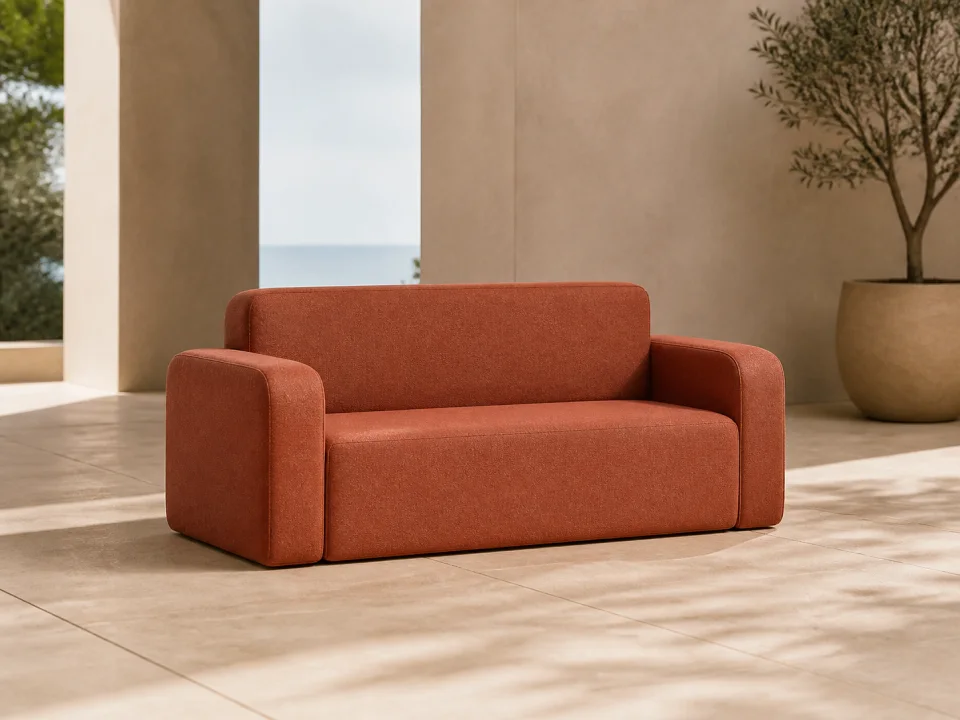
A kids foam sofa is child-proportioned seating in which foam creates most or all of the supportive form. Common formats include a single armchair, two-seat sofa, reading lounger and simple modular set. A compact footprint and low mass can make the product easier for an adult to place in a bedroom, reading corner or family space.
“Foam” and “child-sized” are descriptions, not safety certifications. Age grading, dimensions, materials, access points, workmanship, labels and test scope must be reviewed for the intended market. The approved product specification—not a generic category claim—should control sourcing and retail communication.
Start with context
A useful inquiry explains where the seat will be sold and how it is expected to be used before choosing colors or decorative details.
Country, sales channel and retailer protocol help identify which regulatory questions and documents need to be addressed.
A defined user group guides proportions, labeling and review. “For children” is too broad for responsible development.
Bedroom, supervised play area, reading corner or commercial family space can create different care and durability expectations.
Reading seat, occasional lounge chair, two-person sofa or movable module should be stated without implying unintended play functions.
Fixed or removable cover, cleaning method, closure access and replacement-cover plan affect both pattern engineering and instructions.
Private label artwork, carton language, assembly or recovery guide, warnings and online imagery should describe the same approved model.
Proportion before styling
Reducing every adult-sofa measurement by one percentage does not automatically create a comfortable child seat. Seat height affects how easily the intended user approaches and leaves the product. Seat depth influences whether the back can reach support. Arm height and width change usable space, while back angle shapes a reading or relaxing posture.
The product drawing should record finished dimensions and the reference points used to measure them. During sample review, the team can compare the empty shape with the loaded sitting position and check whether soft edges retain their intended form. Any evaluation involving children should be planned and supervised appropriately by the responsible buyer or qualified testing party.
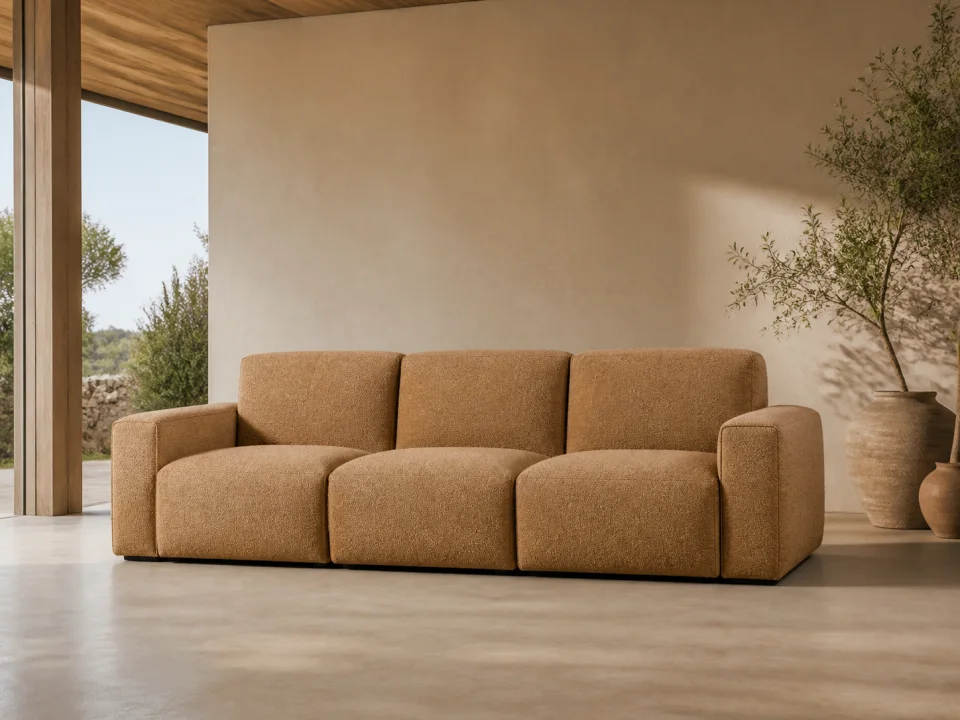
ALF Home can develop a visual family relationship with an adult foam sofa without copying its dimensions. Shared seam language, fabric or silhouette can connect the collection while the child-sized seat keeps its own specification.
Material map
Materials are assessed as part of the complete construction. A fabric name or foam type alone cannot establish compliance.
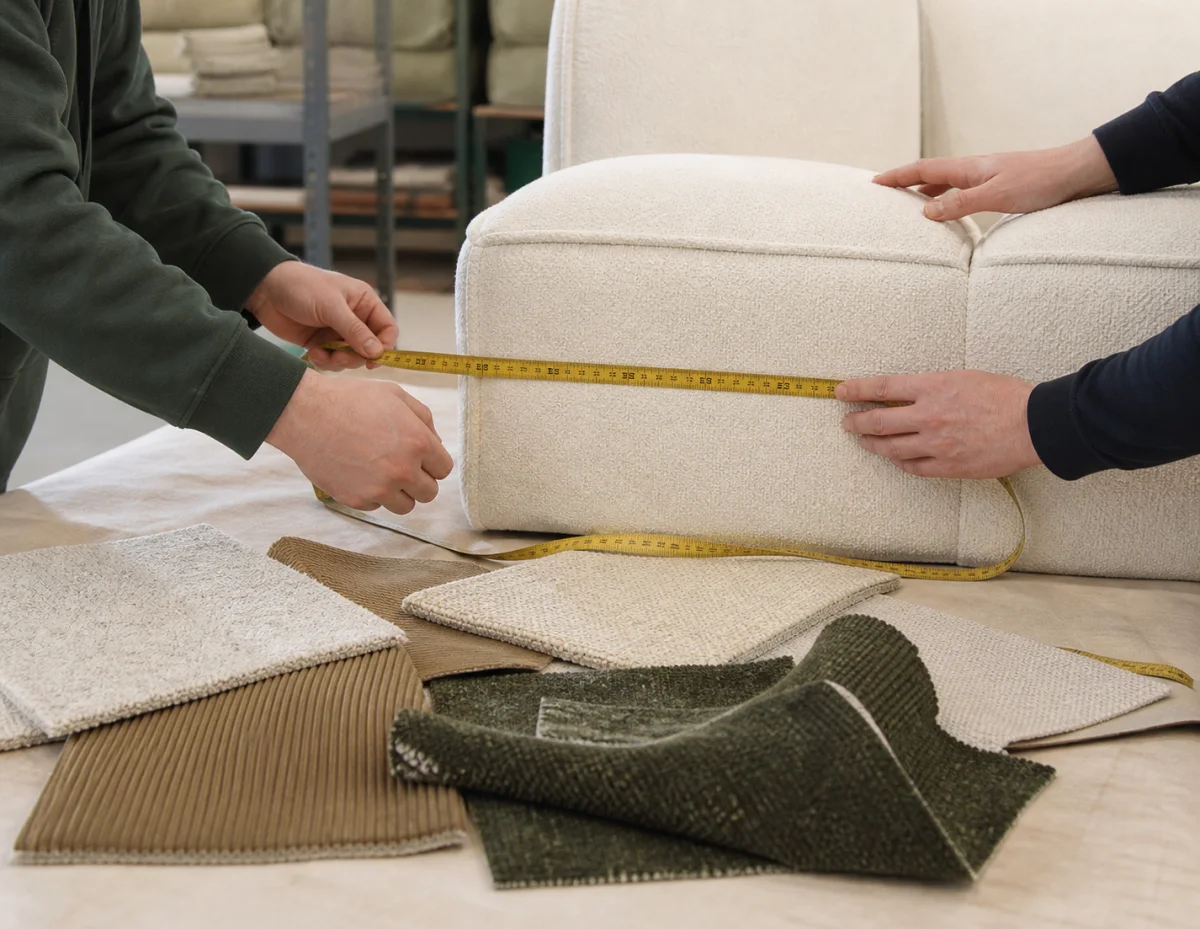
Hand feel, abrasion expectations, colorfastness, care method, lot consistency and the destination-market test plan should be agreed for the selected fabric.
Layer positions, firmness direction, edge behavior, bonding and recovery expectations are recorded against the approved sample rather than described only as “soft.”
Zippers, pullers, hook-and-loop components and seam locations need deliberate access and workmanship decisions for the specified user group.
Age guidance, intended use, care, unpacking and legally required information should be legible, consistent and translated for the sales market where required.
Cover decisions
A removable cover can be useful in family spaces, but the buyer must define what “washable” means for the selected textile and construction. The care label should follow validated instructions. Removing and reinstalling the cover should not expose an unresolved detail or make it difficult to restore the intended fit.
A fixed cover can provide a cleaner silhouette and simpler daily setup. It requires a realistic spot-care instruction and thoughtful fabric selection. In either approach, seams should sit where the design expects after normal use, and decorative elements should not be added without reviewing attachment and access.
Replacement covers can extend the commercial program when color codes, patterns and fit are controlled. They should be approved against the same construction revision as the foam core.
Collection architecture
Every direction below is customized by project. Age grading, dimensions, materials, testing, packaging, MOQ and lead time remain subject to written approval.
A compact single seat with defined back support and reachable arms. It can serve as the visual lead product in a color or character-free private label collection.
Compare lounge-chair construction →A wider format for shared reading or quiet sitting. Usable width, center support behavior and the intended number of users need to be stated clearly.
Compare compact two-seat planning →Simple lightweight pieces can support flexible layouts when each component and configuration has a defined use. The product must not imply climbing or building functions unless specifically developed and assessed for them.
Explore modular system logic →Sample-to-order control
Packaging experience
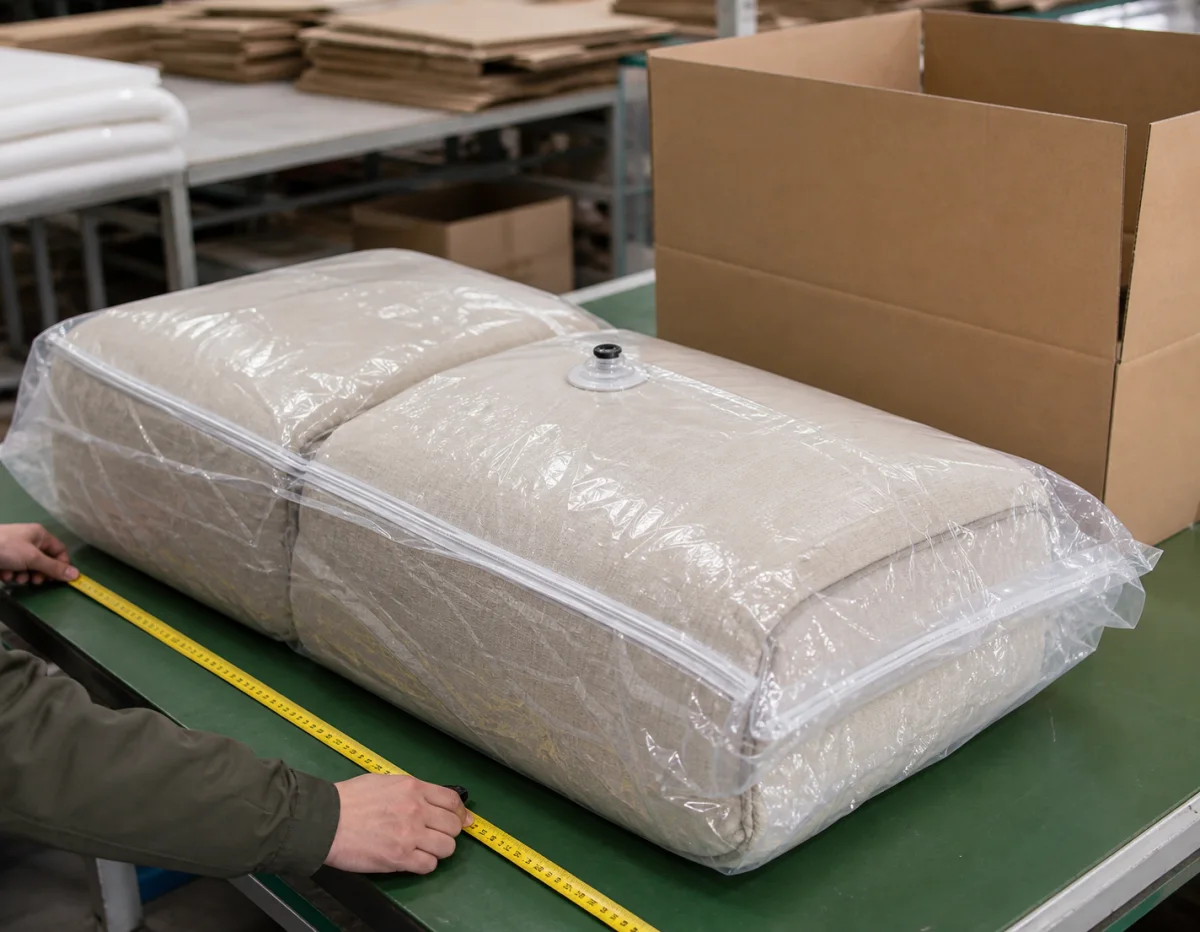
Some child-sized full-foam seats may suit vacuum compression, but small size does not guarantee a successful package. Foam behavior, upholstery, seam geometry and time under compression can influence the result. A trial establishes the packing method, carton size and recovery checks for the approved model.
The outer carton should identify the product, color, quantity and responsible-party information required by the order. Inside, the opening method should tell an adult how to remove packaging carefully, where to place the product and what recovery behavior to expect. Plastic packaging and other materials must be managed according to applicable warnings and local requirements.
Read the complete compression packaging process and coordinate retailer-specific labeling before production artwork is released.
Compliance without shortcuts
Children's products can face different rules depending on destination, age grading, construction, materials, claims and classification. The buyer or responsible party should identify applicable legal standards and retailer protocols, then confirm the test plan with a qualified laboratory. Passing information from a different material or model should not be treated as proof for a new product.
ALF Home records FSC, two CE documents and REACH documentation as available for buyer review. Their relevance must be verified by certificate number, issuer, validity, material or product scope and destination. A CE document is not presented here as a universal approval for every kids sofa.
Supplier transparency
ALF Home's manufacturing business was registered on June 28, 2012. The company profile records 14 years of furniture-industry and export experience, a reported 250,000 m² building area and annual export revenue of US$10,965,053. Commercial communication is available in English.
These facts support supplier qualification; they do not replace model-specific evaluation. Buyers are invited to review the factory information, request relevant documents and define inspection points before placing an order.
Kids foam sofa FAQ
Final requirements are confirmed against the product, market and approved documentation.
Provide the destination market, intended age, use environment, dimensions, upholstery, care approach, labeling needs, packaging and expected testing scope.
No. Softness alone does not establish safety. The complete design, materials, access points, workmanship, labels and applicable requirements need review.
Yes, when closure access, fit and validated care instructions are appropriate for the intended product. The finished sample should be reviewed after removal and refitting.
Some constructions can, subject to a model-specific trial for deformation, cover condition, recovery and carton protection.
That depends on destination, classification, materials, age grading and retailer protocol. Verify that every document covers the exact current product and scope.
Content responsibility
This sourcing guidance distinguishes design intent from verified performance. No age suitability, safety result, test compliance, recovery time, carton reduction, MOQ or lead time is promised without an approved model and supporting evidence.
Last reviewed: August 11, 2026 · About the manufacturer · Request a development review
OEM children's seating
Share your concept, destination, dimensions, material direction, quantity and retailer requirements. We will organize the questions needed for a responsible sample brief.
Discuss your kids sofa