Back rise
The height and angle behind the torso determine whether the user feels seated, reclined or nearly flat. A steep rise supports reading; a lower slope encourages deeper lounging.
 Request a quote
OEM reclining foam furniture · China
A chaise asks the body to move from sitting toward reclining without becoming a bed. ALF Home develops full-foam and boneless loungers around back rise, leg support, surface continuity, sculptural upholstery and compact delivery.
Direct answer
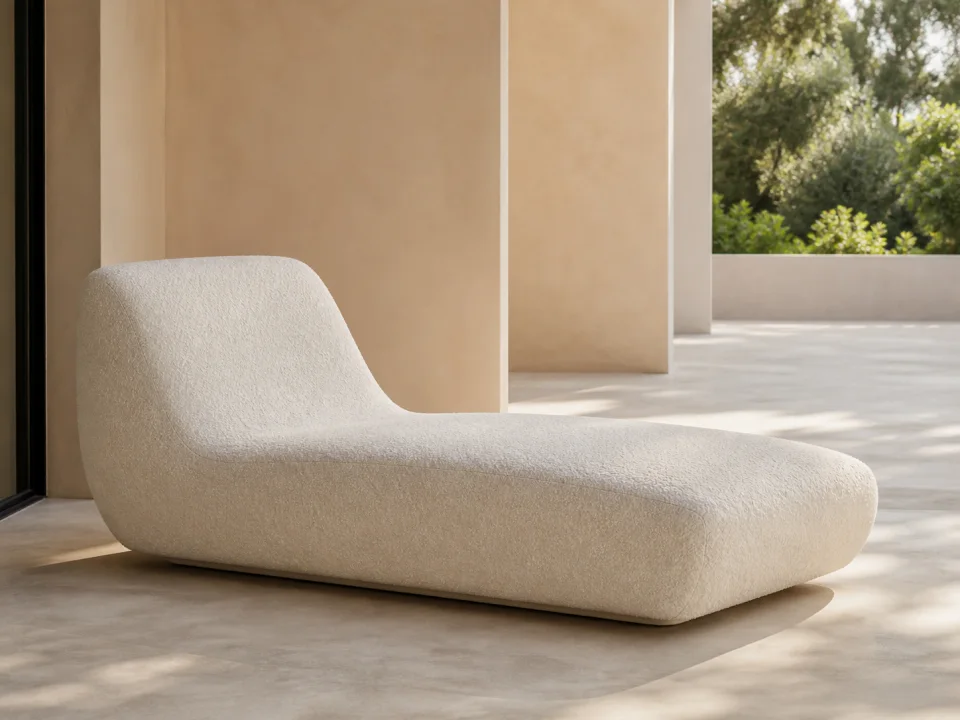
A compression chaise lounge is an elongated upholstered seat designed for reclining and engineered for reduced-volume vacuum packing. It may also be called a boneless chaise lounge, foam chaise, compression lounger or chaise chair. Many versions use a continuous full-foam form rather than a rigid frame.
A chaise differs from a sofa because it is usually planned around one reclining user. It differs from a sofa bed because conversion into a defined sleep surface is not necessarily part of the product promise. The design brief should state whether the primary use is reading, relaxed sitting, near-flat lounging or occasional rest.
Reclining geometry
An attractive side profile is only the beginning. The body feels slope changes, unsupported zones and concentrated pressure along the entire length.
The height and angle behind the torso determine whether the user feels seated, reclined or nearly flat. A steep rise supports reading; a lower slope encourages deeper lounging.
The change between back and seat should support the pelvis without creating a hard ridge or hollow. Foam shaping and layer continuity are especially important here.
The extended section should support thighs and calves without forcing the knees into an awkward position. Length and surface slope must match the intended posture.
Users often sit sideways before reclining. The side edge needs enough stability for entry, exit and occasional upright use without losing the soft visual language.
Profile development
A chaise is read through its outline: the back rise, the seat sweep and the point where the front meets the floor. Minor changes can shift the product from elegant to visually heavy. Technical drawings should define key heights, lengths, slopes and curve transitions rather than relying only on a perspective rendering.
The foam form and cover pattern must be developed together. A large continuous panel may look clean but become difficult to tension around compound curves. Strategic seams can control the cover and reinforce the visual line when positioned intentionally.
Because the product is asymmetrical from front to back, compression recovery may also be uneven. Thick back sections and thin front edges should be inspected separately after unpacking. The final approval references the complete recovered profile.
Private label directions
These are development directions rather than stocked SKUs. Dimensions, orientation, materials, packaging and commercial terms are confirmed per project.
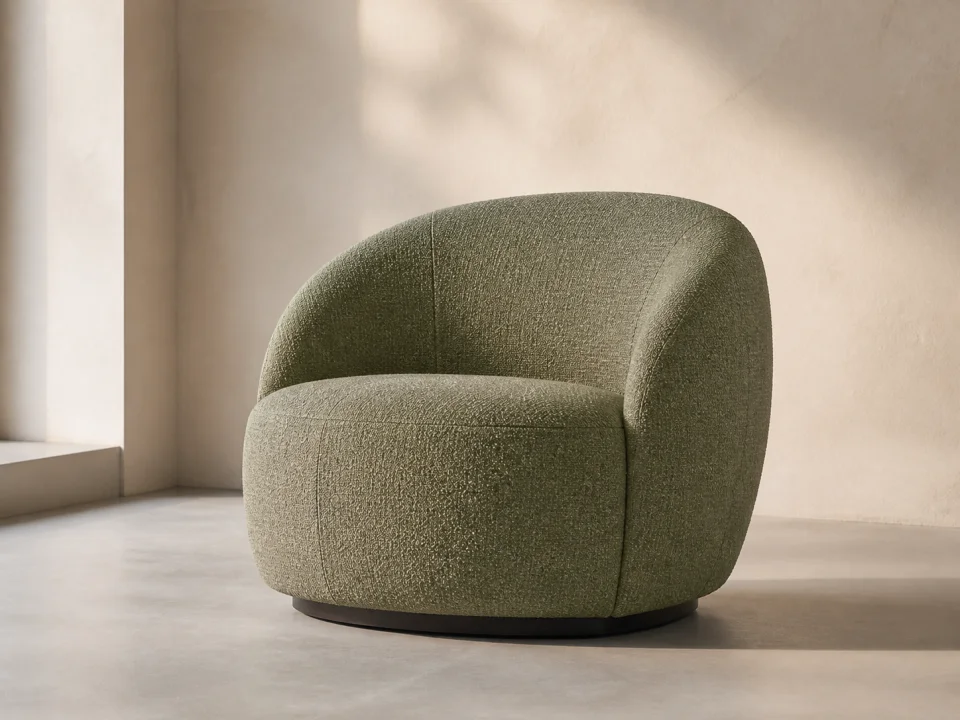
Freestanding
A continuous sculptural form intended to stand alone. Rear and side upholstery receive the same visual attention as the front.
Compact
A shorter extended seat for reading corners and bedrooms where a full-length lounger would dominate the space.
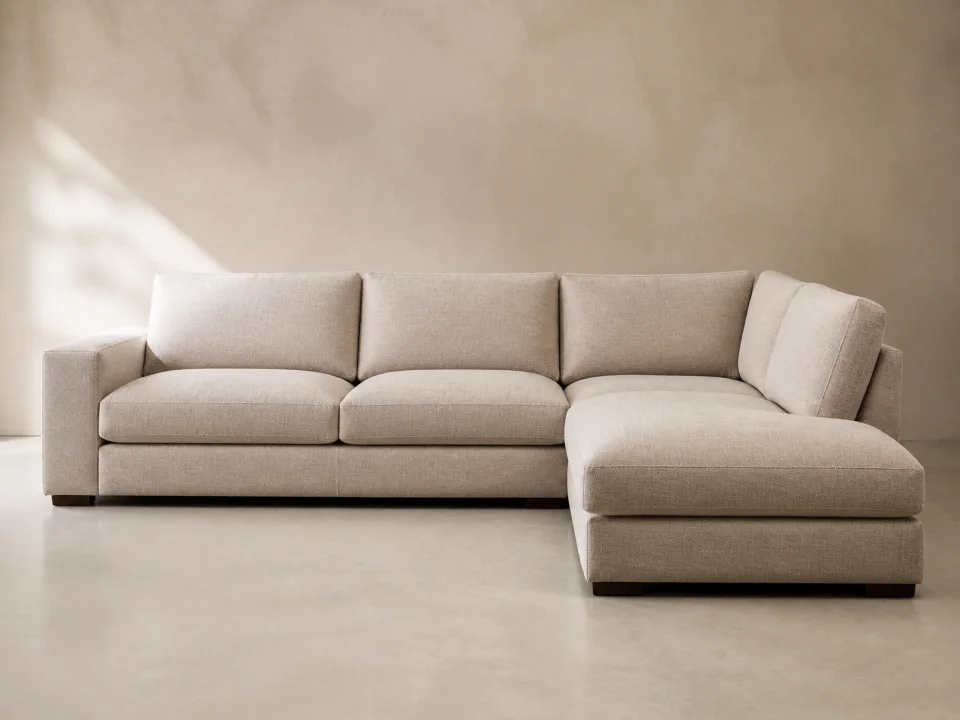
Connected
An extension module that shares seat height, fabric and comfort with a sectional. Left and right orientation must be defined consistently.
Space planning
Its narrow footprint can fit along a bedroom wall, beside a window or within a quiet hospitality corner. The extended length still affects doors, circulation and the view through a room. Overall dimensions should be shown in plan view, not only in a styled photograph.
Freestanding chaises need finished upholstery on every visible side. Wall-oriented models may emphasize a directional arm or back. If left- and right-arm versions are offered, define orientation from a stated viewing position and use a top-view diagram throughout product data and packaging.
Customer photography should show scale with enough surrounding architecture to communicate the footprint. A long lens or empty studio can make a large chaise appear deceptively compact. Accurate dimensions and room-planning diagrams support a better buying decision.
Sample approval
People enter, turn and rest differently. A useful review includes the product’s intended posture and realistic alternative positions.
Assess back angle, hip support, leg length and head position for the target use.
Check the edge when a user sits sideways before reclining or uses the chaise for conversation.
Feel for abrupt layer changes, ridges or unsupported zones along the extended top.
Review the unloaded profile after use and after the approved packaging-recovery period.
Inspect seam alignment, tension around slopes and wrinkles through loaded transitions.
Evaluate movement during entry and exit on the intended floor surfaces.
Packaging recovery
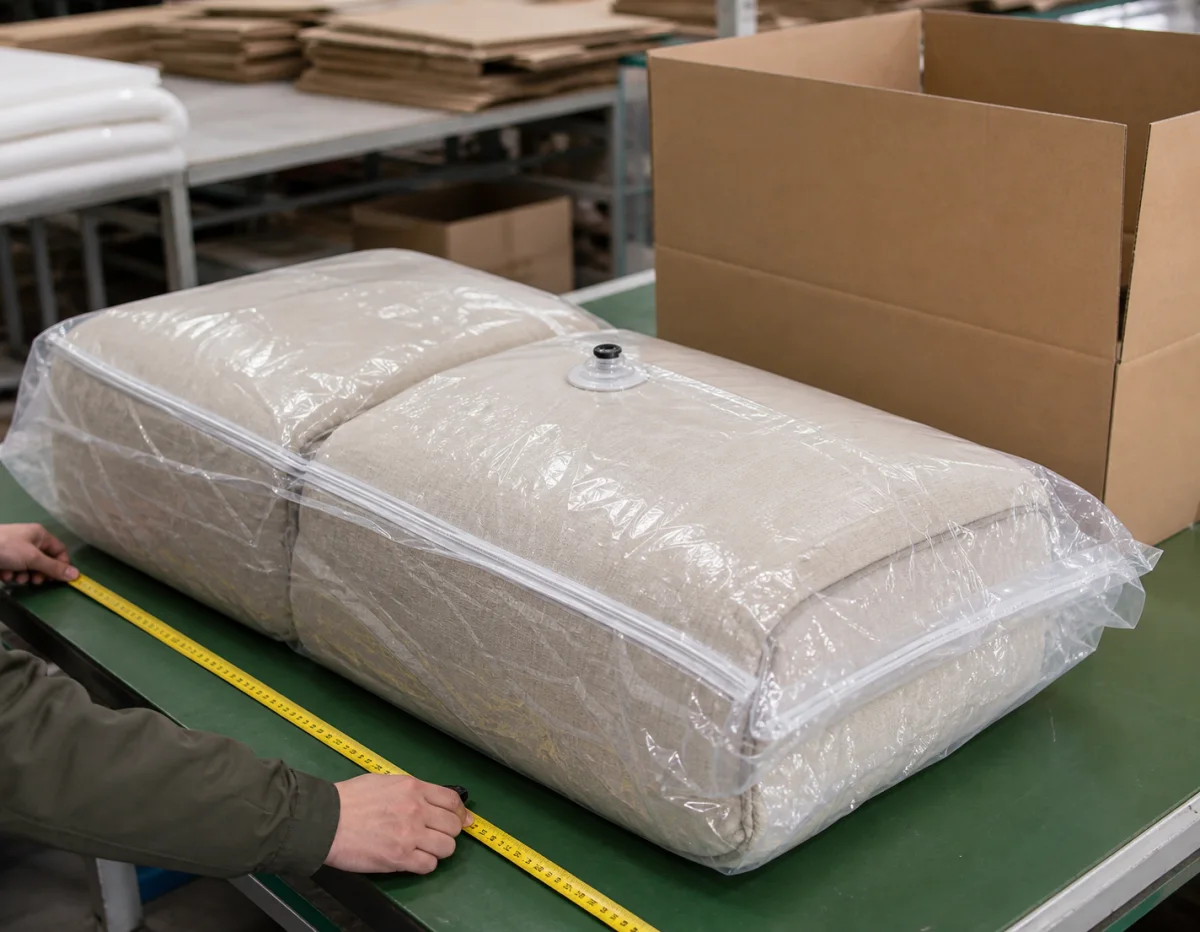
A chaise may need to be gently folded, rolled or compressed according to its construction. The approved method should avoid creating excessive stress at the hip transition or flattening the raised back beyond acceptable recovery.
After an agreed hold period, inspect length, back rise, front edge, symmetry, seams and sitting feel. Customer instructions should show how to remove the protective bag, position the product and allow recovery without forcing the form.
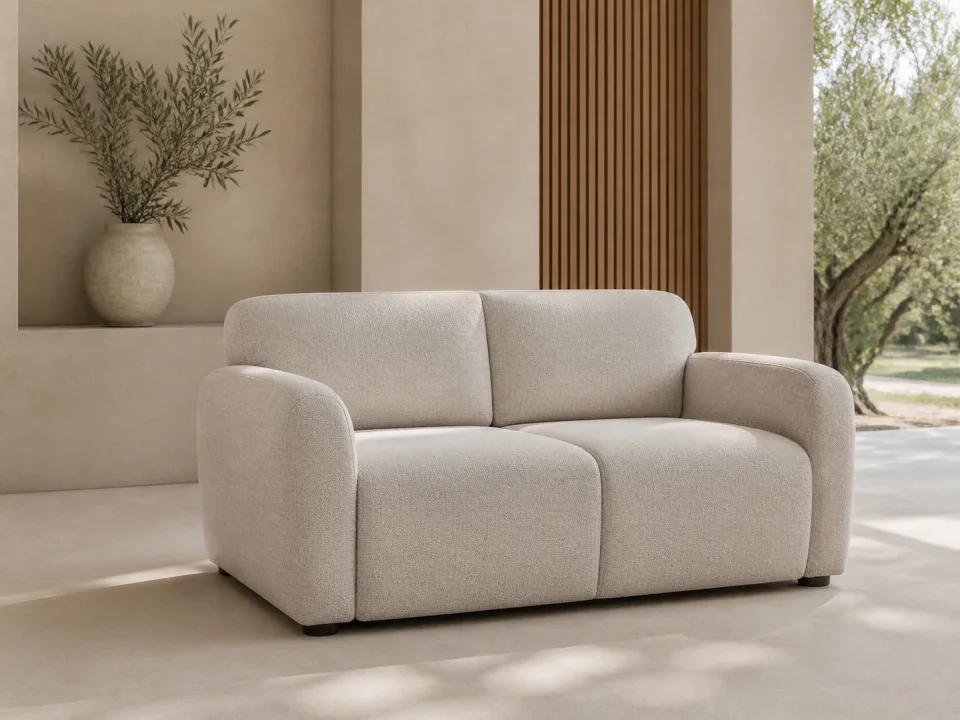
Carton size, gross weight, CBM and loading estimates follow the final package trial. Learn more about compression packaging and compare the coordinated lounge chair and sectional sofa.
Supplier qualification
ALF Home’s manufacturing business was registered on June 28, 2012. The company profile records 14 years of furniture-industry and export experience, a reported 250,000 m² building area and annual export revenue of US$10,965,053. Commercial communication is available in English.
FSC, two CE documents and REACH documentation are recorded as available for review. Buyers should verify certificate number, issuer, validity, tested materials and relevance to the selected chaise and destination market.
Chaise lounge FAQ
Final length, posture and packaging depend on the approved design.
It is an extended upholstered seat for reclining that is engineered for reduced-volume vacuum packing. Many models use boneless or full-foam construction.
A chaise includes extended leg support within the main form. A lounge chair usually supports a seated posture and may use a separate ottoman.
There is no universal length. Select it for the target user, posture, room, back rise and whether the product supports reading, reclining or near-flat lounging.
Yes. Define orientation with a stated viewing position and top-view diagram, then use the same naming in product data, cartons and instructions.
Many can. Foam resilience, length, thick back sections, upholstery and storage duration must be checked with the actual packed sample.
Content responsibility
Posture, profile and sourcing guidance was reviewed for practical consistency. No chaise dimension, recovery time, performance result, MOQ, loading quantity or lead time is claimed without an approved specification.
Last reviewed: August 11, 2026 · About the manufacturer · Request a chaise review
OEM reclining furniture
Share the intended use, target length, silhouette, fabric and expected quantity. We will turn the profile into a sample brief.
Discuss your chaise